







Примерное время чтения: 13 минут
The right lighting track rail is the system that passes every non-negotiable project requirement and delivers the strongest verified value among the systems that remain. Buyers should first eliminate any option that fails compatibility, mounting, electrical, control, dimensional, regulatory, or environmental requirements. The surviving options can then be compared with a weighted scorecard covering installation risk, adaptability, supply continuity, quality evidence, and lifecycle cost. This two-stage method prevents an attractive finish or low unit price from compensating for a critical technical mismatch.
This guide focuses on final selection when more than one track rail system appears technically possible. A separate project-first track rail guide explains how to build requirements from lighting tasks, control zones, mounting conditions, and layout. The method below converts those requirements into an auditable decision, resolves tradeoffs, and produces a selection record that can be handed to designers, installers, purchasing teams, and suppliers.
What makes a lighting track rail right for a project?
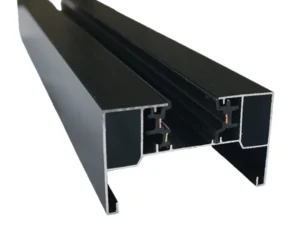
A lighting track rail is right for a project when the complete system fits the intended luminaires, ceiling construction, circuit strategy, physical layout, installation method, applicable requirements, maintenance plan, and procurement model. The rail profile alone cannot answer this question because a usable system also includes power feeds, joiners, corners, end caps, adapters, suspension or recessed parts, and compatible lighting fixtures.
Technical fit and project value are different decisions. Technical fit asks whether a system can be installed and operated safely within the verified design. Project value asks which technically acceptable system creates the best balance of flexibility, risk, cost, appearance, serviceability, and supply. A system must pass the first decision before it can enter the second.
The correct choice is project-specific rather than universally superior. A compact single-zone installation may benefit from simplicity, while a fashion retail store with frequent display changes may value circuit flexibility and a broad compatible fixture range. A replacement project may prioritize exact interface matching, while a new construction project may have more freedom to select a complete new ecosystem.
Use a gate-and-score method instead of one long checklist
The gate-and-score method separates mandatory conditions from preferences. A gate is a requirement that a candidate must pass, such as verified adapter compatibility or a profile that fits the approved ceiling detail. A score is a relative advantage that can justify choosing one passing candidate over another, such as easier installation, better documentation, or lower replacement risk.
Mixing gates and scores creates dangerous tradeoffs. A candidate should not overcome an incompatible fixture interface by earning points for a lower price. A rail should not overcome an unsuitable recessed flange by offering a preferred color. The gate stage protects the project from unacceptable choices, while the score stage makes tradeoffs visible among acceptable choices.
Gate 1: Does the rail belong to the required system family?
The first gate confirms the system architecture rather than relying on a familiar label. Terms such as two-wire, three-wire, four-wire, single-circuit, multi-circuit, conventional track, and magnetic track may be used differently across markets. Buyers should verify conductor functions, circuit arrangement, operating characteristics, protective provisions, physical profile, connector orientation, and adapter interface from controlled product data.
A conductor count alone does not prove circuit behavior or compatibility. The track rail types guide explains the distinctions among common labels and the evidence needed to interpret them. The project team should record the required system function in plain technical terms so that supplier responses can be compared without depending on naming conventions.
Gate 2: Does every intended fixture use an approved interface?
The rail and fixture adapter form a controlled interface. A candidate passes this gate only when the intended spotlights, pendants, linear modules, wall washers, or other luminaires use an adapter approved for that exact rail family. Mechanical insertion alone does not prove correct contact pressure, retention, polarity, grounding, circuit selection, or long-term operation.
An interface matrix is clearer than a general compatibility statement. List every fixture or adapter model in rows and every candidate rail or rail sample in columns. Mark each combination as approved, rejected, or unverified, then attach the drawing, sample test, or supplier confirmation supporting the status. An unverified combination should not be scored as if it were approved.
B2B buyers can use the track light adapter compatibility checklist to evaluate geometry, locking, contacts, ratings, samples, variation, and change control. If the project depends on an existing fixture family, interface confidence normally becomes a high-priority gate because changing the rail can otherwise force an unplanned fixture replacement.
Gate 3: Can the mounting method work with the real ceiling?
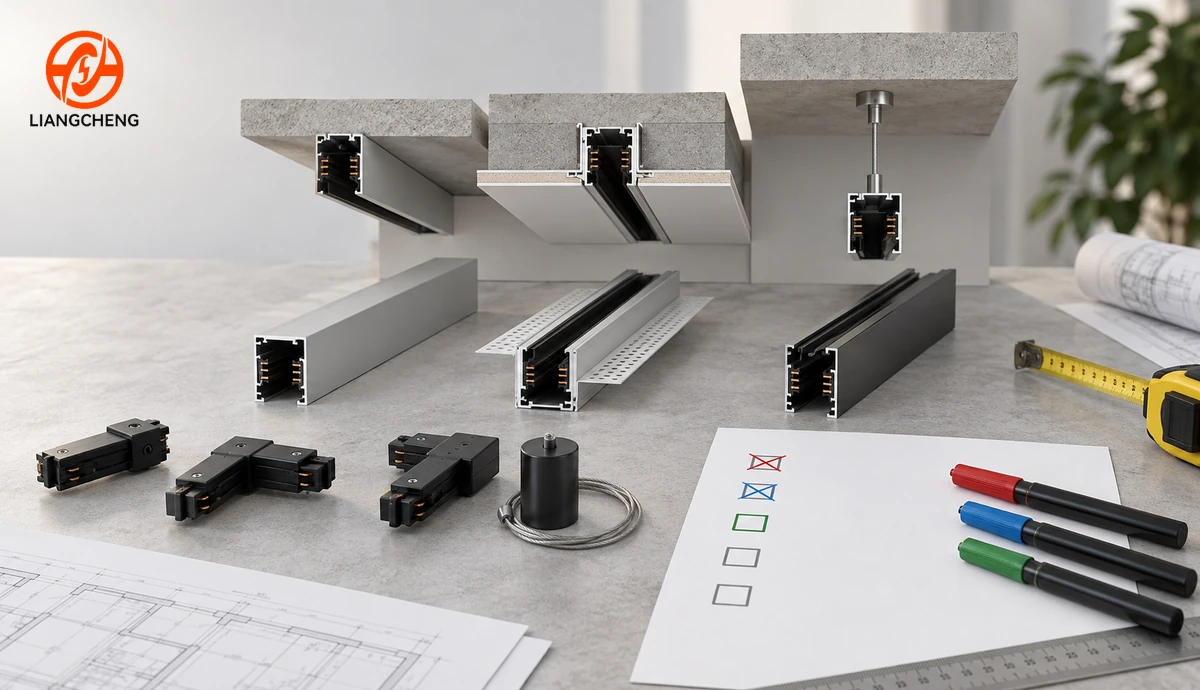
Surface-mounted, recessed, and suspended rails solve different architectural conditions. A surface rail needs an acceptable fixing surface and visible profile. A recessed rail needs a coordinated cutout, depth, flange detail, support, and finishing sequence. A suspended rail needs approved suspension points, cable or rod details, alignment control, power entry, and coordination with the ceiling height.
The candidate must be checked against the actual substrate and construction sequence. A profile that fits a concept drawing may still conflict with ceiling channels, services, insulation, access panels, sprinklers, air outlets, structural limits, or finishing tolerances. The rail selection should therefore reference a coordinated ceiling section rather than a product photograph.
Gate 4: Does the electrical and control concept match?
A rail passes the electrical gate only when its verified ratings, conductor arrangement, circuit capability, feed method, connected equipment, and protective provisions match the approved design. Electrical capacity should be established by qualified project professionals using actual product data, planned loads, applicable rules, installation conditions, and any required derating. Generic internet values should not replace project calculations.
Control needs should be defined as scenes and zones before a rail family is finalized. A simple on-or-off area may not need the same circuit architecture as a store that must switch merchandise zones independently. Control can also be provided outside the rail, so a higher circuit count is not automatically the best solution. The best architecture is the simplest verified system that supports the required operation and future plan.
Power-entry locations must align with the building supply and the chosen system orientation. Straight feeds, end feeds, live-end orientation, internal joiners, corners, and multi-circuit selectors can introduce direction or polarity constraints. The project drawing should identify feed points and system orientation so that procurement does not discover these constraints after rails are cut or ceilings are closed.
Gate 5: Can the complete route be built with approved components?
A candidate rail is incomplete until every straight run, joint, corner, crossing, feed, termination, suspension, recessed transition, and fixture connection has an approved component. A concept line on a ceiling plan may pass through geometry that the selected accessory family cannot create. The gate should therefore be applied to a complete layout rather than to one straight sample.
Convert the ceiling plan into a segment-and-node model. Segments represent rail lengths, while nodes represent feeds, joints, turns, branches, ends, and changes in mounting condition. Each node must map to a compatible component and an installable detail. The track lighting rail accessories guide explains how system components turn a route into a complete bill of materials.
Gate 6: Is the evidence sufficient for the project risk?
The evidence gate asks whether a candidate is proven well enough for the intended use, destination, order value, and consequence of failure. Evidence can include controlled drawings, ratings, material specifications, required declarations or certificates, inspection methods, compatibility records, samples, installation instructions, packaging details, traceability, and supplier change control.
Evidence strength should match the claim. A drawing can support dimensional comparison, but it cannot prove finish consistency. A sample can demonstrate fit and appearance, but one sample cannot prove production repeatability. A certificate can support a stated requirement, but it cannot prove that every component in a mixed system is compatible. The evidence index should name what each document proves and what remains unverified.
Project requirements differ by location and application. The supplier should provide relevant product documentation, while the project owner, designer, installer, importer, or authority determines which rules apply and who can approve compliance. The article provides a selection framework and does not replace electrical design, structural verification, installation instructions, or local approval.
How should qualified track rail systems be scored?
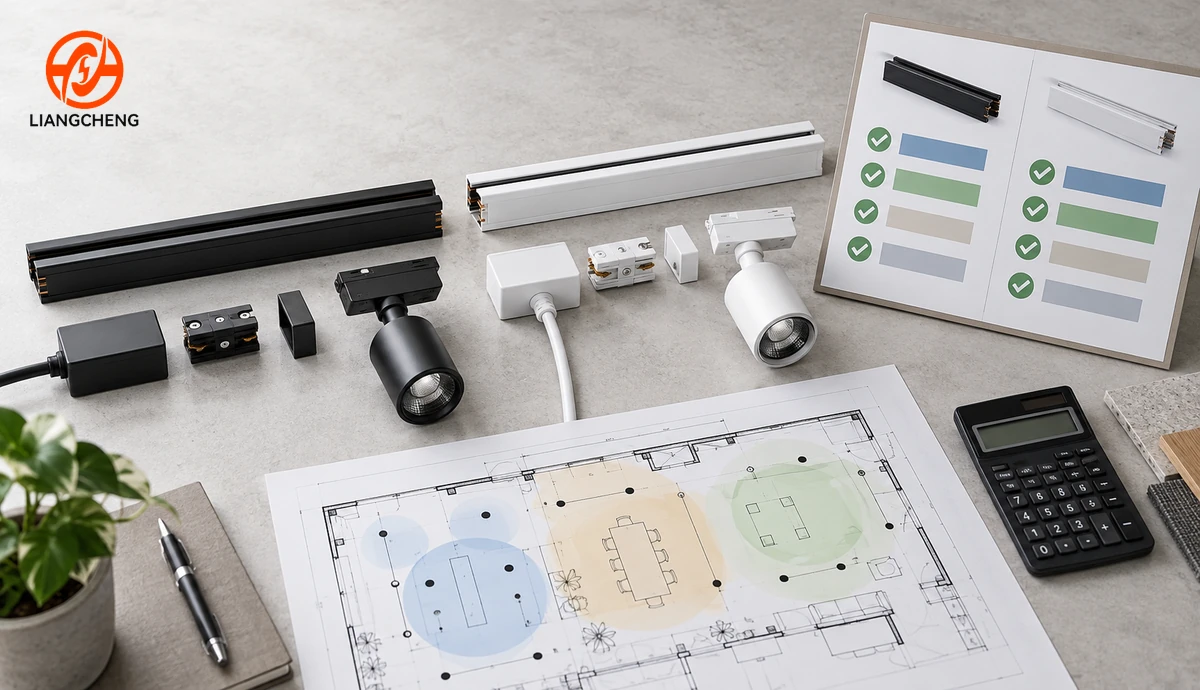
A weighted scorecard compares project value after every mandatory gate has passed. The project team chooses evaluation categories, assigns weights totaling 100 percent, defines a consistent rating scale, and records the evidence behind each rating. The weights should reflect the project rather than supplier marketing priorities.
A practical rating scale uses zero for no acceptable evidence, one for a major weakness, two for below target, three for meeting the defined target, four for exceeding the target, and five for a clearly verified advantage. Any zero connected to a mandatory requirement should return the candidate to the gate stage rather than remain in the score.
The weighted result can be calculated by multiplying each category rating by its percentage weight and dividing by five. A candidate rated four in a category weighted at 20 percent earns 16 weighted points. The total can reach 100, but the number is a decision aid rather than a guarantee. Notes and evidence remain necessary because two candidates with similar totals may carry very different risks.
| Example category | Illustrative weight | Question answered |
|---|---|---|
| Interface confidence | 25% | How strong is the evidence that every intended fixture and accessory works as one system? |
| Installation fit | 20% | How well does the system match ceiling details, routes, access, tolerances, and installer needs? |
| Operational adaptability | 15% | How easily can the layout, aiming, zones, and fixture mix support expected changes? |
| Supply continuity | 15% | How credible are availability, repeat specifications, spare parts, lead-time control, and change notice? |
| Quality evidence | 15% | How complete are drawings, samples, controls, inspection records, traceability, and required documents? |
| Lifecycle cost | 10% | What is the verified cost of purchase, installation, changes, replacements, downtime, and spares? |
The example weights are fictional and must be adjusted. A museum may increase interface, aiming, and documentation weight. A fast-changing retail chain may increase adaptability and supply continuity. A one-time decorative installation may place more weight on appearance and installation fit. A distributor may add assortment simplicity, packaging, private-label support, and cross-SKU compatibility.
How do you prevent subjective scoring?
Every rating should have a written anchor. A supply-continuity rating of five might require an agreed repeat specification, documented production controls, defined lead-time terms, traceable batches, spare-part availability, and advance change notification. A rating of three might mean the basic target is met with ordinary documentation. Defining anchors before reviewing quotations reduces pressure to justify a preferred candidate after the fact.
Uncertainty should lower confidence rather than create an assumed average. If a supplier has not confirmed a critical spare-part detail, mark the rating as provisional and create a closure action. A high score built on missing evidence is less useful than a moderate score supported by verified information. The final decision memo should separate facts, assumptions, open issues, and accepted risks.
How should project type change the decision?
A new installation allows the project to choose a complete rail, adapter, accessory, and fixture ecosystem. The main comparison can focus on future flexibility, ceiling integration, fixture range, installation sequence, serviceability, and supply. The project should still avoid mixing unverified components merely because the initial design has no legacy constraints.
An extension project is constrained by the installed system. Exact interface verification, visual continuity, orientation, aging, documentation, and spare availability become more important than theoretical advantages of a different family. If the existing system cannot be identified or supported, a planned complete replacement may create less risk than a partial mixture.
A distributor selection has a wider boundary than one project. The scorecard should consider how many customer applications one controlled system can serve, which fixture adapters remain consistent across the range, how samples and packaging will be managed, and how repeat supply will be protected. A technically good niche profile may be a weaker portfolio choice if it adds inventory without serving enough verified demand.
Compare reversible and irreversible decisions
A reversible decision can be changed after installation with limited disruption, while an irreversible or expensive decision affects ceilings, wiring, finishes, or the entire fixture ecosystem. Rail finish may sometimes be changed through a planned future order, but recessed dimensions, feed locations, mounting support, and adapter family can be costly to alter. The selection process should spend more evidence and approval effort on decisions with high reversal cost.
Initial price matters most when candidates create the same verified outcome and risk. If one option requires special ceiling work, proprietary replacement stock, additional adapters, more installation labor, or a full fixture change later, the lowest rail price may not create the lowest project cost. Buyers should normalize quotations to the complete installed and supported system.
Lifecycle cost should include the complete bill of materials, installation work, expected changes, spares, damaged replacements, maintenance access, downtime, packaging losses, and logistics. The lighting track rail buying guide provides a broader pre-order review of pricing, packaging, samples, and purchase readiness.
What should a project sample prove?
A sample should close the highest-risk uncertainties left by documents. Useful checks include profile dimensions, finish and color, straightness, connector engagement, end-cap fit, adapter insertion, locking, contact behavior, fixture support, circuit selection where relevant, mounting detail, visual alignment, cutting procedure, and packaging protection. The sample plan should state which combinations and conditions are being approved.
The track rail sample approval process explains how to move from drawings through prototypes and pilot production. A high-risk or custom project should include a pilot assembly or mockup that represents actual joints, feeds, mounting, fixtures, and ceiling details before bulk production begins.
Turn the selection into a purchase-ready specification
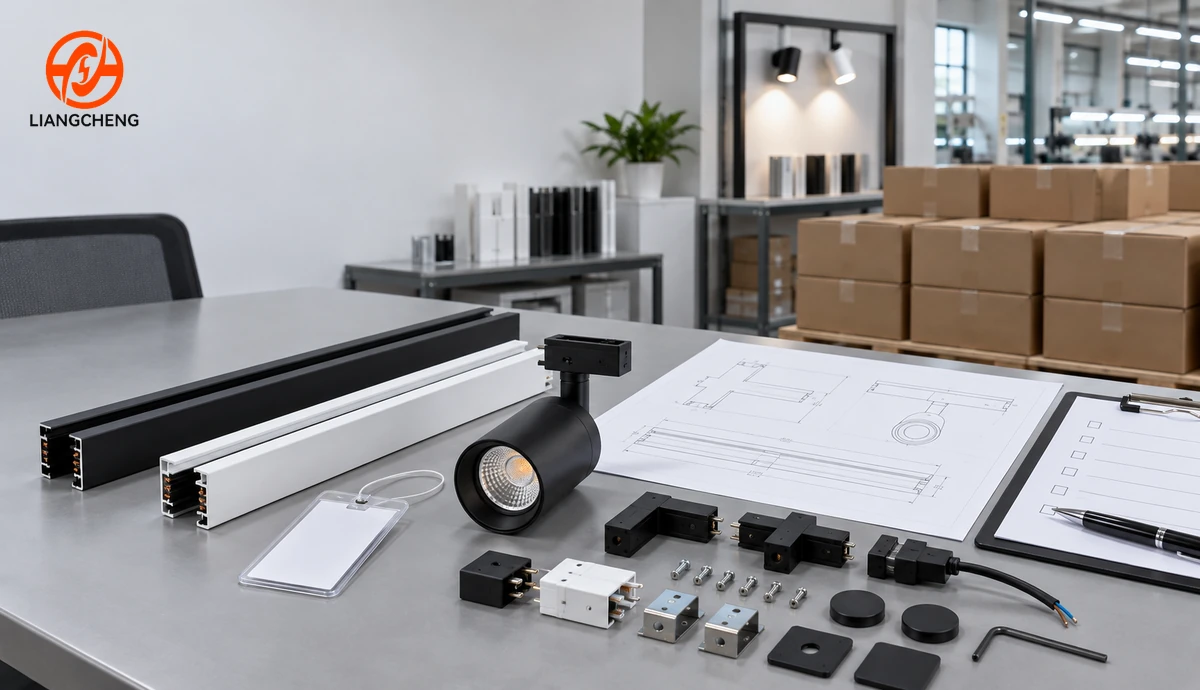
The final selection record should name the approved system family, rail model, conductor and circuit functions, profile drawing revision, mounting method, lengths, finish, feeds, joiners, directional accessories, end caps, suspension or recessed components, compatible adapters, fixture references, required documents, sample status, packaging, inspection, traceability, and change-control requirements.
Every unresolved item should have an owner and closure date before the purchase order. An open ceiling detail belongs with the design or construction team, an unverified adapter belongs with the system supplier and quality team, and an incomplete commercial term belongs with procurement. Ownership prevents assumptions from moving silently into production.
A clear RFQ allows suppliers to quote the same scope. The track rail RFQ guide lists the project, interface, dimensions, accessories, finish, quantity, packaging, documentation, sample, and commercial information needed for a useful response. Comparable inputs make the scorecard more credible because differences reflect the offers rather than missing requirements.
Common mistakes when choosing lighting track rail
Choosing from appearance first is a mistake because color and profile shape cannot prove system function. Visual preference should be scored only after compatibility, mounting, electrical, control, layout, and evidence gates pass. A finish sample belongs in the approval file, but it cannot rescue an incompatible system.
Choosing from price per meter is a mistake because straight rail is only one part of the installed system. Feeds, joiners, corners, adapters, mounting parts, custom cutting, packaging, freight, installation, spares, and future fixture replacement can change the commercial result. Normalize every offer to the same complete scope.
Giving every criterion equal importance is a mistake because project risks are not equal. A minor finish preference should not carry the same decision weight as fixture compatibility or ceiling fit. Weights should reflect consequence, probability, reversibility, and responsibility, then be approved before final scoring.
Scoring before closing mandatory evidence is a mistake because a polished proposal can hide an unverified interface. Missing data should remain an open action or fail a gate when the risk is critical. Assumptions must be visible in the decision memo and should never be converted into silent positive scores.
Часто задаваемые вопросы
Should the project choose track lights or the rail first?
The project should define lighting tasks first, then select the rail and fixture-adapter ecosystem together. If critical fixtures already exist, their verified adapter interface may constrain the rail. If the project starts without fixed fixtures, comparing complete systems provides more flexibility than choosing either component in isolation.
Is a multi-circuit rail always the better choice?
A multi-circuit rail is better only when the project needs its verified control capability and accepts the related profile, accessories, adapters, wiring, installation, and cost. Additional capability without a defined use can add complexity without creating value. The simplest system that supports approved present and future scenes is normally easier to specify and maintain.
Can rails and adapters from different suppliers be mixed?
Components from different sources should be mixed only when the exact combination has controlled technical evidence and project approval. Similar dimensions or matching labels do not prove reliable mechanical or electrical compatibility. The approved interface matrix should identify every permitted combination and its supporting evidence.
What if two track rail systems receive almost the same score?
A near tie should be resolved by reviewing the highest-consequence categories, uncertainty, reversal cost, and sensitivity to changed weights. The team can test whether a small weight change reverses the result. If it does, a targeted sample, supplier clarification, or pilot may be more valuable than debating the total score.
Who should approve the final track rail selection?
Approval should include the roles responsible for design intent, electrical and installation requirements, procurement, quality, and ongoing operation. The exact authority depends on the project contract and applicable requirements. Supplier input supports the decision but does not replace project-side approval.
Choose and source a project-ready track rail system
Liangcheng Lighting supplies wholesale and customized track lighting rail systems for distributors, contractors, lighting brands, importers, and commercial projects. A productive B2B inquiry should include the project type, destination, ceiling and mounting details, system architecture, intended fixtures or adapters, control zones, layout, rail lengths, finish, accessory schedule, estimated quantity, packaging needs, documentation, and sample approval plan.
To compare qualified systems with a clear gate-and-score method, contact Liangcheng Lighting with your drawings, interface information, requirement register, and target order plan. Liangcheng Lighting can support rail and accessory selection, dimensional review, compatible system planning, finish and length customization, samples, packaging, and wholesale supply. Final electrical, structural, installation, and compliance decisions should remain with the qualified professionals responsible for the project.
Нужны индивидуальные решения для трекового освещения?
Свяжитесь с Liangcheng Lighting для получения решений OEM/ODM по алюминиевым трековым системам и профессиональной светотехнической поддержке.