







Примерное время чтения: 14 минут
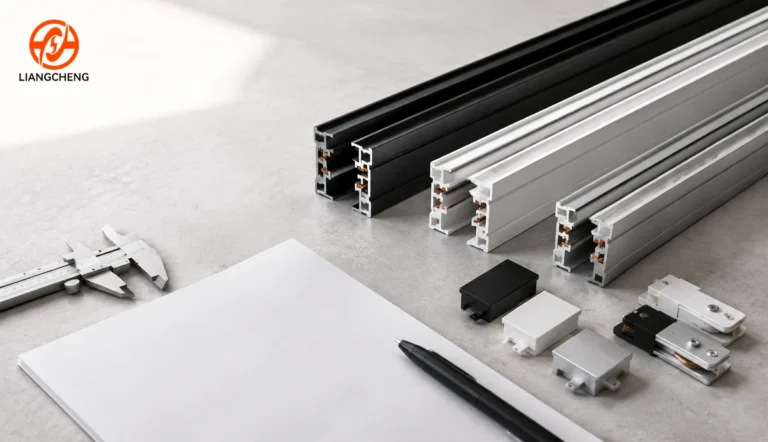
Track light adapter compatibility means that one adapter matches the exact rail interface mechanically, electrically, and functionally, with evidence that the match remains consistent in normal production. A similar appearance, the same wire count, or a successful one-time insertion does not prove compatibility. B2B buyers should approve the rail and adapter as a controlled pair, then verify dimensions, keying, contacts, grounding, locking, ratings, load support, circuit selection, samples, batch records, and change control before bulk release.
This checklist is designed for importers, distributors, lighting brands, project suppliers, fixture factories, and quality teams. It focuses on procurement approval rather than on the broad question of which luminaire formats can use a rail. For that foundation, see the guide to трековые светильники, совместимые с 3-проводными направляющими. The process below converts compatibility from a sales statement into a documented purchasing decision.
Why should buyers treat the adapter as a controlled interface?
The track light adapter is the bridge between a luminaire and a powered rail. Its housing locates the fixture, its lock retains the load, and its contacts connect the required conductor paths. Some versions also select a circuit or provide a defined attachment point for a spotlight, pendant, or linear luminaire. One small component therefore controls several independent risks at the same time.
An adapter can enter a rail yet still be wrong. Contacts may land beside the intended conductors, a ground feature may not engage correctly, a lock may catch only a shallow edge, or an apparently suitable selector may map to the wrong circuit. Tolerance variation can also turn a convenient sample fit into a tight or loose production fit. Buyers should define compatibility as a verified operating envelope, not as a visual resemblance.
System terminology adds another risk. A three-contact adapter, a 3-wire rail, and a 3-circuit system do not necessarily describe the same architecture. The single-circuit and multi-circuit comparison explains why conductor count and control-group count must be confirmed separately. A purchase order should use an approved drawing and part code in addition to any familiar market name.
What evidence should be collected before an RFQ is issued?
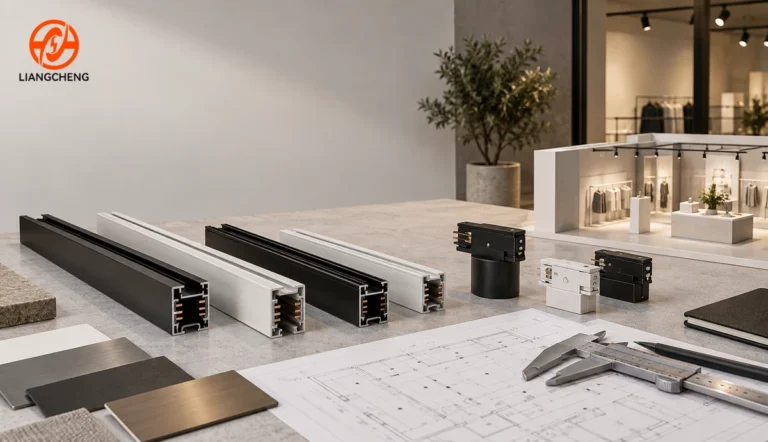
A strong request for quotation begins with evidence from the real system. New projects can use a coordinated rail, feed, accessories, adapters, and luminaires from one documented family. Replacement projects require more investigation because the installed rail may have no current part number or may have been sourced in several phases.
Collect a straight-on photograph of the rail end, both sides of the channel, the power feed, one working adapter, any polarity or circuit marks, and the luminaire attachment. Place a scale beside the opening, but do not treat a photograph as the final dimensional record. Record the project country, supply conditions, circuit plan, mounting method, fixture type, fixture mass, expected quantity, finish, and replacement requirement. If a physical rail sample is available, identify it as a controlled reference and protect it from damage.
For unfamiliar legacy systems, the interface family must be identified before pricing. The Руководство по совместимости H-типа, J-типа и L-типа shows why common family labels are useful clues but do not replace drawings or sample validation. If identification remains uncertain, request a matched rail and adapter proposal instead of asking a factory to approve compatibility from one distant photograph.
Track light adapter compatibility checklist at a glance
| Approval layer | Buyer must verify | Useful evidence | Hold condition |
|---|---|---|---|
| System identity | Rail family, adapter code, revision, intended luminaire | Controlled drawings and sample labels | Only a generic market name is supplied |
| Geometry | Opening, body width, insertion depth, keying, contact locations | Dimensioned interface drawing and measured samples | Critical dimensions or tolerances are missing |
| Mechanical function | Insertion, rotation, lock engagement, retention, removal | Approved procedure and test record | Force, play, or lock position is inconsistent |
| Electrical interface | Contact map, polarity, protective earth, circuit path | Terminal schedule and continuity checks | Contact function is inferred from appearance |
| Ratings | Voltage, current, fixture load, environment, attachment limits | Product data and project specification | Any rating is lower than the intended application |
| Production control | Materials, finish, markings, traceability, change control | Approved sample, inspection plan, lot record | Supplier can substitute key parts without notice |
| Упаковка | Part separation, contact protection, labels, spare quantity | Packaging specification and shipment sample | Mixed versions cannot be distinguished |
A hold condition does not always mean rejection. It means that the purchase team lacks enough evidence for release. The supplier can close the gap with drawings, samples, clarification, or a controlled test. This pass, hold, and fail logic prevents commercial deadlines from converting an unanswered technical question into an assumed approval.
How should rail and adapter geometry be checked?
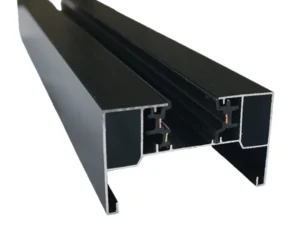
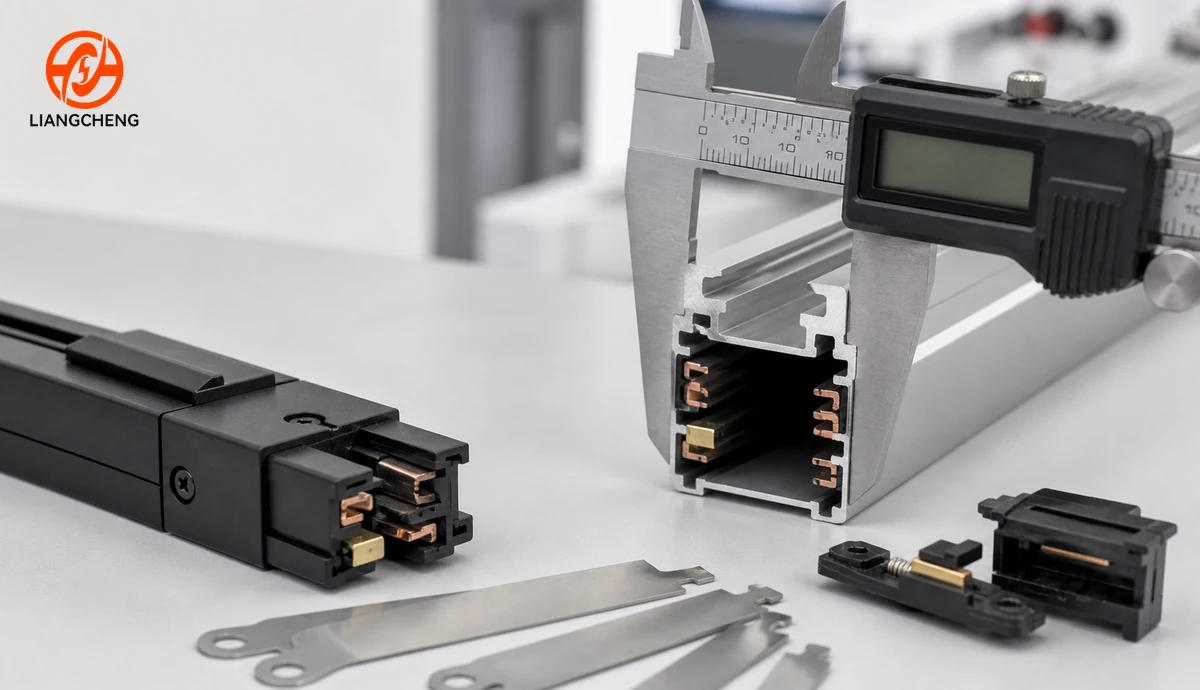
Start with the rail cross-section and the adapter envelope. Critical characteristics can include channel opening width, internal depth, guide edges, asymmetric keys, body width, stop surfaces, insertion depth, lock engagement location, and the distance from each contact to a defined datum. The exact list depends on the system, so the drawing should identify the dimensions that actually control fit and function.
Do not compare only one adapter with one rail. A compatibility decision should consider tolerance at both interfaces. A narrow adapter from one sample and a wide rail from another may fit easily, while the opposite combination may bind. The purchasing team should ask how the proposed tolerances interact and should test representative combinations from different samples or lots. The general measurement framework in the track rail dimensions guide can help organize the rail side of this review.
Which mechanical functions must pass before approval?
A correct adapter should enter in the intended orientation without damage, reach its final position, engage the lock fully, support the specified luminaire arrangement, and release through the documented removal action. These steps should feel repeatable across samples. Excessive force, scraping, visible plastic stress, weak engagement, large movement after locking, or a lock that appears closed before full insertion are reasons to stop and investigate.
Mechanical approval should cover the complete luminaire assembly when practical. Adapter performance can change after the fixture body, bracket, driver enclosure, pendant cord grip, or decorative housing is attached. The center of gravity and operating orientation may place torque on the rail interface even when the static mass seems modest. The supplier should state the intended attachment method and any fixture load or geometry limits that apply to the adapter.
Retention testing requires an agreed fixture, direction, duration, and acceptance criterion. The appropriate values must come from the product specification, applicable requirements, and project risk; they should not be invented during inspection. A buyer can still define the required record: sample identity, rail identity, orientation, test method, measured result, observation, operator, equipment, and decision.
How should contacts, polarity, and protective earth be verified?
The electrical review begins with a contact map. For every adapter contact, the drawing should identify the corresponding rail conductor and intended function. The map should also show insertion orientation and any polarized key. Never assign line, neutral, protective earth, or selectable circuit paths from contact color or position alone.
Check that contacts align with conductors throughout the locked position, have the intended contact pressure, and do not touch an adjacent conductive path. Review the contact material and surface treatment specified for the approved design. Ask how contact pieces are retained inside the housing and how assembly errors are prevented. If the system includes a protective-earth function, confirm its mechanical sequence and electrical continuity according to the controlled design.
Electrical checks should be performed by qualified personnel using safe, de-energized methods where applicable and an approved test plan. Continuity, isolation between unintended paths, selector mapping, and grounding continuity can be documented before any controlled operational evaluation. Final installation and commissioning must follow the product instructions, project design, and local requirements.
Does circuit selector behavior match the project plan?
Multi-circuit adapters may include a selector that assigns a luminaire to one available circuit path. The selector positions, physical marks, contact movement, and rail conductor mapping must match the project schedule. A selector with three positions is not proof that it works with every rail described as 3-circuit.
Test each usable selector position on representative matched rail. Confirm that the selected path is repeatable after removal and reinsertion, and that the control setting cannot remain between valid positions. Include the selector position in the luminaire schedule and commissioning record. This makes later scene changes or maintenance more reliable.
Single-circuit adapters still require clear orientation and polarity where the system design uses them. The complete 3-wire track rail guide explains common conductor functions, but the approved interface drawing always controls the actual order.
Which ratings belong on the adapter approval sheet?
Record every rating that limits use: intended supply type, rated voltage, rated current, fixture load, allowed attachment method, operating environment, and any temperature or clearance limitations supplied for the product. Check the adapter rating against the rail, luminaire, driver, feed, connector, circuit design, and project environment. The system capability is limited by the applicable component or design constraint, not by the strongest isolated part.
Do not convert a supplier statement into a certification claim. Request the product documents required for the destination market and have the responsible project professional review applicability. Compatibility approval confirms a matched interface for the intended specification; it does not replace electrical design, regulatory review, or installation inspection.
What should a golden sample include?
A golden sample is the physical reference approved by both commercial and technical stakeholders. It should represent the complete adapter configuration, including housing, contacts, lock, selector if present, attachment hardware, color, markings, and packaging. Pair it with a matched rail sample rather than storing the adapter alone. Seal or identify both references so that production samples cannot be confused with the approved set.
The physical samples need an approval record that states part codes, drawing revisions, finish, date, approvers, known limitations, and the tests completed. Photographs help preserve visual details, but photographs should not replace the real sample or drawing. If the supplier and buyer each retain a set, both sets should be traceable to the same approval event.
Golden samples are especially valuable when a fixture factory buys adapters separately from rails. They provide a stable reference for incoming inspection and assembly trials. The broader track rail versus track light explanation clarifies why the rail, adapter, and luminaire remain distinct items even though buyers often purchase them as one system.
How should fit and function testing cover production variation?
Build a small test matrix rather than repeating the same easy pairing. Include adapters from more than one production position or lot when available and rail samples that represent approved dimensional variation. Pair each adapter with multiple rail samples. Run the insertion, locking, movement, removal, contact, grounding, and selector checks that apply to the design.
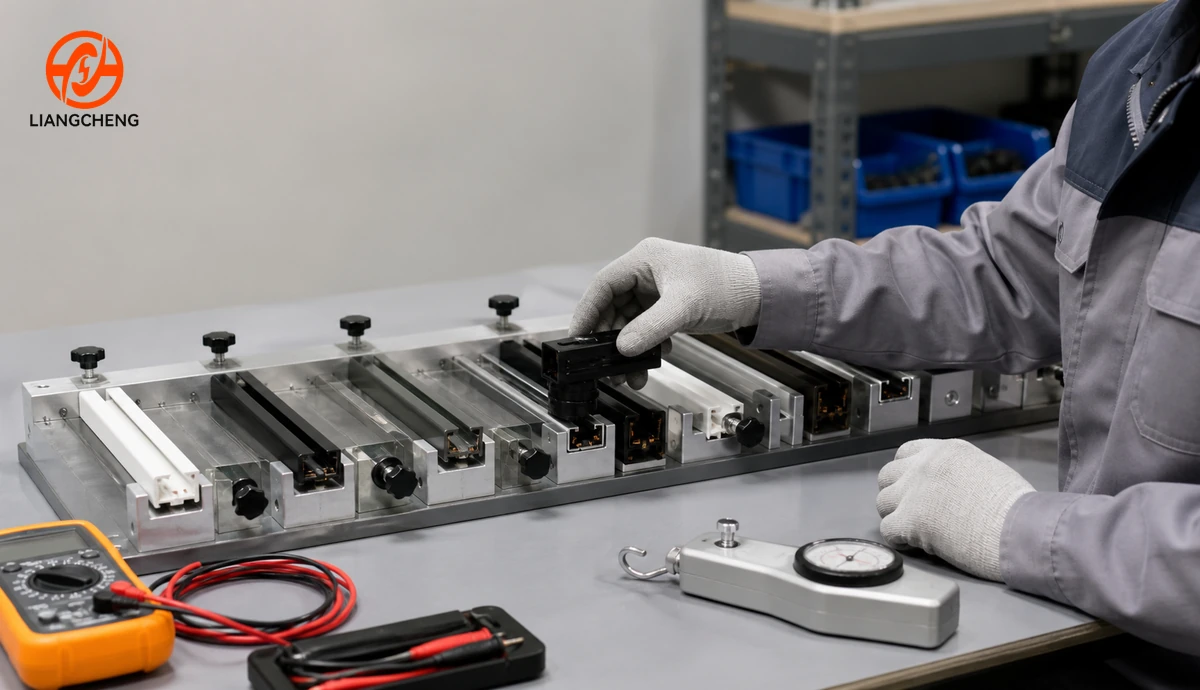
For repeat-use applications, define an insertion-cycle evaluation that reflects the product specification. Inspect for contact deformation, housing wear, debris, loss of lock engagement, rising insertion force, or unstable continuity. Record the cycle method and sample condition. A test result has little reuse value when the report omits the mating rail or the exact adapter revision.
A pilot run can expose assembly and packaging issues that bench samples miss. Build the intended fixture, apply the production attachment method, pack the units, unpack them, and repeat the interface check. If a pilot reveals a problem, place the affected characteristic on hold until the design, process, or inspection plan is revised and the corrective evidence is approved.
What belongs in the incoming inspection plan?
The incoming plan should separate identity, appearance, dimensions, mechanical function, and electrical function. Check supplier code, buyer code, revision, color, lot, quantity, package label, deformation, damaged contacts, missing parts, and incomplete marks.
Dimensional checks should focus on characteristics that influence the interface, not on a long list of low-risk dimensions. Functional sampling should use an approved rail fixture or matched rail sample. Define the sampling plan, acceptance logic, equipment, test method, and reaction plan before shipments arrive. Numeric acceptance limits must come from approved specifications, not from a generic checklist.
When a result falls outside the limit, quarantine the affected lot, preserve samples, and record the exact failure. Do not improve a result by forcing the adapter into the gauge or by selecting only the easiest rail. Supplier review should determine containment, root cause, corrective action, and whether previous lots or assembled fixtures are affected.
How do materials, finish, and markings affect compatibility?
Material selection influences stiffness, insulation behavior, wear, contact force, and dimensional stability. Finish thickness can affect an engagement surface. Color resin or coating changes can alter appearance and may also change process behavior. Buyers do not need to dictate every manufacturing choice, but the supplier should control materials and processes that can change fit, electrical function, or service life.
Markings should distinguish system family, adapter version, circuit setting where applicable, and other information required by the product specification. Marks must remain visible after normal fixture assembly when they support installation or service. Part codes on the unit, inner package, master carton, invoice, and inspection record should map consistently.
Finish approval should use an agreed reference and viewing condition. Terms such as black, white, and matte are too broad for repeatable B2B supply. If the adapter must coordinate with the rail and luminaire, approve the assembled visual combination. For custom programs, record color reference, gloss expectation, texture, logo or private-label requirement, and the limit for visible variation.
What change control should the supplier provide?
Compatibility can be lost after a successful launch if a supplier changes a mold, contact material, spring, sub-supplier, assembly process, coating, or critical tolerance. The purchase agreement should identify changes that require notice and reapproval. The notice should describe the reason, affected part code, old and new revisions, risk assessment, implementation lot, and validation evidence.
Not every administrative change needs a full qualification. Reapproval depth should follow risk. A label layout adjustment may need a document review, while a new contact geometry or housing mold can require dimensions, fit testing, electrical checks, pilot assembly, and a new golden sample. The buyer should decide before the changed lot ships.
Traceability connects that decision to real inventory. At minimum, the system should let the parties identify which adapter version and lot entered a fixture or customer shipment. This improves containment if a field complaint appears and prevents mixed revisions from becoming an unexplained compatibility problem.
How should adapters be packaged for wholesale orders?
Packaging must prevent contact bending, housing scratches, mixed colors, missing hardware, and confusion between similar versions. Use separated trays, cells, bags, or protective inserts as required by the design. Keep selectors and locks in the documented shipping position. Do not allow loose metal hardware to rub against contact surfaces.
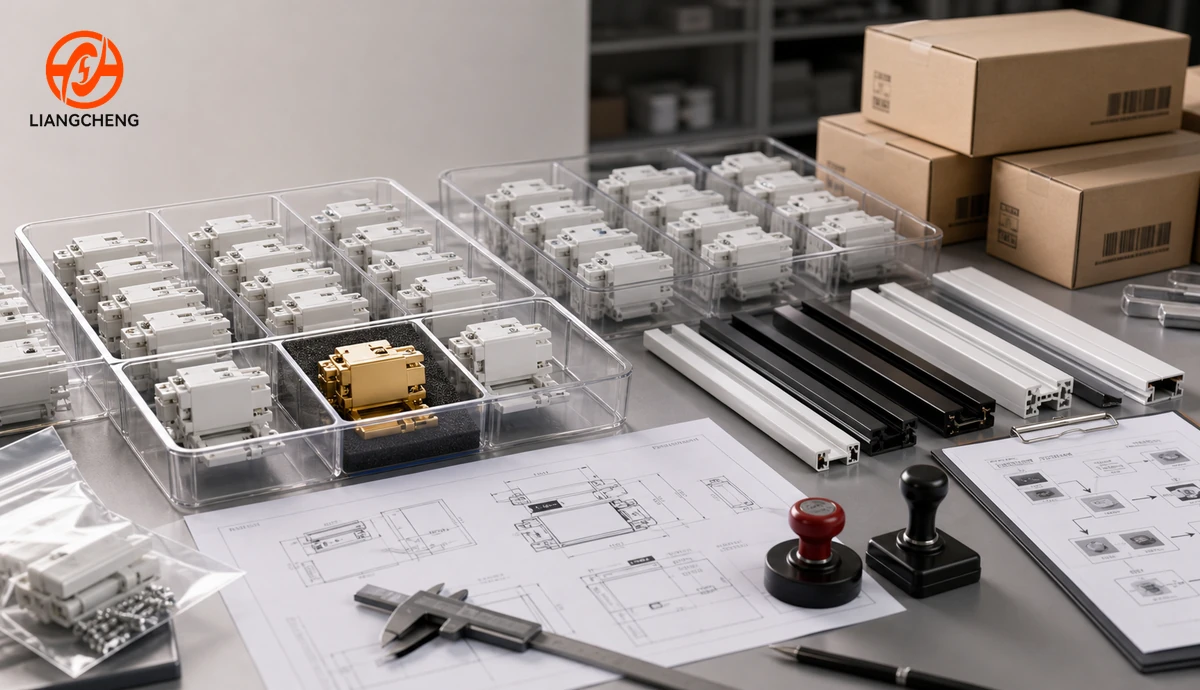
Labels should show the information needed at receiving and assembly, such as buyer part code, supplier part code, revision, color, quantity, and lot identity. When several adapter families share one shipment, use clear physical separation and a visual confirmation point. A wrong but similar adapter can pass through a warehouse more easily than a visibly different component.
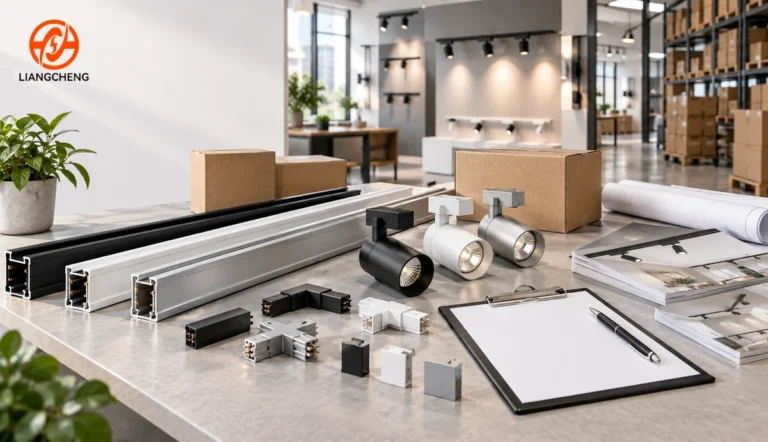
Define spare quantities from project risk, maintenance strategy, installation locations, and replacement lead time rather than using an automatic percentage. Spares must be the same approved version and should remain labeled during storage. Include the adapter list within the complete system bill of materials described in the track lighting rail accessories guide.
What should the purchase specification contain?
A concise purchase specification can prevent most avoidable ambiguity. Attach controlled documents rather than filling the order with informal descriptions. The following items form a practical minimum:
- Buyer part code, supplier part code, adapter revision, and matched rail code.
- Interface family and circuit arrangement, supported by drawings and a terminal map.
- Critical dimensions, tolerances, datum definitions, and measurement methods.
- Insertion orientation, lock action, removal method, and applicable fixture limits.
- Contact functions, protective-earth arrangement, selector mapping, and ratings.
- Housing material, contact material, finish, color, marks, and approved visual reference.
- Golden sample identity, inspection plan, sampling method, and reaction plan.
- Packaging, labels, carton quantity, traceability, spare parts, and change-notice rules.
For a new coordinated system, review available standard track rail systems and matching options before freezing the adapter. Selecting the rail family, mounting format, finish, circuit plan, and fixture interface together is usually more controllable than trying to repair compatibility after separate orders are placed.
How should buyers make the final release decision?
Use three outcomes. Pass means every required document and test meets the approved criteria. Hold means information is missing or a result needs clarification, but no final rejection has been made. Fail means a defined requirement was not met. Record the outcome by adapter code and revision, not only by supplier name.
Commercial pressure should not change a technical hold into an undocumented pass. If timing requires a limited pilot, define the quantity, destination, controls, and open risks in writing. Do not allow pilot approval to become automatic mass-production approval. Close every open item before the normal release status changes.
The most reliable final package contains approved drawings, contact map, rating data, fit matrix, functional records, golden samples, inspection plan, packaging specification, change-control agreement, and responsible approvers. That package gives purchasing, quality, production, installation, and service teams the same definition of compatibility.
Часто задаваемые вопросы
Can an adapter be approved because it fits one rail sample?
No. One fit proves only that two individual pieces engaged once. Approval should cover the defined rail and adapter revisions, critical dimensions and tolerances, lock function, contact mapping, ratings, and representative sample combinations.
Does the same wire count mean the adapter is compatible?
No. Wire count does not define rail profile, keying, contact location, polarity, grounding, locking, circuit logic, or ratings. The exact system interface must match.
Can an existing fixture body use a different adapter?
Possibly, but the fixture-to-adapter attachment, load transfer, wiring space, strain relief, driver arrangement, ratings, and completed assembly all require engineering review and validation. A mechanical screw pattern alone is not enough.
Should a buyer test every adapter in a shipment?
The inspection scope should follow an approved risk-based sampling plan and the product requirements. Identity and packaging checks may differ from dimensional or functional sampling. Critical concerns may justify stronger controls until process capability is established.
What should be sent when requesting a compatibility quotation?
Send the rail and adapter codes if known, end-view photographs, key dimensions, an existing sample when available, conductor and circuit information, supply conditions, fixture type and mass, finish, quantity, market, and required documents. State whether the request is for exact replacement or a new coordinated system.
Build a controlled adapter and track rail supply program
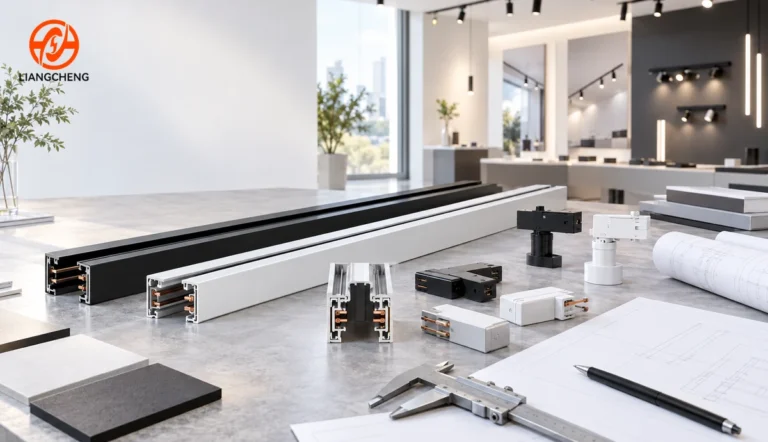
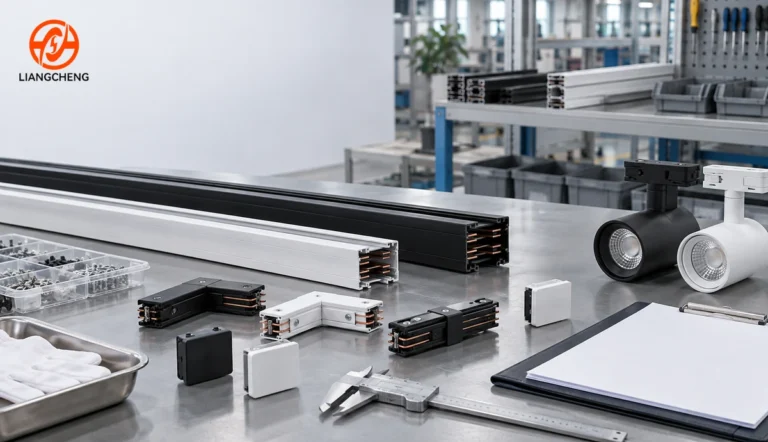
Liangcheng Lighting supplies wholesale and customized track lighting rail systems for B2B customers. Support can cover coordinated rail profiles, compatible adapters and accessories, surface, recessed, or suspended system planning, custom lengths, finishes, colors, packaging, and branding requirements. The objective is to define one approved interface and carry that definition through samples, production, inspection, and delivery.
For a distributor program, lighting brand, project quotation, or replacement requirement, send Liangcheng Lighting the rail reference, interface photos or samples, circuit plan, fixture details, finish, target quantity, packaging needs, and destination market. The team can review the information and prepare a matched wholesale or custom track rail proposal. Visit the Liangcheng Lighting website to start a B2B inquiry and request drawings or samples for compatibility approval.
Нужны индивидуальные решения для трекового освещения?
Свяжитесь с Liangcheng Lighting для получения решений OEM/ODM по алюминиевым трековым системам и профессиональной светотехнической поддержке.