







Примерное время чтения: 13 минут
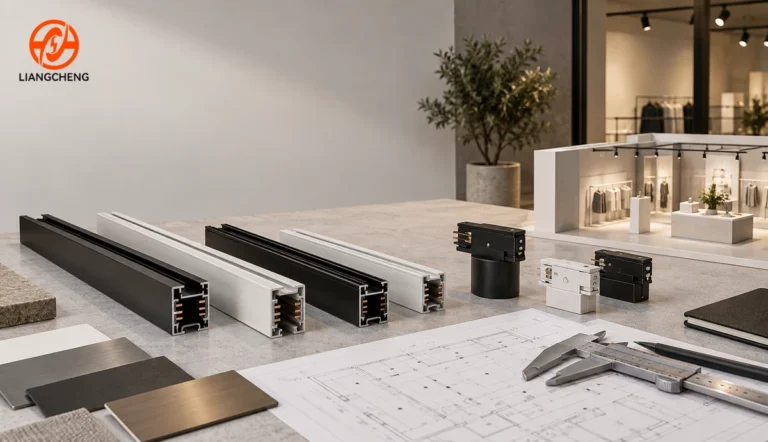
A track rail RFQ should include the application, destination market, rail family, electrical requirements, mounting method, dimensions, finish, quantities by item, matching accessories, drawings, sample requirements, quality criteria, packaging, delivery schedule, and quotation format. A request for quotation built around these fields produces comparable offers; a request containing only a product name and total meters leaves suppliers to price different assumptions. The objective is to define the same supply scope before comparing prices.
For lighting distributors, importers, and project buyers, a complete RFQ is a decision document rather than a long product description. Technical details establish what must be supplied, while commercial fields establish how the offer must be priced and delivered. Separating those two functions helps buyers distinguish a genuinely lower price from an offer that excludes important components, documents, or services.
What is a track rail RFQ, and when is it appropriate?
A track rail RFQ is a structured request asking a manufacturer to quote a defined lighting rail requirement. Unlike an early request for product information, an RFQ identifies quantities, technical references, and required deliverables. When the product family is still undecided, ask for a documented proposal first; otherwise, apparently comparable quotations may describe fundamentally different systems.
A budget estimate and a production quotation require different levels of certainty. A budget RFQ can identify unresolved dimensions or quantities as assumptions, whereas a production RFQ should reference approved specifications and controlled drawings. Labeling the quotation stage prevents a preliminary estimate from being mistaken for a fully engineered, production-ready offer.
Which details belong in the opening RFQ summary?
The opening RFQ summary should state the buyer, project or program reference, destination, application, supply scope, requested response date, and technical contact. A short structured summary is more useful than a company introduction alone because the supplier can immediately route the inquiry to the relevant sales and engineering staff. Include an RFQ number and revision so later clarifications remain traceable.
The application description should distinguish distributor stock, a new installation, replacement supply, and private label development. Distributor stock emphasizes replenishment and SKU consistency, while replacement supply emphasizes the existing interface and available evidence. Stating the purchasing situation helps the manufacturer identify which unanswered questions could change feasibility, sampling effort, or quotation scope.
How should the rail family and electrical requirements be described?
The RFQ should identify the track rail family through a model reference, drawing, or verified sample rather than relying only on a wire-count label. Conductor count, independently controlled circuits, and adapter geometry describe different characteristics. A complete reference reduces ambiguity because two products using similar market terminology may not share electrical functions or mechanical interfaces.
The electrical schedule should separately state the supply voltage, AC or DC requirement, frequency where applicable, required current rating, circuit arrangement, protective conductor requirements, and intended control method. A statement such as three-wire track is less informative than a schedule identifying the function of each conductive path. Ask the supplier to confirm ratings and system boundaries rather than infer them from appearance.
The control requirement should describe the intended operation, not simply request dimmable track. Independent switching groups and a particular dimming interface are different requirements, so the RFQ should identify both when relevant. The single-circuit and multi-circuit track lighting guide helps buyers separate circuit architecture from control expectations before seeking a quotation.
Which dimensions and drawings are essential?
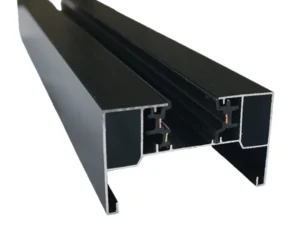
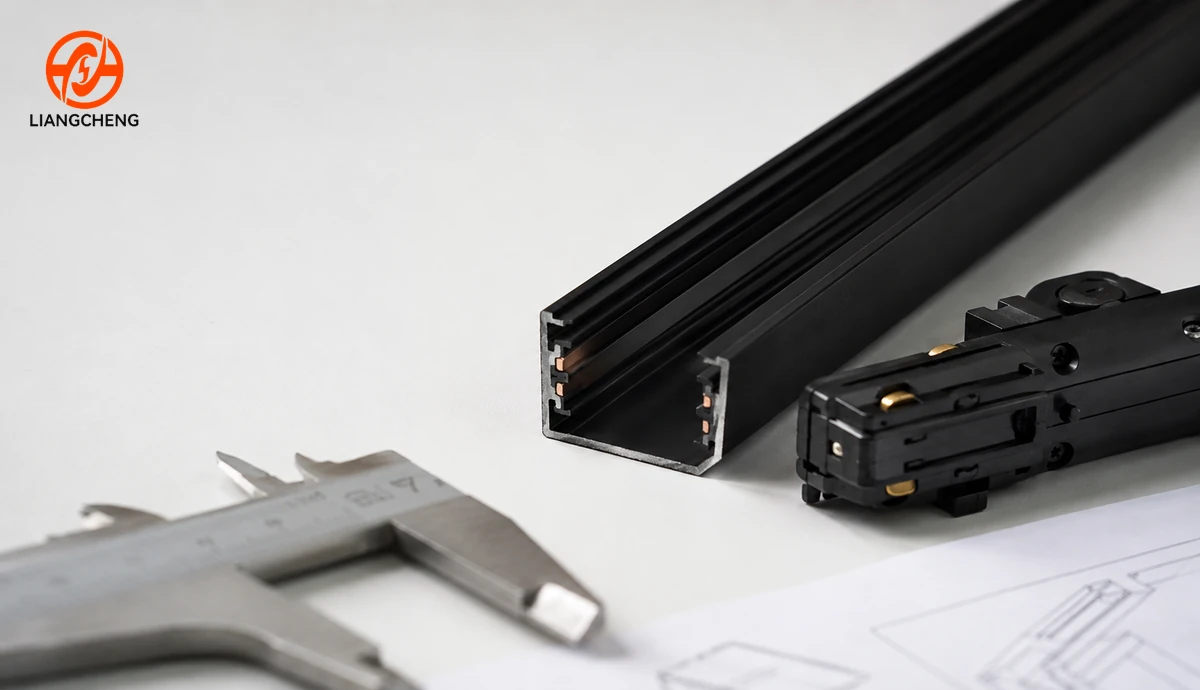
The dimensional package should contain rail length, cross-section, opening geometry, mounting features, relevant tolerances, and a drawing revision. A nominal length defines only one dimension, whereas a cross-section drawing exposes the interface that affects adapters, connectors, and ceiling integration. Refer to the руководство по размерам направляющих для трекового освещения when deciding which dimensions need confirmation.
The length schedule should distinguish finished piece length from assembled run length and total order length. For example, 100 pieces at 2,000 mm and 200 pieces at 1,000 mm both total 200 meters, but they create different cutting, handling, joint, and packaging requirements. Listing piece quantities and units prevents an apparently equivalent meter total from masking a different deliverable.
The drawing register should identify the current file, revision, date, and approval status for every applicable component. A PDF reference plus editable geometry can be more useful than an unnumbered screenshot, but the RFQ must state which file controls dimensions. Require the supplier to flag contradictions instead of selecting whichever dimension is easier to manufacture.
What extra evidence is needed for a replacement rail?
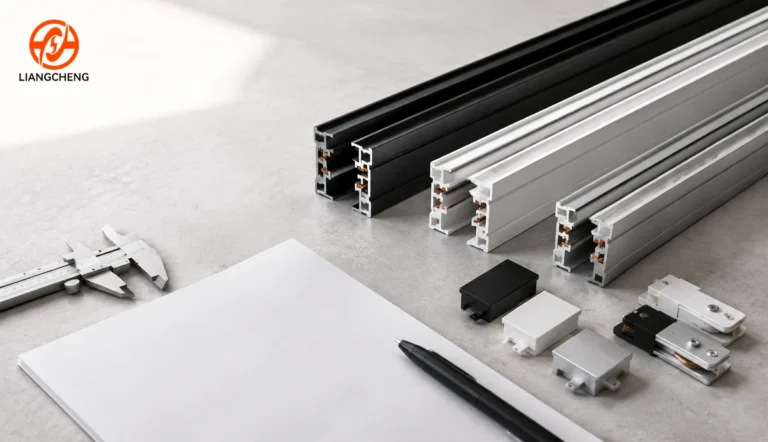
A replacement-track RFQ should include clear end-view photographs, markings, measured profile dimensions, contact positions, adapter photographs, feed details, and a physical sample when available. Photographs support initial identification, while a matched sample supports practical interface evaluation. Neither visual similarity nor an informal product nickname should be presented as proof that a replacement is compatible.
The compatibility requirement should state whether existing luminaires, adapters, connectors, or feeds must remain in use. A completely coordinated new system offers a different evaluation boundary from a replacement rail connected to existing components. The track light adapter compatibility checklist provides evidence fields that help suppliers quote the correct evaluation scope without promising universal interchangeability.
How should mounting and layout information be supplied?
The mounting section should identify surface-mounted, suspended, or recessed installation and describe the ceiling or supporting structure. A suspended arrangement requires different hardware and coordination from a surface-mounted arrangement, so mounting method should never be left implicit. Provide intended suspension drop, relevant ceiling details, fixture mass, and layout constraints, then request the documented mounting arrangement for technical review.
The layout attachment should show run lengths, corners, intersections, feed locations, installation zones, and orientation references. A plan drawing is more reliable than a list of corner connectors because visually similar connectors can have different orientation requirements within a rail family. Ask the supplier to mark proposed part codes on the layout so each quotation line can be reconciled with the intended arrangement.
What should the accessory bill of materials contain?
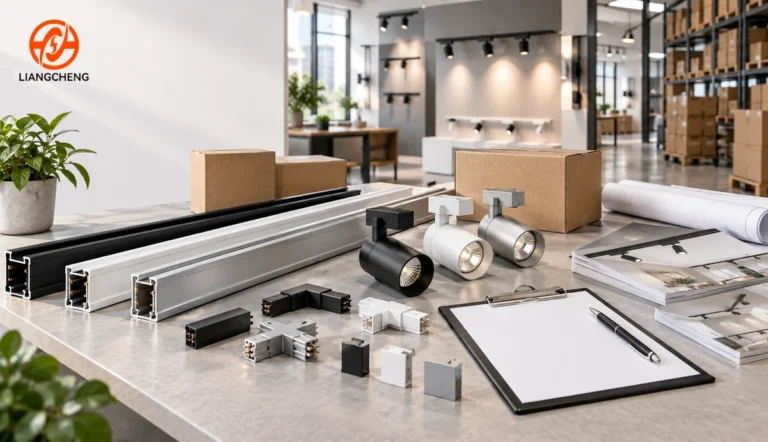
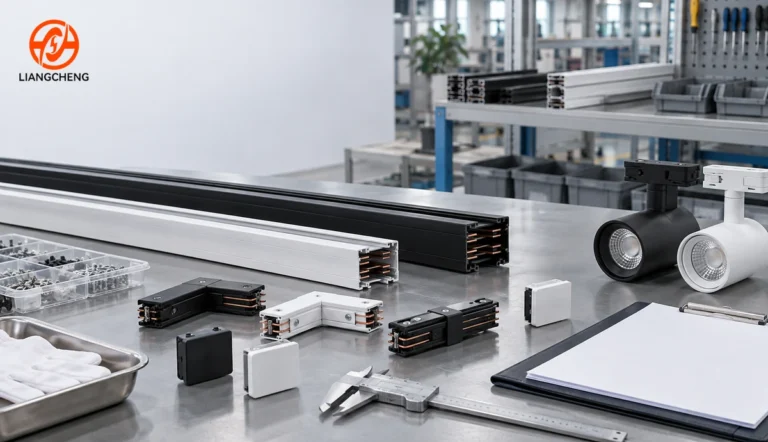
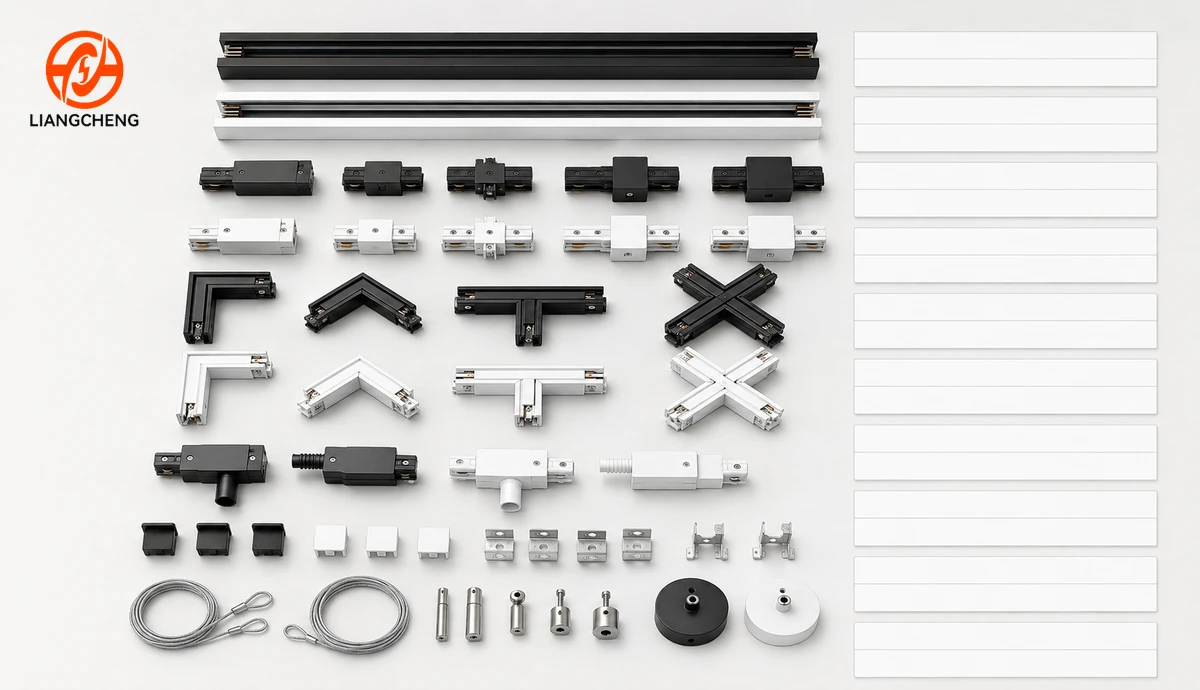
The accessory bill of materials should list feeds, straight joiners, directional connectors, end caps, adapters, suspension parts, and mounting components as separate items. A complete system quotation differs from a rail-only quotation even when the rail price is identical. The track lighting rail accessories guide explains the component functions that buyers should translate into specific RFQ lines.
Each accessory line should contain a buyer reference, supplier part code if known, compatible rail family, finish, orientation, unit, quantity, and drawing reference. Separately list installation quantities and spare quantities rather than hiding a spare allowance inside the total. Clear line-level identification makes missing components visible before the order reaches production or the installation site.
An RFQ should distinguish components supplied loose from preassembled or packaged kits. A carton of individual feeds and caps may contain the same parts as project kits, but counting, labeling, assembly, and receiving effort differ. Request the kit contents and individual replacement codes so buyers can compare the commercial value of convenience without losing component traceability.
How should material, color, and finish be specified?
The material section should state required materials or ask the supplier to declare the proposed materials against the drawing. A named material and controlled specification provide a clearer comparison than a request for premium quality. Where material selection affects performance, ask for technical justification and supporting records rather than substituting an unsupported grade preference for an engineering requirement.
The finish section should identify coating or anodizing, color reference, texture, gloss expectations, visible surfaces, and the approval method. A physical finish sample can resolve appearance questions that a screen image cannot because displays and lighting change perceived color. Ask whether rails and accessories will be matched to one approved reference and require exceptions to be declared in the quotation.
How should quantities, MOQ, and forecasts be separated?
The quantity schedule should separate the firm opening order, requested price-break quantities, and nonbinding demand forecast. A forecast helps the supplier understand potential repeat business, while a firm quantity defines the current quotation basis. Combining both into one large number can produce pricing assumptions that fail when the actual first order is much smaller.
The MOQ request should ask for minimums by product, length, finish, packaging variant, and total order where applicable. A minimum for a standard rail may differ from a minimum for custom packaging or a special finish. Request these constraints separately so a distributor can revise the assortment intelligently instead of treating every quoted minimum as a universal factory rule.
What quality and documentation requirements belong in the RFQ?
The quality section should identify measurable acceptance characteristics, inspection methods, sampling arrangements, and the approval authority. Dimensional fit, straightness, finish appearance, correct component identity, and agreed functional checks provide a more actionable basis than defect-free quality. Require the supplier to identify which checks are included in the price and which need additional arrangements.
The documentation request should name the destination market and ask for evidence covering the actual proposed models and configuration. A general factory certificate or website badge is less useful than traceable documentation linked to the quotation. Have a qualified reviewer confirm applicable requirements; this RFQ guide does not establish legal compliance or authorize installation.
The substitution rule should require written disclosure of deviations before approval. A separately identified alternative can be evaluated for fit, cost, and lead time, whereas an unannounced substitution makes quotations misleading. Ask suppliers to list every exception to drawings, materials, ratings, finish, packaging, and documentation instead of leaving the buyer to discover differences after delivery.
What sample and tooling questions should be asked?
The sample request should define sample quantity, rail lengths, accessory combinations, finish, packaging scope, evaluation purpose, and expected approval record. A short display sample can demonstrate appearance, while a complete matched set is better suited to interface and assembly review. Request sample cost and timing separately from production pricing because the deliverables and preparation effort may differ.
The tooling request should distinguish an existing profile with custom cutting from a new cross-section or specially developed component. New geometry may require different development and validation work than a standard product variant. Ask for tooling charges, ownership arrangements, maintenance responsibilities, modification costs, and sample approval milestones without assuming that a quotation automatically transfers design rights.
How should private label and packaging requirements be presented?
The private label section should specify logo files, product codes, label content, manual language, carton artwork, barcode responsibilities, and approval revisions. A branded carton is a different deliverable from a fully controlled product identity system. The private label track rail product line guide explains how SKU and document consistency support repeat orders beyond the initial artwork approval.
The packaging section should state pieces per pack, surface protection, end protection, accessory separation, carton limits, receiving constraints, and requested shipment grouping. Retail packs and bulk project packs serve different handling needs, so a standard export carton description is not enough for comparison. Use the long track rail packaging guide to identify the protection questions relevant to the intended route.
Which delivery and commercial fields make prices comparable?
The delivery schedule should separate sample readiness, sample approval, production completion, dispatch, and required arrival. A dispatch date differs from an arrival date because transport and receiving activities occur between them. Ask suppliers to state the event that starts lead time, such as deposit and drawing approval, so the quotation does not depend on an invisible prerequisite.
The pricing schedule should specify currency, pricing unit, quantity tier, delivery basis, named location, quotation validity, payment milestones, and separately charged items. A per-meter rail price cannot be compared directly with a per-piece system price. Request samples, tooling, special packaging, inspection, and documentation as distinct lines to identify the actual scope of each offer.
The logistics request should identify destination, preferred transport mode, shipment dimensions or handling limits, and required packing information. A factory collection offer and a destination-delivery offer include different services, so buyers should compare the same agreed basis. Confirm freight, insurance, taxes, and other inclusions or exclusions explicitly with the relevant parties rather than assuming they are covered.
What does an incomplete RFQ look like compared with a useful one?
An incomplete RFQ might request 500 meters of black track with connectors and the best price. A useful RFQ splits those meters into piece lengths, identifies the rail family, attaches the layout, lists each connector, and specifies finish and commercial assumptions. The extra structure improves comparison because suppliers no longer need to invent the missing product and delivery scope.
| RFQ field | Incomplete wording | Useful replacement |
|---|---|---|
| Product identity | Three-wire track | Drawing reference, rail series, conductive-path functions, required ratings |
| Quantity | 500 meters | Piece count by finished length, finish, and SKU |
| Compatibility | Fits existing lights | Existing adapter codes, photos, samples, and evaluation requirement |
| Аксессуары | Include connectors | Itemized parts with orientation, quantity, and layout reference |
| Завершить | Good black finish | Process, reference sample, texture, gloss, and approval method |
| Timing | Delivery soon | Required milestones and destination arrival target |
| Price | Best price | Currency, unit, quantity tier, delivery basis, and exclusions |
Which RFQ template can buyers copy?
The following track rail RFQ template separates mandatory buyer inputs from supplier confirmations. A fillable checklist is easier to reuse than a narrative email because missing fields stay visible. Replace every bracketed field with verified information or mark it as pending confirmation; the template is an inquiry framework, not an approved technical specification.
Subject: Track Rail RFQ - [Project or Program] - [RFQ Number / Revision]

Buyer: [Company, Contact, Email, Destination]
Application: [Distributor Stock / New Project / Replacement]
Quotation stage: [Budget Estimate / Defined Production Scope]
Response deadline: [Date and Time Zone]

1. Rail identification
   [Series, Model, Drawing Number, Revision, Sample Reference]
2. Electrical requirements
   [Supply, AC/DC, Frequency if Applicable, Ratings,
   Circuit Functions, Protective Conductor, Control Method]
3. Installation and interface
   [Mounting Type, Layout, Existing Adapter References,
   Fixture Details, Required Compatibility Evidence]
4. Dimensional schedule
   [Finished Length, Profile, Tolerances, Unit, Quantity per SKU]
5. Materials and finish
   [Required Specification or Supplier Proposal,
   Process, Color Reference, Texture, Sample Approval]
6. Accessory bill of materials
   [Code, Description, Orientation, Finish, Unit, Quantity,
   Spares, Layout Reference, Loose Parts or Kits]
7. Samples and quality
   [Sample Set, Inspection Criteria, Test Evidence,
   Documentation Scope, Approval Responsibility]
8. Branding and packaging
   [Logo, Labels, Manuals, Pack Quantity, Protection,
   Carton Limits, Artwork Revision]
9. Commercial basis
   [Currency, Price Breaks, Delivery Basis and Named Point,
   Payment Milestones, Validity, Separate Charges]
10. Schedule and response
    [Sample Date, Production Milestones, Required Arrival,
    MOQ per Variant, Declared Deviations and Exclusions]

Please return the completed line-item quotation, model references,
technical attachments, lead-time assumptions, and exception list.
Do not replace specified items without written approval.
How should quotations be reviewed after the RFQ is sent?
Quotation review should begin with scope matching rather than ranking unit prices. Map every supplier line to the RFQ line number and mark missing accessories, changed quantities, substituted models, and excluded services. The Руководство по оптовым поставкам алюминиевых рельсов для железнодорожных путей provides broader purchasing context, while the RFQ matrix supplies the exact comparison basis.
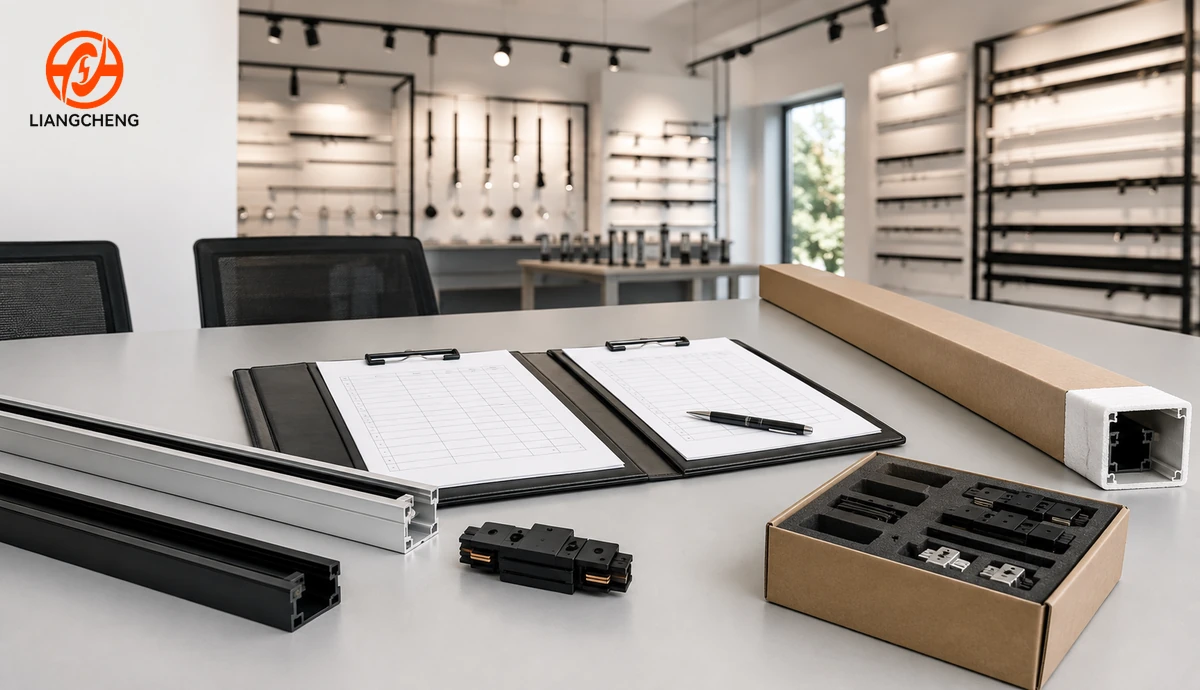
A clarification log should record each question, supplier response, affected line, cost effect, revision, and buyer decision. One shared log is easier to reconcile than answers scattered across messages because a clarification can affect drawings, price, and delivery simultaneously. Issue an updated RFQ to all participating suppliers when a material requirement changes so the revised quotations remain comparable.
What should buyers do when information is missing?
An RFQ with unknown dimensions should label those dimensions as unresolved and request a technical identification step. A clearly marked uncertainty is safer than a guessed measurement because the supplier can separate a provisional estimate from confirmed manufacture. Send available evidence and ask which additional drawing, sample, or measurement is needed to close the gap.
An RFQ with an uncertain order volume should request explicit quantity scenarios rather than imply a firm annual commitment. Separate an opening-order scenario from a repeat-order forecast because each can have different commercial assumptions. Require suppliers to identify which price depends on combined variants, scheduled releases, or other conditions before using it in an internal comparison.
Frequently asked questions about track rail RFQs
Can a track rail quotation be requested without a drawing?
A preliminary track rail quotation can begin with a model reference, clear photographs, dimensions, and intended use. A production quotation needs stronger identification than a visual estimate because compatibility and tolerances affect the supplied system. Ask the manufacturer to identify the missing evidence and label any early price as conditional on technical confirmation.
Should rail and accessory prices be combined?
Rail and accessory prices should normally be itemized even when the buyer also requests a complete-system total. Itemization exposes missing parts, whereas a single bundled price can hide scope differences. Ask for both the component schedule and the total so procurement teams can compare completeness and plan replacement purchases.
Does a low unit price identify the best offer?
A low unit price identifies only one part of a track rail offer. A higher unit price may include packaging, matching accessories, or validation that another offer excludes, so compare equivalent deliverables before judging value. Record every inclusion and unresolved deviation to distinguish cost differences from differences in scope.
Ready to send a track rail RFQ to Liangcheng Lighting?
Liangcheng Lighting offers wholesale track lighting rails and customization options covering lengths, finishes, branding, packaging, and matching accessories, as described on its standard track rail systems page. A requirements-based inquiry is more useful than a general price request because the team can evaluate the requested system and identify details needing confirmation. Product-specific availability and documentation should be confirmed in the quotation.
To request a B2B quotation from Liangcheng Lighting, send your RFQ summary, rail reference or drawings, electrical and mounting requirements, quantities by length and finish, accessory list, sample expectations, packaging needs, destination, and delivery target. If a specification is unknown, mark it clearly rather than guessing. A documented inquiry gives both buyer and manufacturer a practical basis for clarifying scope, reviewing samples, and developing an order-ready proposal.
Нужны индивидуальные решения для трекового освещения?
Свяжитесь с Liangcheng Lighting для получения решений OEM/ODM по алюминиевым трековым системам и профессиональной светотехнической поддержке.