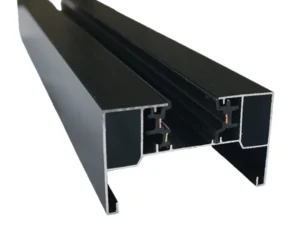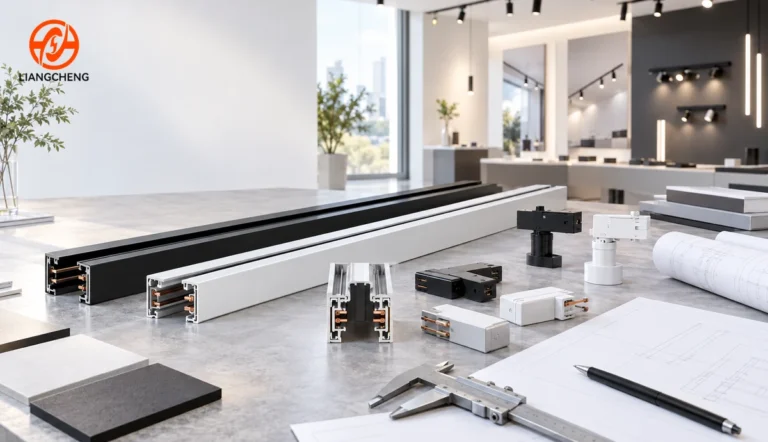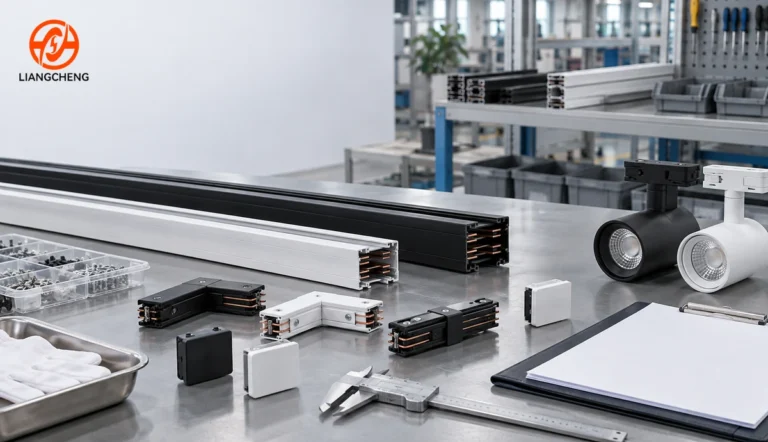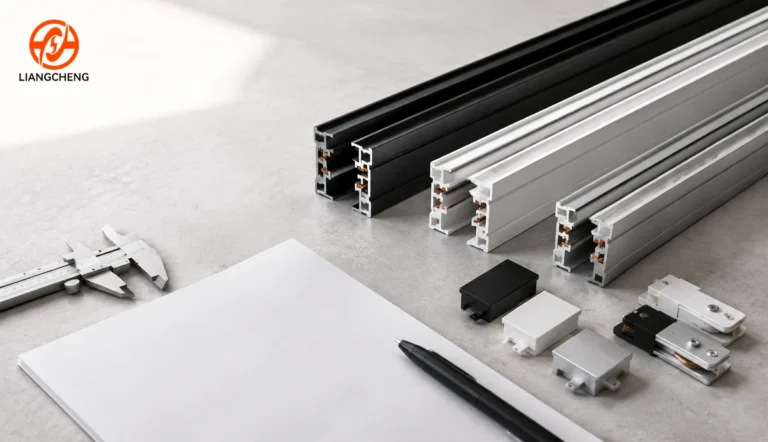







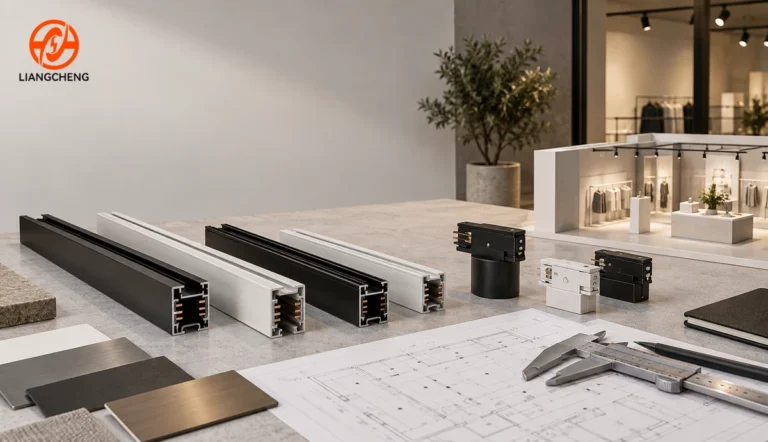

الصين هي المصدر الرئيسي للسكك الحديدية الألومنيوم في العالم - وبالنسبة للمشترين الذين يعرفون ما يجب تقييمه، فإن الشراء مباشرة من المصنعين الصينيين يوفر مزايا كبيرة من حيث التكلفة، وتنوع المنتجات، وقدرات التخصيص.
لكن المشترين الذين يعانون من مشاكل الجودة، والتكاليف المخفية، وموثوقية الموردين، يعتمدون أيضًا على مصادر من الصين. الفرق ليس الحظ. إنه الإعداد.
يغطي هذا الدليل كل عامل مهم عند استيراد قضبان الألمنيوم من الصين - بدءًا من مواصفات المنتج ومعايير المواد إلى خيارات تصنيع المعدات الأصلية، والتكاليف الحقيقية للوصول، ولوجستيات الشحن. سواء كنت مستوردًا لأول مرة أو تتطلع إلى ترقية سلسلة التوريد الحالية لديك، فهذه هي القرارات التي تحدد ما إذا كان برنامج الاستيراد الخاص بك سينجح.
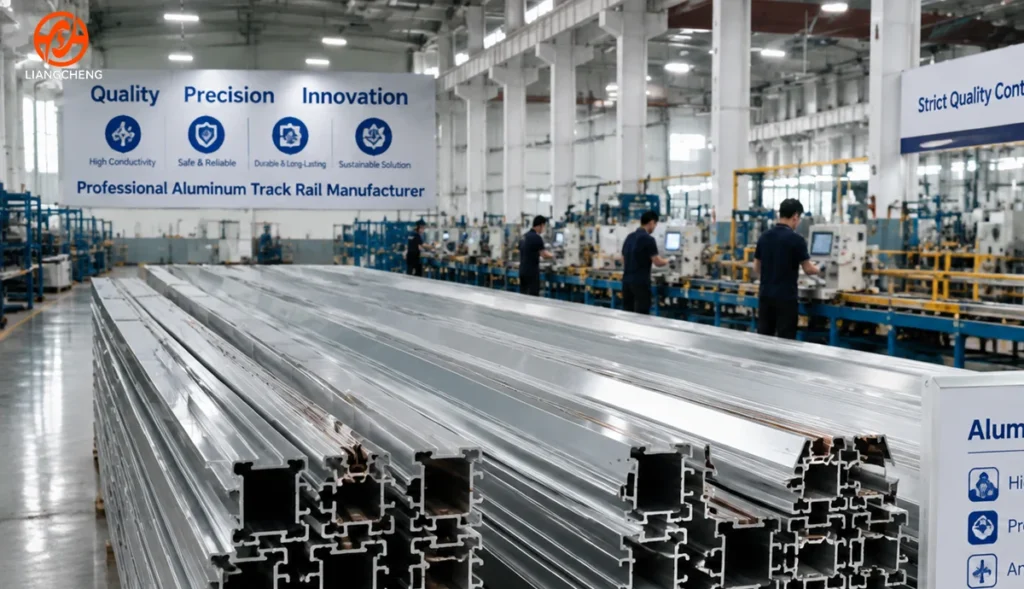
لماذا تستورد المزيد من الشركات ألومنيوم المسارات من الصين
لقد توسع سوق الإضاءة بتقنية LED بشكل كبير عبر القطاعات التجارية، وقطاع التجزئة، وقطاع الضيافة، والقطاع السكني. مع هذا النمو، ازداد الطلب على أنظمة مسارات الألومنيوم — الهيكل الأساسي لأي تركيب إضاءة تعتمد على مسارات.
أصبحت الصين مركز التصنيع المهيمن لقضبان الألمنيوم لعدة أسباب مترابطة:
عمق سلسلة التوريد العمودية. تنتج الصين سبائك الألمنيوم، وقوالب البثق، والمواد الكيميائية المؤكسدة، ومواد المشتتات البلاستيكية، وملحقات التركيب - وكلها ضمن مناطق صناعية متقاربة. هذا التكامل في سلسلة التوريد يعني انخفاض تكاليف الإنتاج وسرعة في أوقات التسليم مقارنة بالمصنعين في أماكن أخرى.
حجم الإنتاج. تعمل مصانع بثق الألمنيوم الصينية الرئيسية بأحجام إنتاج تتيح جودة ثابتة عبر الطلبات الكبيرة. يدير مصنع متوسط الحجم بسعة سنوية تزيد عن 100 ألف طن ضوابط عمليات أكثر صرامة بكثير من عملية صغيرة تنتج 5 آلاف طن.
قدرة التصدير والتصنيع الأصلية / التصنيع حسب الطلب. يمكن للمصنع.
خبرة التصدير. لدى مصنعي سكك حديد المسار الراسخين في قوانغدونغ وجيانغسو وشاندونغ سنوات من الخبرة مع وثائق شهادات CE و RoHS و LVD و EMC و CB - وهي أوراق الامتثال التي يتطلبها المشترون الدوليون.
المشترون الذين يستفيدون من هذه المزايا هم موزعو الإضاءة LED، وتجار الجملة في مجال الأجهزة الكهربائية، والعلامات التجارية المتخصصة في الإضاءة التي تعمل على تطوير خطوط إنتاج تحت علامتها التجارية الخاصة، والمقاولون الذين يتولون تنفيذ المشاريع التجارية، وموردو المشاريع الذين يبحثون عن منتجات تتوافق مع المواصفات المطلوبة.
1. فهم أنواع مختلفة من سكك الألمنيوم قبل الاستيراد
قبل التواصل مع الموردين، عليك أن تكون على دراية تامة بما ستشتريه بالضبط. تشمل قضبان الألمنيوم عدة فئات منتجات متميزة تختلف في هياكلها وطرق تركيبها وخصائص أدائها.
أنواع مقاطع الألومنيوم LED
مظهر LED مثبت على السطح — مثبت مباشرة على سطح مستو (سقف، جدار، خزانة). الأكثر تنوعًا والأسرع في التركيب. يستخدم بشكل شائع في التطبيقات السكنية والتجارية حيث لا يكون من الممكن أو المطلوب التثبيت داخل المادة الأساسية.
إطار LED مدمج — يتم تركيبه في قناة موجهة أو فتحة في الحائط الجاف بحيث يكون السطح الأمامي مساويًا للسطح المحيط. ينتج خط إضاءة نظيفًا وغير منقطع. مفضل لمشاريع الهندسة المعمارية والضيافة الراقية.
مظهر LED معلق — تُعلَّق من السقف باستخدام مجموعات من الأسلاك أو القضبان. تخلق ترتيبات إضاءة معلقة خطية للمكاتب والمطاعم والمساحات التجارية المفتوحة. متوفرة بتكوينات ذات مصدر إضاءة واحد أو مصدرين (إضاءة لأعلى ولأسفل).
مقطع ألومنيوم LED زاوية - مصمم بزاوية جسم 30 درجة أو 45 درجة لتوجيه الضوء إلى أو على طول الزوايا. يستخدم على نطاق واسع في إضاءة خزائن المطبخ، وإضاءة حواف واجهات العرض، ورفوف متاجر التجزئة.
قناة LED مقاومة للماء — مقطع مصنف IP65 أو IP67 مع ختم سيليكون أو بثق سيليكون كامل. مطلوب في الحمامات والمناطق المغطاة الخارجية وأي بيئة تتعرض للرطوبة.
أنواع أنظمة سكك الإضاءة
سكة حديد مغناطيسية — نظام متخصص حيث تتصل وحدات الإضاءة LED وتنخلع مغناطيسيًا، مما يسمح بإعادة التموضع المرن دون الحاجة لأدوات. شائع في تطبيقات البيع بالتجزئة والمتاحف والمعارض.
مسار إضاءة خطي — سكة هيكلية مصممة لأنظمة الإضاءة الخطية المعلقة أو المعلقة. تُستخدم غالبًا في الأماكن التجارية والمكاتب.
مسار سقف - مسار مثبت على السطح أو مدمج يحمل التيار إلى الأضواء والكشافات المتوافقة. متوفر بتكوينات 1 دائرة (2 سلك)، 3 دوائر، 4 دوائر، 6 دوائر، ومغناطيسي.
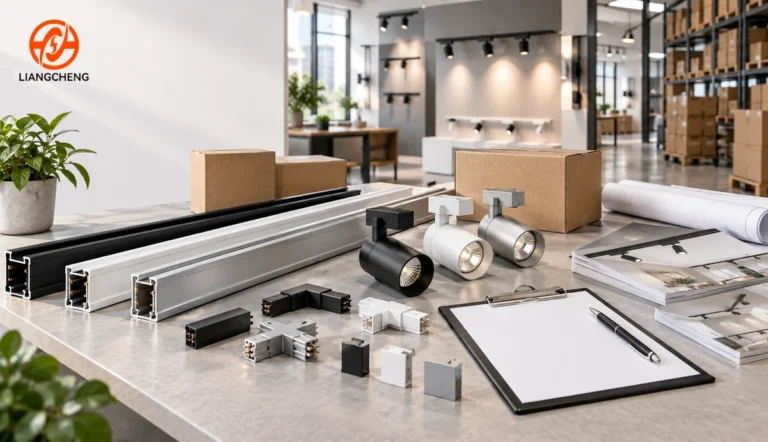
نظام مسار الإضاءة التجارية — أنظمة كاملة تشمل القضبان، ووصلات التوصيل، ووحدات التغذية الطرفية، والأغطية الطرفية، وملحقات التثبيت المتوافقة. ويؤدي توفير نظام كامل إلى تبسيط عملية تحديد المواصفات وتقليل مشكلات التوافق في المشاريع.
المواصفات الرئيسية للتأكد منها قبل الطلب
قبل طلب عروض الأسعار، يرجى تجهيز المواصفات التالية:
- أبعاد المقطع (العرض × الارتفاع بالملم)
- خيارات طول قياسية (1 متر / 2 متر / 3 متر) أو أطوال مقطوعة حسب الطلب
- سماكة جدار الألومنيوم (محددة بالمليمتر)
- تكوين الدوائر لأنظمة سكك الحديد (دائرة واحدة، 3 دوائر، 4 دوائر، 6 دوائر، مغناطيسية)
- مواصفات شريط LED المتوافق (إن أمكن) - عرض الشريط، أقصى واط
- مادة الناشر — PMMA (الأكريليك) أو PC (البولي كربونات)
- تشطيب السطح — مطلي بالأنود (فضي/أسود/ألوان أخرى)، مطلي بالمسحوق، تشطيب مصنع
- متطلبات الأغطية الطرفية والملحقات
تقديم مواصفات كاملة في استفسارك الأول يوفر الوقت لكلا الطرفين ويشير للمورد بأنك مشترٍ جاد.
2. اختيار سبائك الألومنيوم المناسبة وجودة المواد
تعد جودة المواد هي المصدر الرئيسي لأهم الاختلافات في الجودة. فقد يبدو مقطع الألمنيوم متطابقًا من الخارج، في حين يختلف أداؤه اختلافًا كبيرًا في ما يتعلق بتبديد الحرارة، واتساق تشطيب السطح، والمتانة على المدى الطويل — وذلك اعتمادًا كليًّا على مواصفات السبائك ودرجة جودة المواد.
سبائك الألومنيوم الشائعة المستخدمة في مقاطع LED وقضبان المسار
سبيكة الألومنيوم 6063 - المعيار الصناعي لمقاطع LED
6063 هو السبيكة القياسية لإنتاج قطاعات الألومنيوم وملفات السكك الحديدية لمصابيح LED. مزيج خصائصه يجعله مناسبًا تمامًا للتطبيق:
| عقار | 6063-T5 القيمة |
|---|---|
| قوة الشد | 145–195 ميجا باسكال |
| الموصلية الحرارية | 200 واط/متر·كلفن |
| كثافة | ٢٫٧٠ جم/سم³ |
| أداء البثق | ممتاز |
| جودة الأنودة | ممتاز |
| مقاومة التآكل | جيد |
يشير التعيين T5 إلى أن السبيكة قد تم تقويتها اصطناعياً بعد البثق، مما يحسن خصائصها الميكانيكية دون الحاجة إلى معالجة حرارية كاملة بالذوبان. هذا هو التعيين الأكثر عملية لإنتاج مقاطع LED.
سبائك الألومنيوم 6061 — للتطبيقات الهيكلية
يتمتع 6061 بقوة شد أعلى من 6063 (تصل إلى 310 ميجا باسكال في معالجة T6)، ولكنه أصعب في البثق إلى مقاطع عرضية معقدة وأقل انتظامًا في الأكسدة الأنودية. وهو مناسب لمكونات سكك القطار التي تتحمل الأحمال الميكانيكية، ولكنه ليس الأمثل لسكن ملامح LED حيث تكون جودة الأكسدة الأنودية والتشطيب السطحي مهمين.
ماذا تسأل الموردين عن معايير المواد
يجب أن يكون مصنعو قضبان الألومنيوم الاحترافية قادرين على توفير:
- مواصفات درجة السبائك — تأكيد كتابي للسبيكة المحددة (على سبيل المثال، 6063-T5)
- شهادة مادة — توثيق تركيبة السبيكة وتتبع الدُفعات
- تقرير التركيب الكيميائي — تأكيد أن السبيكة تقع ضمن حدود المواصفات
- مواصفات سمك الجدار والتسامح — يجب تحديد الحد الأدنى لسمك الجدار في ورقة مواصفات المنتج، وليس مجرد “سمك قياسي”
علامة حمراء: أي مورد لا يستطيع تحديد السبيكة التي يستخدمها، أو يقدم أسعارًا أقل بكثير من السوق دون تفسير، من المحتمل أن يستخدم الألومنيوم المعاد تدويره أو المخلوط الذي يكون أداؤه ضعيفًا في تبديد الحرارة والأنودة. هذه واحدة من أكثر مشاكل الجودة شيوعًا في مصادر المقاطع ذات الأسعار المنخفضة.
3. تقييم قدرة الشركة المصنعة على الإنتاج
الاختيار بالتعامل مباشرة مع المصنع بدلاً من شركة تجارية يمنحك وصولاً مباشراً إلى ضوابط الإنتاج والدعم الهندسي وأسعار أفضل. ولكن ليست كل المصانع تمتلك القدرة المماثلة.
أسئلة يجب طرحها قبل الالتزام بمورد
استخدم هذه الأسئلة لفحص الموردين في محادثاتك الأولية:
- هل أنت مصنع أم شركة تجارية؟ (اطلب وثائق تسجيل المصنع إذا كان الأمر غير واضح)
- كم عدد خطوط بثق الألمنيوم التي تديرونها ، وما هي تصنيفات الحمولة الخاصة بها؟
- ما هي طاقتك الإنتاجية الشهرية لمقاطع السكك الحديدية؟
- هل لديكم أنودة وطلاء بالمسحوق داخليًا، أم أنكم تستعينون بمصادر خارجية للمعالجة السطحية؟
- هل يمكنك تقديم تخصيص OEM - مقاطع عرضية مخصصة، وألوان مخصصة، وتعبئة بعلامة تجارية خاصة؟
- إلى كم بلد تقوم بالتصدير حالياً، وهل لديك وثائق من تلك الأسواق؟
ما الذي يجب أن تمتلكه مصانع إضاءة LED الاحترافية المصنوعة من الألومنيوم
تتطلب عملية تصنيع سكة ألومنيوم عالية الجودة القدرات التالية داخليًا أو تحت سيطرة وثيقة:
بثق الألمنيوم — معدات ضغط قادرة على إنتاج المقطع العرضي للملف الشخصي بتفاوت أبعاد ضمن ±0.1 مم على الأبعاد الرئيسية. بالنسبة لأنظمة مسارات السكك الحديدية، يعد التفاوت على قناة السكك الحديدية الحاملة للتيار أمرًا بالغ الأهمية لتوافق التركيبات.
قطع بدقة — مناشير آلية ذات أسطح قطع نظيفة. تشير الأطراف المشوهة أو خشنة القطع إلى معايير أقل لمراقبة الجودة وستسبب مشاكل عند التركيب.
تصنيع باستخدام الحاسب الآلي — للتشكيل، الحفر، والتصنيع المخصص للملحقات والموصلات.
معالجة السطح — حمام الأنودة في الموقع هو مؤشر قوي لمراقبة الجودة. الأنودة الخارجية تقدم المزيد من المتغيرات. اسأل عن إدارة كيمياء حمام الأنودة وكيف يتم التحكم في اتساق اللون عبر الدفعات.
الطلاء بالمسحوق — لخيارات الألوان المخصصة والتطبيقات الخارجية.
تجميع — لمجموعات القطع الكاملة مع ناشرات، وأغطية نهائية، وملحقات تثبيت مجمعة مسبقًا.
فحص الجودة — قسم مراقبة جودة مخصص مزود بمقاييس الأبعاد، وبروتوكولات فحص الأسطح، وعمليات التوثيق.
٤. تقييم جودة المعالجة السطحية والتشطيب
يؤثر المعالجة السطحية على كل من مظهر وعمر خدمة سكة الألومنيوم. كما أنه يحدد التوافق مع بيئة المشروع - سكنية داخلية، تجارية، أو خارجية/رطبة.
خيارات المعالجة السطحية الشائعة
الألومنيوم المؤكسد
الأنودة هي عملية كهروكيميائية تحول سطح الألومنيوم إلى طبقة أكسيد متينة، مدمجة في المادة الأساسية بدلاً من تطبيقها فوقها. هذا يجعل الأنودة أكثر متانة من الطلاء في الظروف العادية.
فوائد لمسار السكة الحديد:
- مقاومة للخدش تفوق الدهان
- الحماية من التآكل فعالة في معظم البيئات الداخلية
- مظهر فاخر - تشطيب غير لامع أو شبه لامع موحد
- طلاء سطحي غير موصل كهربائيًا
نطاقات سمك الأكسدة القياسية:
- 10–15 ميكرون: تطبيقات الإضاءة الداخلية القياسية
- 15-25 ميكرون: تطبيقات تجارية ذات استخدام أثقل
- 25+ ميكرون: بيئات خارجية أو عالية الرطوبة
الألوان الأكثر شيوعًا: فضي (مؤكسد طبيعي)، أسود مؤكسد، شامبانيا/برونزي. تتوفر ألوان مؤكسدة مخصصة ولكنها تتطلب كميات دنيا.
ألومنيوم مطلي بالبودرة
يتم تطبيق الطلاء بالمسحوق على بوليمر بالحرارة بشكل كهروستاتيكي، ثم تتم معالجته بالحرارة. تكون النهاية الناتجة أسمك من الأنودة ومتوفرة بألوان غير محدودة فعليًا عبر نظام RAL.
الفوائد:
- نطاق ألوان RAL الكامل - يمكن مطابقة أي لون
- مقاومة قوية للأشعة فوق البنفسجية والعوامل الجوية في التركيبات المخصصة للاستخدام الخارجي
- مقاومة جيدة للصدمات
ملاحظة: الطلاء بالمسحوق يضيف سماكة قابلة للقياس لسطح المقطع الجانبي (عادةً 60-100 ميكرون)، مما قد يؤثر على ملاءمة أغطية الموزع والملحقات إذا لم يتم أخذ ذلك في الاعتبار عند تصميم المقطع الجانبي. تأكد من الموردين أن الملحقات محددة للمقاطع الجانبية المطلية بالمسحوق إذا كنت تستخدم هذه التشطيبات.
مشاكل جودة السطح التي يجب البحث عنها
عند تقييم العينات، افحص بحثًا عن:
- لون أنودة غير متساوٍ — تباين مرئي عبر طول المقطع أو بين المقاطع في نفس الدفعة
- خدوش وأضرار المناولة - فيلم واقٍ غير كافٍ أثناء الإنتاج أو التغليف
- علامات أو خطوط الأكسدة - علامة على ضعف التحكم في كيمياء حوض الأنودة
- فقاعات السطح أو التنقر — مشكلة في جودة المواد أو مشكلة في عملية المعالجة المسبقة
- اختلافات الألوان بين الدفعات — حاسم للمشاريع التي تتطلب تسليمات متعددة؛ اطلب وثائق تحمل لون الدفعة
5. تأكيد متطلبات أداء مقاطع الألومنيوم لـ LED
يجب أن يؤدي مسار السكة لإنارة LED أداءً ميكانيكيًا وحراريًا - وليس مجرد المظهر الصحيح. يجب أن تدفع متطلبات أداء تطبيقك إلى تحديد مواصفات المقطع العرضي الذي تبحث عنه.
أداء تبديد الحرارة
يعمل المقطع الألومنيومي في نظام إضاءة LED كمشتت حراري. تولد شرائط LED الحرارة عند نقطة الالتقاء بين شريحة LED ولوحة الدوائر. بدون انتقال فعال للحرارة، ترتفع درجة حرارة نقطة الالتقاء، مما يؤدي إلى تسريع تدهور اللمعان وتقليل العمر الافتراضي.
العوامل التي تحدد أداء تبديد الحرارة:
- سمك الجدار — جدران أسمك تعني كتلة ألومنيوم أكبر وسعة تخزين حراري أعظم
- مساحة مقطع عرضي — المقاطع الأكبر ذات المساحة الإجمالية من الألومنيوم تبدد الحرارة بشكل أكثر فعالية
- الموصلية الحرارية للسبيكة — 6063 عند تقريبًا 200 واط/م·كلفن يؤدي أداءً جيدًا لتطبيقات LED
- منطقة الاتصال — الدرجة التي يلامس بها الركيزة الشريطية لمصباح LED القاعدة الألومنيوم؛ يعد الحجم المناسب للقناة أمرًا بالغ الأهمية
لتطبيقات شرائط LED عالية الطاقة (أعلى من 10 وات/متر)، حدد مقاطع ذات سمك جدار 1.2 مم أو أعلى وتأكد من أن أبعاد القناة الداخلية تتطابق مع عرض شريط LED الخاص بك لتحقيق أقصى قدر من التلامس.
عوامل التصميم الهيكلي لأنظمة السكك الحديدية
بالنسبة لأنظمة مسارات نقل التيار (دائرة واحدة، 3 دوائر، 4 دوائر، 6 دوائر)، تنطبق اعتبارات هيكلية إضافية:
- سمك الجدار عند قناة الموصل — يجب تحديده وفقًا لمتطلبات التيار للنظام (عادةً 10 أمبير - 16 أمبير لكل دائرة)
- مادة الموصل وتصنيفه — تأكيد أن مقطع موصل النحاس (مم²) يتطابق مع متطلبات شدة التيار للنظام
- طريقة التثبيت — التثبيت على السطح أو الغائر أو المعلق يحدد الملحقات والحمل الهيكلي الذي يجب أن يتحمله المسار
- تصنيف الامتداد — للأنظمة المعلقة، تأكد من الحد الأقصى للمسافة الموصى بها بين نقاط الدعم عند الحمل المخصص للتثبيت
6. التحقق من شهادات الموردين وضمان الجودة
يجب على المشترين الدوليين عدم تقديم طلبات شراء بالجملة قبل التحقق من حالة الشهادات. فالشهادات تحل المشكلات التي تنشأ في المراحل اللاحقة — مثل التخليص الجمركي، والامتثال للمعايير الكهربائية في سوق الوجهة، والتغطية التأمينية.
شهادات هامة حسب السوق
| شهادة | النطاق | مطلوب من أجل |
|---|---|---|
| شهادة المطابقة الأوروبية + التوجيه الخاص بالجهد المنخفض + التوافق الكهرومغناطيسي | التوجيه الأوروبي للجهد المنخفض، التوافق الكهرومغناطيسي | الأسواق الأوروبية (إلزامي) |
| رو إتش إس | تقييد استخدام المواد الخطرة | الاتحاد الأوروبي، المملكة المتحدة، العديد من الأسواق العالمية |
| سي بي | الاختبارات الدولية للسلامة عبر مخطط IECEE | أسواق متعددة عبر اختبار واحد |
| آيزو 9001 | نظام إدارة الجودة | مؤشر ثقة واسع للمشترين |
| TÜV GS | الفحص الفني الألماني، شهادة السلامة | الأسواق الأوروبية، التموضع المتميز |
| الوصول | الامتثال للمواد الكيميائية في الاتحاد الأوروبي | الأسواق الأوروبية |
هام: اطلب تقارير اختبار فعلية، وليس مجرد شعارات شهادات. شعار شهادة على موقع ويب أو صورة منتج لا يؤكد شيئًا. يجب أن يظهر تقرير الاختبار نموذج المنتج المحدد الذي تم اختباره، ومختبر الاختبار، وتاريخ الإصدار. تأكد من أن الشهادة لم تنته صلاحيتها.
بالنسبة لأنظمة مسارات السكك الحديدية تحديدًا - التي تحمل التيار الكهربائي - فإن شهادتي LVD و EMC ليست اختيارية للسوق الأوروبية. تأكد من أن الشهادة تغطي شدة التيار المحددة وتكوين الدائرة للمنتج الذي تطلبه.
عملية فحص الجودة قبل الشحن
قم ببناء فحص الجودة في عملية الشراء الخاصة بك، خاصة بالنسبة للطلبات الأولى والموردين الجدد.
ما الذي يجب فحصه قبل الشحن:
- فحص الأبعاد — أبعاد المقطع العرضي والطول مقابل المواصفات، مع وثائق التفاوت
- فحص الأسطح - توحيد عملية الأنودة أو الطلاء، خلو السطح من الخدوش، اتساق اللون مقارنة بالعينة المعتمدة
- قياس سمك جدار الألومنيوم — باستخدام مقياس الموجات فوق الصوتية؛ تحقق مقابل المواصفات
- الاختبار الكهربائي لسكك القطار — استمرارية الموصل، مقاومة العزل، عزل الدائرة بين الموصلات
- اختبار اتساق الألوان — قارن عينات الدُفعات بالمعيار اللوني المعتمد تحت إضاءة متسقة
- Packaging inspection — confirm protective film, carton integrity, and labeling accuracy before loading
For orders above $20,000 USD, third-party pre-shipment inspection by a firm like SGS, Bureau Veritas, or Intertek adds a layer of independent verification. The cost is typically $250–400 USD per inspection and is almost always worth it for new supplier relationships.
7. Compare Aluminum Track Rail Suppliers: Evaluation Framework
Don’t choose a supplier based on the lowest quoted price. The cheapest price at the factory gate rarely remains the lowest cost when quality issues, delays, and re-orders are factored in.
Use this framework to evaluate suppliers systematically:
| عامل | What to Evaluate |
|---|---|
| Factory experience | Years specifically manufacturing track rail and LED profiles (not general aluminum) |
| Production capability | Extrusion press tonnage, in-house surface treatment, CNC capability |
| Customization | OEM/ODM experience, custom die development track record |
| Quality system | Certifications held, QC team structure, inspection documentation |
| Communication | Technical responsiveness, English capability, willingness to provide documentation |
| Export experience | Number of countries served, familiarity with destination market certifications |
| Sample quality | Request samples before bulk order — evaluate against spec |
| References | Ask for existing customer contacts or case studies in your market |
The most reliable suppliers score well across all eight factors. A factory with exceptional production capability but poor communication will create ongoing friction. A factory with good communication but insufficient certification documentation will create compliance problems at customs.
8. Understand OEM Customization Options
OEM and private label track rail is the choice for lighting brands, larger distributors, and project suppliers who want product differentiation or supply chain control.
Available Customizations for Aluminum Track Rail
المقطع العرضي للملف الشخصي المخصص — new die development creates a unique profile shape. This is the highest level of OEM — no other buyer can replicate your profile without their own die. Die development typically takes 7–15 days and costs RMB 3,000–10,000 depending on complexity.
طول مخصص — profiles cut to specification rather than standard 1m/2m/3m lengths. Useful for projects or retail programs where standard lengths create waste.
Custom color — custom anodize colors (requires minimum quantity for bath setup) or custom RAL powder coat (standard palette available from stock, custom RAL requires minimum).
Logo printing or embossing — brand marks on the profile body, end caps, or diffuser cover labels.
Custom packaging design — branded retail boxes, custom carton markings, private label documentation. Important for brands protecting their identity at the distributor level.
New mold for accessories — custom end caps, mounting clips, or junction boxes to match a proprietary system.
When to Develop a Custom Profile
Custom profile development makes commercial sense when:
- You’re building a private label lighting product line that needs visual differentiation
- A project specification requires a cross-section dimension not available in the manufacturer’s standard range
- You want to prevent your distributor network from sourcing the same product directly from the factory
- You’re a retail chain that needs consistent product across multiple suppliers and needs a defined specification standard
MOQ guidance for OEM: Most factories require 500–1,000 linear meters per SKU for custom profile production. Standard catalog profiles in private label packaging often have lower MOQ thresholds of 200–500 meters.
9. Calculate the Real Import Cost from China
The factory price is only one component of your landed cost. Buyers who focus only on the ex-works price often find the economics look very different by the time the product arrives in their warehouse.
Total Landed Cost Components
| Cost Item | Notes |
|---|---|
| Product price (EXW) | Factory gate price, your baseline |
| Mold/tooling cost | One-time charge for custom profiles; amortize over projected order volume |
| Domestic trucking (China) | Factory to port; typically $100–300 USD per FCL depending on distance |
| Export documentation | Commercial invoice, packing list, certificate of origin; usually included by factory |
| Inspection cost | Pre-shipment inspection, $250–400 USD if using third-party |
| Sea freight (FCL) | $1,200–3,500 USD per 20′ container depending on origin port and destination; rates fluctuate |
| Destination port charges | THC, documentation fees; varies by port |
| Customs duties / tariffs | Varies by HS code and destination country; confirm before quoting |
| VAT at import | Varies by country; may be recoverable for registered businesses |
| Local trucking (destination) | Port to your warehouse |
| Packaging cost | Protective film, cartons; confirm whether included in product price |
For aluminum track rail, the HS code is typically 7610.10 (aluminum structures and parts) or 8547.90 (electrical conduit fittings), depending on whether the product is certified as an electrical component. The correct HS code affects the duty rate — clarify this with your customs broker before importing.
How to Reduce Import Costs
اطلب بكميات تعادل حمولة حاوية كاملة. The per-unit economics improve significantly when filling a 20′ or 40′ container versus LCL (less than container load) shipments.
Combine multiple SKUs in one container. If ordering several profile types from one supplier, consolidating into a single container shipment reduces per-SKU logistics overhead.
Optimize profile lengths for carton efficiency. 2-meter profiles pack more efficiently than 3-meter profiles for most standard container dimensions. Discuss packaging optimization with your supplier before production.
Work directly with manufacturers, not trading companies. Eliminating the middleman typically saves 10–20% on product cost. The tradeoff is more sourcing work upfront — which this guide helps you do effectively.
Build long-term relationships. Suppliers offer better pricing, priority production scheduling, and more flexibility to long-term buyers. Multi-year purchasing agreements or annual volume commitments can unlock meaningful price advantages.
10. Shipping and Packaging Considerations for Aluminum Track Rail
Aluminum profiles are long, relatively fragile on the surface, and prone to damage if packaging is inadequate. Getting shipping and packaging right prevents claim headaches.
Packaging Requirements for Export
Minimum acceptable export packaging for aluminum track rail:
- Individual protective film wrap on every profile — this prevents surface scratching between profiles in the bundle
- PE foam or corrugated cardboard interleaving between bundles
- Double-wall export cartons with corner and edge reinforcement
- For profiles over 2 meters: wooden crates or custom packaging to prevent mid-span bending
- Accurate carton marking — profile type, finish, length, quantity, gross weight
Inspect packaging samples from your supplier before your first production order. Poor packaging is one of the most common sources of damage claims on aluminum profile shipments, and damage that occurs in transit can be difficult to claim if the packaging doesn’t meet standard freight insurance requirements.
Shipping Mode Options
Sea Freight — recommended for most aluminum track rail orders
Sea freight is the standard mode for aluminum profile imports and makes commercial sense for almost all orders above sample quantities. Container load (FCL) shipping gives you full control over loading and inspection. For smaller orders, LCL (consolidation) is available but adds per-shipment handling costs.
Transit times to major destinations:
- China to Europe: approximately 25–35 days
- China to North America (West Coast): approximately 14–20 days
- China to South America: approximately 30–40 days
Air Freight — for samples and urgent small orders
Air freight is appropriate for sample shipments (typically under 30 kg) and genuinely urgent small orders where the carrying cost of stock-out exceeds the freight premium. For production orders, the cost premium over sea freight makes air freight economically impractical for most buyers.
11. Common Mistakes When Importing Aluminum Track Rail from China
These are the errors that experienced importers have learned to avoid — often the hard way.
Mistake 1: Choosing the Cheapest Supplier
The lowest price almost always signals compromised material quality, insufficient wall thickness, or substandard surface treatment. A profile that fails after 12 months in a commercial installation generates warranty claims, replacement costs, and customer relationship damage that far exceeds the savings on the original order.
Evaluate total value — quality, consistency, service, certification — not just unit price.
Mistake 2: Skipping Sample Approval
Never proceed to bulk production without approving physical samples against your specification. Samples allow you to verify dimensional accuracy, surface quality, color match, accessory compatibility, and packaging standard before committing to production quantities. Any supplier unwilling to provide samples before a bulk order is a supplier to avoid.
Mistake 3: Ignoring Packaging Standards
Long aluminum profiles shift in transit unless packaging is designed to hold them. Profile-to-profile contact during shipping creates surface scratches that make products unsaleable. Protective film on every profile, properly designed cartons, and appropriate void fill are not optional — they’re requirements you should specify in writing before production.
Mistake 4: Not Verifying Certification Coverage
A CE certificate that covers a different product model, a different amperage rating, or that has expired is worthless. Request the actual test report for the specific product you’re ordering and verify that the certification scope matches your requirements. Check the issue and expiry dates.
Mistake 5: Not Clarifying After-Sales Support
Before committing to a supplier, understand their policy on defective products, batch quality variance, and replacement supply. A supplier who becomes unresponsive after payment is a common complaint — and one that’s easier to screen for before the first order than to manage afterward. Ask for their written quality guarantee and replacement process.
12. Why Work with a Professional Aluminum Track Rail Manufacturer in China?
The right Chinese manufacturer doesn’t just supply a product — they become a technical partner who helps you solve specification challenges, manage costs, and build a consistent supply chain.
Characteristics of a professional aluminum track rail manufacturer worth working with:
Specialized LED lighting focus — factories that manufacture exclusively for the lighting market understand the product requirements, application environments, and certification landscape better than general aluminum extrusion plants. Specialization shows in the depth of their product range and the quality of their engineering support.
In-house OEM/ODM capability — the ability to develop custom profiles, custom finishes, and private label packaging in-house (not through subcontractors) means faster development cycles and more accountability for the outcome.
Demonstrated export experience — factories serving multiple international markets have already solved the documentation, certification, and logistics challenges that trip up new exporters. Their experience becomes your advantage.
Transparent quality systems — factories that operate ISO 9001 quality management systems, maintain TÜV GS certification, and conduct 100% pre-shipment inspection have built quality into their process rather than trying to catch problems at the end.
Responsive technical support — when you’re specifying track rail for a commercial project, questions about circuit configurations, accessory compatibility, load ratings, and installation requirements need fast, accurate answers. Choose suppliers whose technical team responds in detail, not generic product brochures.
Conclusion: How to Successfully Import Aluminum Track Rail from China
Importing aluminum track rail from China is a proven strategy for lighting distributors, brands, and project suppliers who want competitive costs and genuine OEM capability. The manufacturers exist to serve you — but your success depends on doing the evaluation work properly before committing to production.
Before placing your first bulk order, confirm:
- Product specifications are fully documented — cross-section, alloy, finish, circuit configuration, accessories
- Aluminum material grade is specified as 6063-T5 with documentation available
- Factory capability covers your production volume and surface treatment requirements
- Sample approval is completed against your written specification
- Certifications cover the specific product model and destination market requirements
- Total landed cost is calculated including freight, duties, and inspection
- Packaging standard is confirmed and protects profiles through the full shipping journey
- After-sales and replacement policies are understood before the first order
The right manufacturer partnership delivers consistent quality, reliable supply, and the flexibility to grow your product range as your market develops.
Ready to source aluminum track rail from China? جيانغمن ليانغتشينغ للإضاءة (lclights.com) manufactures complete track lighting systems — including 2-wire, 3-circuit, 4-circuit, 6-circuit, and magnetic track rail — with in-house OEM/ODM capability, CE/RoHS/LVD/EMC/CB certification, and 100% pre-shipment QC inspection. Contact their team with your project specifications for a complete solution proposal.
أسئلة متكررة
What is the minimum order quantity for aluminum track rail from China? Standard catalog products typically start at 200–500 linear meters. Custom profile development (new die) usually requires a minimum of 500–1,000 meters per SKU to justify die costs. For complete track rail systems with circuit configurations, MOQs may be higher — confirm with the supplier before investing in samples.
How do I verify that a Chinese supplier is a factory and not a trading company? Request the business license (营业执照), which shows the registered business type. Factory registrations typically include manufacturing in the business scope. You can also request factory photos and production videos, or conduct a video call factory tour. Trading companies sometimes list manufacturing capabilities they outsource.
What certifications are required to import LED track rail into Europe? For European market sales, track rail systems require CE marking, which involves LVD (Low Voltage Directive) and EMC (Electromagnetic Compatibility) compliance. RoHS and REACH compliance are also required. Request test reports from a recognized notified body — not just certificate logos.
What HS code applies to aluminum track rail? The applicable HS code depends on product configuration. Aluminum structural profiles typically fall under 7610.10 (aluminum structures). Track rail systems with electrical conductors may be classified under 8547.90 (electrical conduit fittings and accessories). Confirm the correct code with your customs broker in the destination country before importing, as it determines the applicable duty rate.
How long does sea freight take from China to my market? Typical transit times by sea freight: Europe 25–35 days; North America West Coast 14–20 days; North America East Coast 25–30 days; South America 30–40 days; Australia/New Zealand 20–30 days. These are transit times from port to port — allow additional time for customs clearance and local delivery.
What is the typical lead time for custom aluminum track rail from Chinese factories? Standard catalog products: 15–20 days after order confirmation. New custom profile with die development: 7–15 days for die, plus 15–20 days production after die approval. Total for custom first order: typically 30–40 days from order to shipment.
هل تحتاج إلى حلول إضاءة مسارات مخصصة؟
اتصل بـ Liangcheng Lighting لحلول قضبان الألومنيوم OEM/ODM ودعم الإضاءة الاحترافي.