






Estimated reading time: 10 minutes
Track spotlights, pendants, and some linear luminaires can all be compatible with a 3-wire rail, but only when each fixture uses the correct adapter for that exact track family. The words “3-wire” do not describe a universal connector. Buyers must match the rail profile, contact positions, grounding arrangement, electrical rating, adapter orientation, and locking geometry. A fixture that looks suitable or slides into the rail is not necessarily electrically compatible.
This guide explains which fixture formats are commonly available for 3-wire rails, how to identify a genuine match, and what buyers should verify before placing an order. The goal is to prevent the expensive compatibility mistakes that occur when a fixture body is selected before its adapter and rail interface are confirmed.
What does “3-wire track rail” mean?
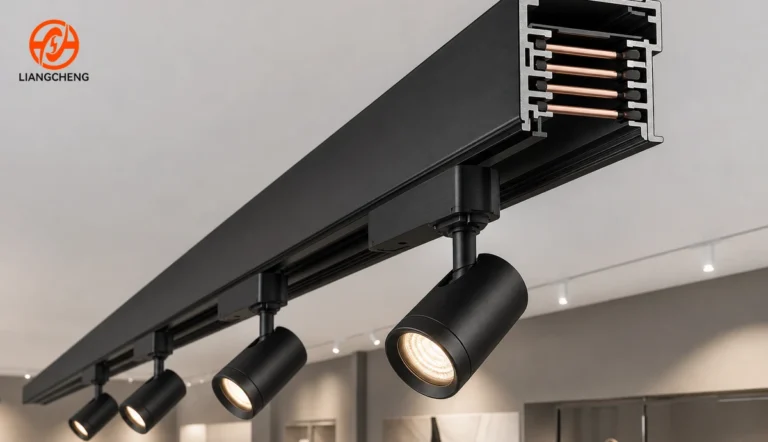
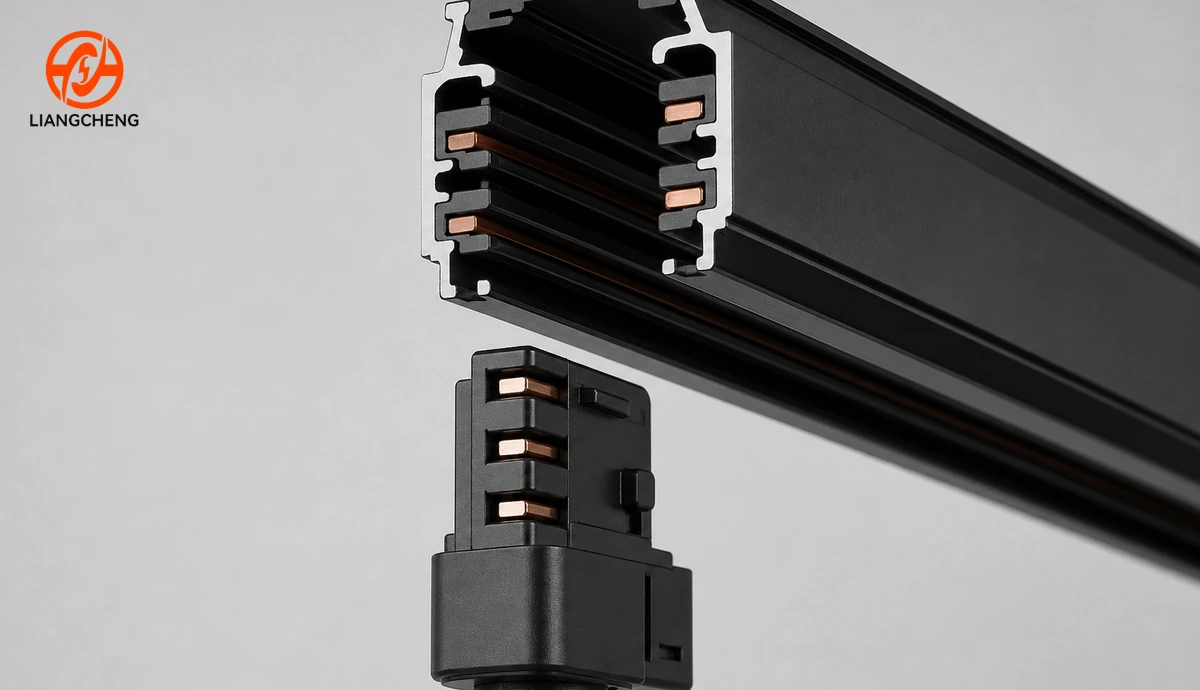
A 3-wire track rail generally contains three conductive paths or is sold as part of a three-contact interface family. In a common single-circuit line-voltage arrangement, the conductors support live, neutral, and protective earth. However, terminology varies between countries, manufacturers, and product families. Some suppliers use wire count, circuit count, and track-family names too loosely.
A 3-wire rail is not automatically the same as a 3-circuit rail. A 3-circuit commercial track normally needs separate live conductors for independently switched groups, plus the required neutral and grounding arrangement. Buyers who need multiple control zones should review the practical distinction between 2-wire and 3-circuit track rail before selecting fixtures.
In some markets, a common H-style track is described as a three-wire, single-circuit line-voltage system. Even then, the label alone is insufficient. The fixture adapter must match the precise H-style rail geometry and the approved product series. The site’s H-Type, J-Type, and L-Type compatibility guide explains why these interface families should not be mixed.
Which track light formats can use a compatible 3-wire adapter?
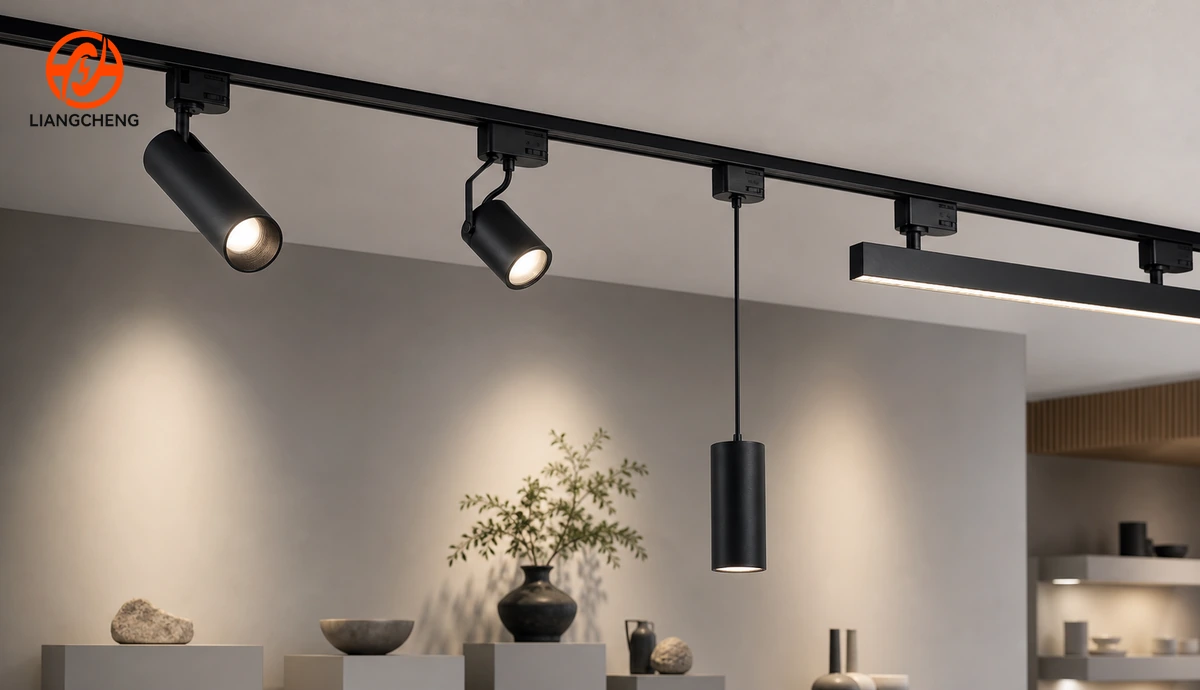
The fixture format does not determine compatibility by itself. The adapter is the component that connects the luminaire to the rail, carries power, provides mechanical support, and maintains the intended grounding and orientation. Several fixture types can therefore share one track family when each model is supplied with the correct approved adapter.
Adjustable cylindrical track spotlights
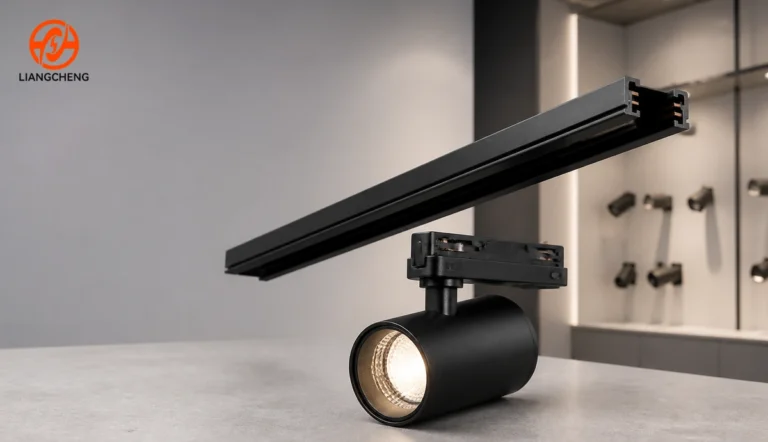
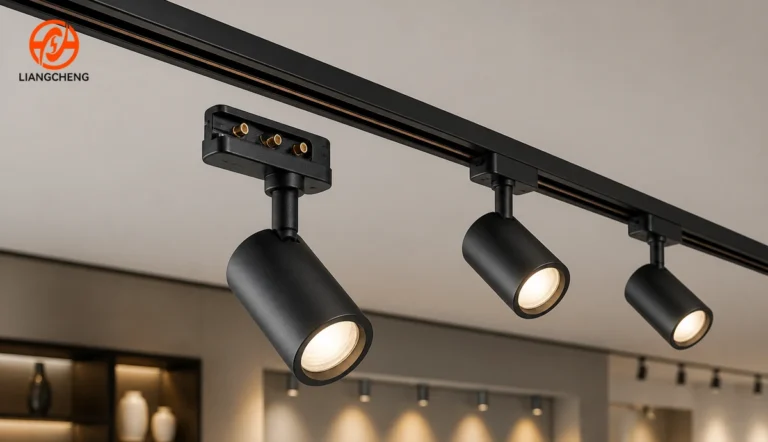
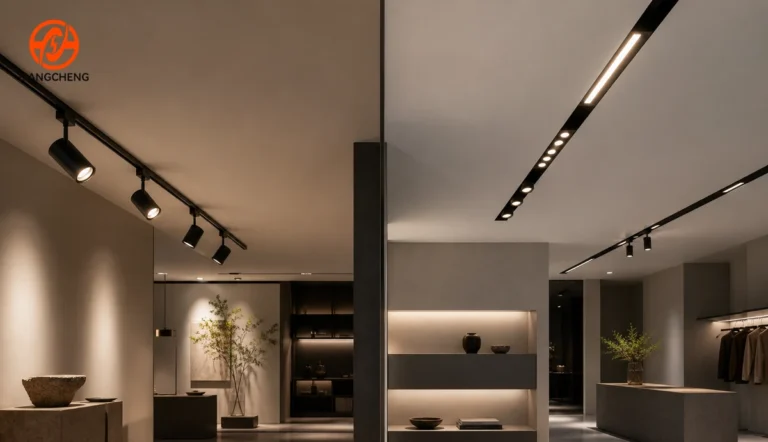
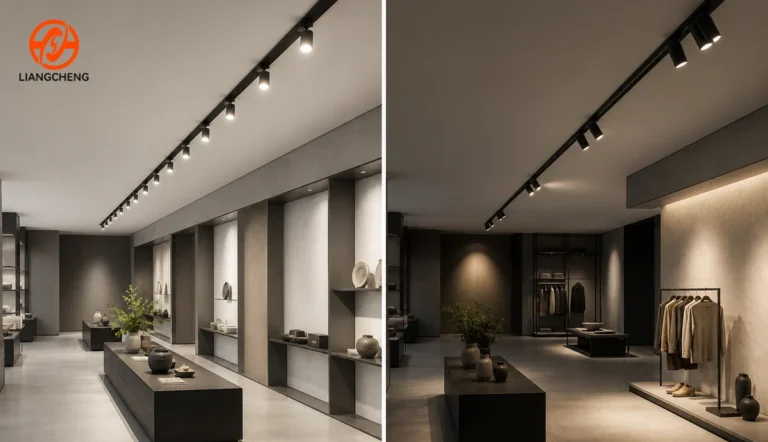
Cylindrical LED spotlights are the most common fixture format for 3-wire rails. They are widely used for retail displays, galleries, hospitality spaces, showrooms, and residential accent lighting. Their rotating and tilting joints allow the beam to be redirected after merchandise, artwork, or furniture layouts change.
A compatible spotlight needs more than the correct number of visible contacts. Buyers should confirm the adapter family, rated voltage, maximum load, grounding provision, locking direction, and physical clearance around the track. The fixture driver may be built into the cylinder, integrated into the adapter housing, or located elsewhere in the luminaire. That design difference can affect size and appearance, but it does not make an incompatible adapter acceptable.
Compact display spotlights
Compact spotlights can be compatible when they use a correctly matched 3-wire adapter. These fixtures are useful in small retail bays, display cabinets with overhead track, galleries with lower ceilings, and residential feature areas. Their lighter visual scale can reduce ceiling clutter.
Small size does not eliminate the need to check mechanical loading. Confirm the weight limit stated for the rail, adapter, connector, and mounting method. The total load includes every fixture on the run, while the electrical load includes the combined wattage and any inrush-current considerations identified by the driver supplier.
Track-mounted pendant lights
Pendant lights can use a 3-wire track system when the pendant is supplied with a purpose-designed, load-rated adapter for that rail. This option allows decorative lighting to be repositioned without relocating a fixed ceiling outlet. It can work well above counters, reception desks, cafe tables, and merchandising islands.
Pendants require additional mechanical attention because they create a hanging load and may introduce leverage or movement. Buyers should verify maximum fixture weight, suspension length, cable strain relief, track mounting spacing, and any restrictions on sloped or vertical installations. A spotlight adapter should not be modified into a pendant adapter unless the system manufacturer explicitly approves that construction.
Linear track luminaires
Some linear LED luminaires are available with adapters designed for conventional 3-wire track families. A linear unit can provide broader illumination than a narrow-beam spotlight and may support ambient, aisle, wall-wash, or task lighting. This makes it useful when a project needs both accent light and a more uniform base layer on the same physical track layout.
Long fixtures can place different forces on the adapter and rail than compact spotlights. Confirm whether the luminaire uses one adapter or multiple support points, how its weight is distributed, and whether the selected rail allows the proposed orientation. Do not assume a magnetic linear module will work on a conventional line-voltage 3-wire rail. Magnetic and conventional systems use different attachment and electrical architectures.
Wall-wash and asymmetric track lights
Wall-wash track lights can be compatible if their adapters match the rail. These fixtures use asymmetric optics or elongated distributions to illuminate vertical surfaces more evenly. They are valuable for art walls, retail shelving, signage, and architectural finishes.
The optical purpose has no direct effect on the connector standard, but fixture orientation matters. The adapter must lock securely while the optical system faces the intended wall. Check whether the rail and adapter are polarized or keyed, and confirm the allowed rotation range before finalizing the lighting layout.
What makes a track light electrically and mechanically compatible?
True compatibility requires every relevant interface to match. Buyers should treat the rail, live-end feed, connectors, adapters, fixtures, and control equipment as one system rather than as unrelated parts.
| Compatibility point | What must match | Why it matters |
|---|---|---|
| Track family | Named interface, approved series, and cross-section | Similar-looking rails can use different contact and locking geometry. |
| Contact arrangement | Number, shape, spacing, position, and spring pressure | Incorrect alignment can prevent power delivery or create an unsafe connection. |
| Grounding | Protective-earth path and adapter contact | Class I metal fixtures may depend on a continuous protective-earth connection. |
| Voltage and frequency | Rail supply and fixture-driver input rating | A mechanical fit does not prove the electrical rating is correct. |
| Keying and polarity | Insertion direction, tabs, ridges, and polarity marks | Keying helps place contacts against the intended conductors. |
| Locking mechanism | Rotation, lever, latch, and mechanical stop | The adapter must remain secure during adjustment and normal use. |
| Load rating | Fixture weight and electrical load limits | Both structural and electrical limits apply to the complete track run. |
| Controls | Driver, dimmer, switching, and circuit arrangement | A fixture can receive power yet remain unsuitable for the planned control method. |
Is every H-Type track light compatible with every 3-wire rail?
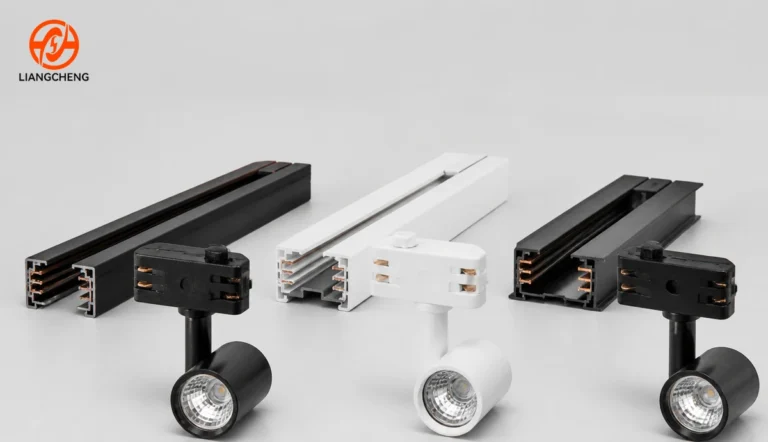
No. H-Type is commonly associated with a three-contact, single-circuit track interface, but product labels are not a substitute for approved compatibility documentation. Suppliers may use terms such as H-style or H-compatible for products with small dimensional or construction differences. Regional voltage, certification, grounding, and accessory requirements may also differ.
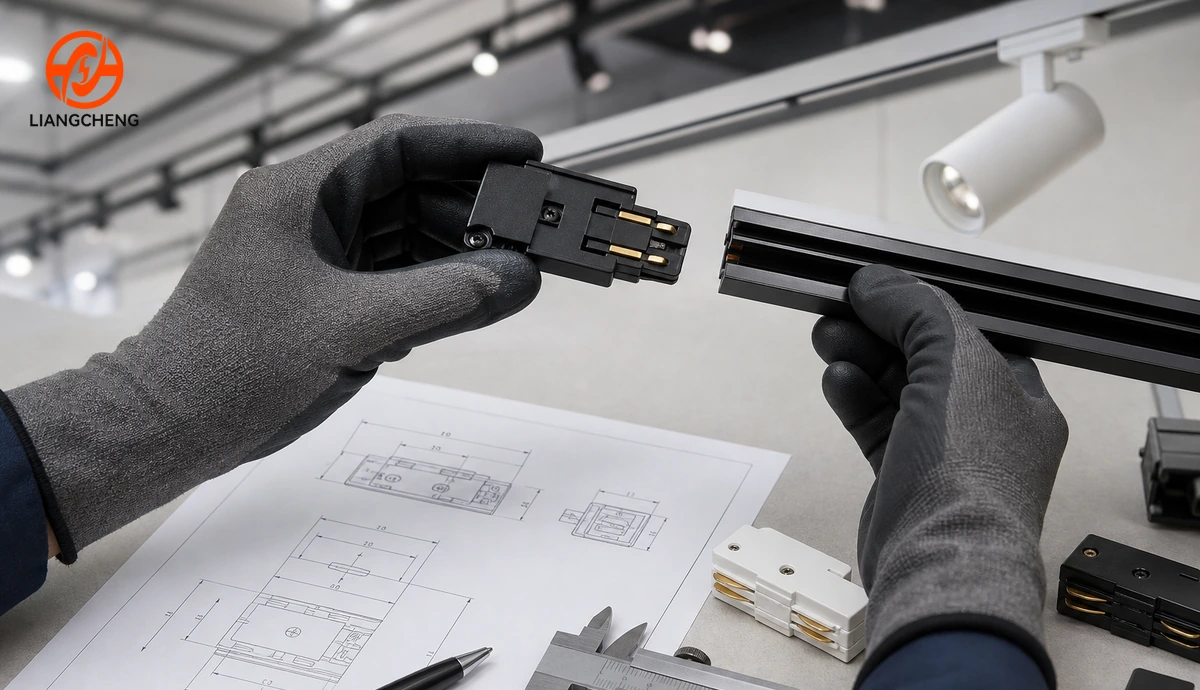
A buyer should request the rail cross-section, adapter drawing, contact layout, input rating, grounding method, and written compatibility statement. When maintaining an existing installation, photograph the rail end, feed, adapter contacts, keying features, and product markings. Measurements and a physical sample are more reliable than a general product name.
J-Type and L-Type heads should not be forced into an H-Type rail. Each family has its own adapter contact arrangement and keying. A loose mechanical fit, partial insertion, or ability to rotate does not prove that the electrical contacts align safely.
Can a fixture body be converted to a 3-wire adapter?
Some fixture bodies are offered by their manufacturer with a choice of factory-installed adapters. For example, the same spotlight housing may be sold in versions for different conventional track families. This is a product option, not universal interchangeability.
Conversion is appropriate only when the fixture manufacturer provides an approved adapter option and confirms the mechanical support, driver connection, grounding, temperature performance, and electrical ratings. Field replacement by unqualified personnel can invalidate certification, damage the fixture, or create an unsafe connection. For installed systems, electrical work should follow local regulations and be performed by qualified personnel.
Are magnetic track lights compatible with conventional 3-wire rails?
Generally, no. Magnetic track systems commonly use a different rail profile, low-voltage power architecture, magnetic retention method, and spring-contact arrangement. A magnetic module is not made compatible by having a similar width or by touching conductive strips inside another rail.
Conventional and magnetic systems also differ in fixture form, driver placement, insertion method, and available accessories. Buyers comparing the two architectures can review the differences between ordinary and magnetic track lights. Select the complete system architecture before choosing fixture modules.
How should buyers verify compatibility before ordering?
- Identify the existing or specified track family. Record the manufacturer, series, rail cross-section, number and position of conductors, voltage, grounding method, and product markings.
- Define the required fixture format. List spotlight, pendant, linear, or wall-wash requirements together with wattage, beam angle, color temperature, color rendering, finish, and control method.
- Request technical drawings. Compare rail and adapter dimensions, contact positions, keying, insertion direction, and locking features.
- Confirm electrical ratings. Verify voltage, frequency, protective-earth requirements, driver input, dimming method, maximum circuit load, and applicable local requirements.
- Obtain written compatibility confirmation. Ask the supplier to name the exact rail and adapter models that are approved to work together.
- Test a physical sample. Use a de-energized sample for the initial mechanical check, followed by a controlled electrical evaluation by qualified personnel.
- Approve the complete accessory set. Verify live ends, joiners, corners, end caps, suspension parts, and every fixture adapter, not only a straight rail sample.
- Keep an approved reference sample. A signed sample and drawing help incoming inspection teams compare future production batches.
What information should appear on a purchase specification?
A useful purchase specification should identify both performance and interface requirements. Include the rail family and model, adapter model, conductor and circuit arrangement, voltage, frequency, grounding class, rated current, fixture wattage, driver type, dimming protocol, finish, fixture weight, beam angle, color temperature, color rendering target, and required approvals.
For a new project, specify the complete rail package from the beginning. The wholesale aluminum track rail sourcing guide provides a broader checklist for materials, circuits, accessories, manufacturing, and quality control. For general system fundamentals, see the introduction to LED lighting track systems.
For replacement orders, add photos, measured drawings, existing labels, and an approved physical sample. State that the supplier must not substitute another adapter family without written approval. This requirement is especially important when a project has several visually similar track types.
What compatibility mistakes cause the most problems?
- Matching by wire count alone. Three conductors do not establish a universal contact layout or track family.
- Confusing 3-wire with 3-circuit. The terms describe different aspects of electrical architecture.
- Choosing by fixture appearance. Two identical-looking spotlights can be supplied with different adapters.
- Assuming a mechanical fit proves safety. Contacts may be misaligned even when an adapter partially enters the rail.
- Ignoring grounding. A protective-earth connection is essential where the product design and local requirements demand it.
- Mixing conventional and magnetic products. Their attachment and power systems are normally different.
- Testing only one component. Feeds, joiners, corners, adapters, and fixtures must work as a complete set.
- Skipping sample approval. Small interface differences can create widespread installation failures in a bulk order.
Which 3-wire-compatible fixture should a project choose?
Choose the optical format according to the lighting task, then specify it with an adapter approved for the exact rail. Adjustable spotlights suit merchandise and artwork. Compact spotlights suit smaller displays and lower ceilings. Pendants add decorative task lighting over defined areas. Linear luminaires can contribute broader ambient or aisle lighting. Wall-wash fixtures support vertical illumination.
For commercial layouts, consider how fixture selection affects aiming, glare, visual hierarchy, maintenance, and future changes. The guide to commercial lighting design with LED track rails explains how rail configuration and fixture selection work together.
The final decision should follow this order: define the lighting task, confirm the rail architecture, select the compatible adapter family, verify electrical and mechanical limits, approve a sample, and only then confirm the fixture quantity. This sequence keeps visual design decisions connected to a safe, serviceable system.
Frequently asked questions
Can any three-contact spotlight fit a 3-wire rail?
No. Contact count is only one compatibility factor. Contact position, spacing, rail profile, adapter keying, locking direction, grounding, voltage, and product-series approval must also match.
Are 3-wire rails always single-circuit?
Not universally. A common 3-wire line-voltage track may be single-circuit with live, neutral, and protective earth, but naming practices vary. Verify the wiring diagram and number of independently switchable circuits.
Can one 3-wire rail carry spotlights and pendants together?
It can when every fixture uses an approved adapter for the same rail and the complete installation remains within electrical and mechanical load limits.
Can a dimmable track light work on a 3-wire rail?
Possibly, but rail compatibility does not guarantee dimming compatibility. The fixture driver, dimmer, wiring method, load range, and control protocol must be compatible with one another.
How can an importer reduce compatibility risk?
Use exact model numbers, approved drawings, a signed sample, written supplier confirmation, and incoming inspection criteria. Avoid purchase descriptions that say only “3-wire track light” without defining the interface.
Final answer
The main types of lights that can be used on 3-wire rails include adjustable spotlights, compact display lights, pendants, linear luminaires, and wall-wash fixtures. However, none of these formats is compatible merely because it is called a track light. The fixture must use the correct adapter for the exact rail family and match its contacts, keying, locking method, grounding, voltage, load limits, and control requirements.
For buyers, the safest rule is simple: purchase and approve the rail, accessories, adapter, and fixture as one documented system. That approach protects installation schedules, reduces returns, and makes future replacement fixtures much easier to source.
Precisa de Soluções Personalizadas de Iluminação de Trilhos?
Entre em contato com a Liangcheng Lighting para soluções de trilhos de alumínio OEM/ODM e suporte profissional de iluminação.
Relacionado