







Track rail MOQ and lead time depend on the exact rail system, length, finish, accessories, and degree of customization. A small order of standard, stocked rails can move differently from a private-label program that needs a new extrusion, sample approval, printed cartons, and market-specific documentation. For B2B buyers, the useful question is not simply “What is your MOQ?” It is “What quantity and schedule apply to this complete, approved system, and what event starts the clock?”
This guide explains how a Chinese track rail manufacturer may calculate minimum order quantity, where production time is spent, and how a distributor or project contractor can build a reliable purchase schedule. The quantity and timing examples below are planning illustrations, not a published MOQ, guaranteed lead time, or quotation from Liangcheng Lighting. Ask for a written, configuration-specific offer before committing to a customer opening date.
What does MOQ mean for a track rail order?
MOQ, or minimum order quantity, is the smallest order a manufacturer will accept under a particular product and commercial specification. In track rail procurement, the minimum may be expressed in pieces, linear meters, cartons, or the value of a production batch. A quote for 100 pieces is incomplete unless it also states the rail length, profile, color, and whether connectors count toward that quantity.
Track rails combine aluminum extrusion, insulated conductors, end processing, finish work, and protective packing. A change to any one of these may require a separate production setup or material batch. Consequently, 50 black two-meter rails and 50 white two-meter rails may be treated as two smaller runs rather than one 100-piece run. Buyers should request an MOQ by SKU, where a SKU identifies a precise profile, electrical configuration, length, finish, and mounting format.
A useful comparison is between a stocked standard rail and a made-to-order profile. Stock can sometimes be supplied as a sample or small replenishment because its setup cost has already been absorbed. A new profile has one-time die and trial costs that must be paid directly or spread over an agreed production volume. Neither path is universally cheaper: low-volume stock may have a higher unit price, while custom tooling may be economical across a repeat program.
Why do rail MOQ and lead time change by configuration?
The electrical architecture is the first dividing line. Liangcheng Lighting lists standard track rails, including 2-wire, multi-circuit, and magnetic systems, with matching accessories. A 2-wire single-circuit rail suits straightforward switching in a small shop or home. A multi-circuit rail serves projects that need separately controlled lighting groups on one route. A magnetic system uses a compatible low-voltage power supply and module interface. These are distinct systems, so quantities should never be combined merely because all items are called “track rail.”
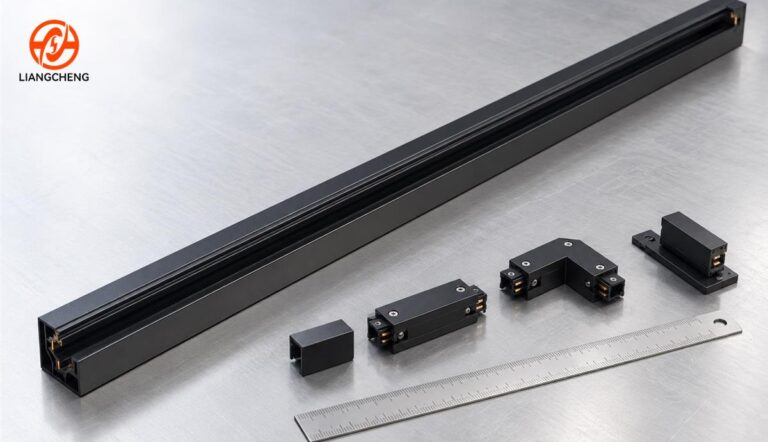
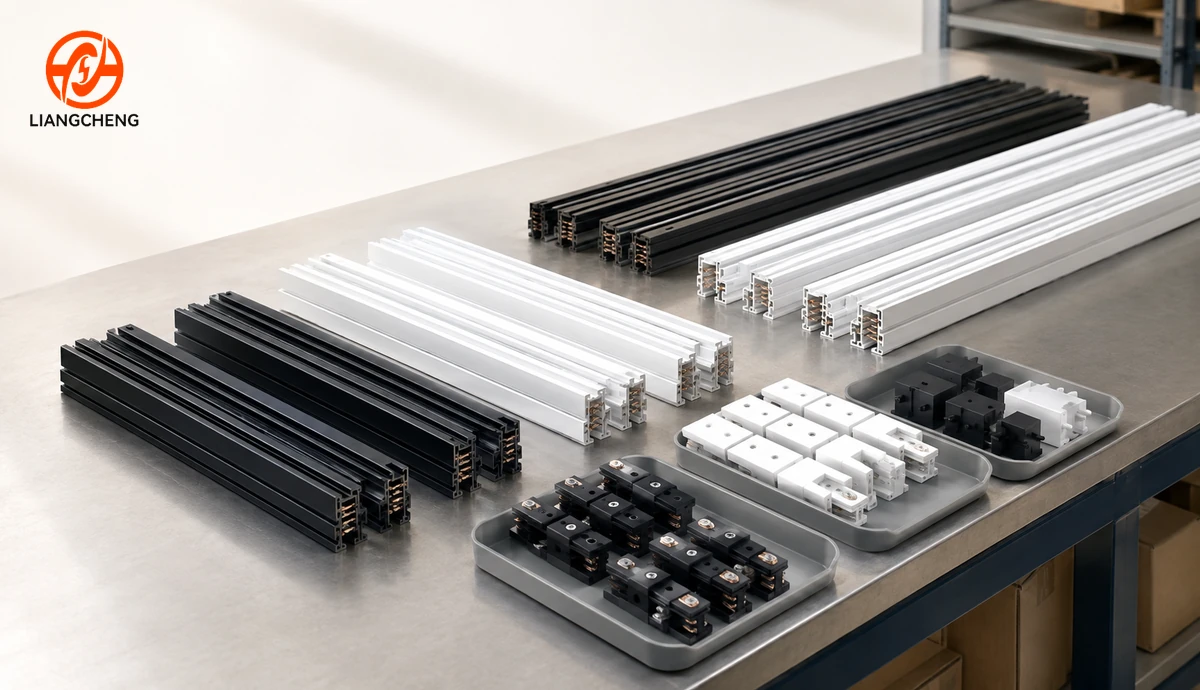
Length and finish are the next variables. Liangcheng lists standard lengths of 0.5 m, 1 m, 1.5 m, 2 m, and 3 m, and standard black, white, and silver finishes on its rail category page. A custom cut length can add cutting setup, waste calculation, and a different carton design. A custom powder-coat or anodized color can require color approval and a dedicated finishing batch. Longer rails also need packaging that protects straightness and surface finish, and they may attract different freight handling than short sections.
Mounting format changes the bill of materials. A surface-mounted run may use simple fixing hardware; a suspended run needs suspension kits and verified load support; a recessed run must match the ceiling detail and trim geometry. The minimum for the rail profile may be separate from minimums for special brackets or custom cartons. The best RFQ therefore groups every line by system and finish, then lists all accessories required to make the installed run work.
What MOQ should a B2B buyer expect?
There is no responsible single MOQ number for every Chinese track rail manufacturer. Public supplier examples range from no strict minimum for certain stocked products to rail minimums stated in pieces or meters. Those figures are evidence that commercial terms vary, not a dependable forecast for a specific Liangcheng order. The right expectation is a tiered answer: sample quantity, first production quantity, custom-finish quantity, and repeat-order quantity may all differ.
Ask whether mixed lengths within one profile and finish can share a minimum. For example, a project might require 40 one-meter rails and 30 two-meter rails in the same white single-circuit system. A factory may combine them if the extrusion and finish batch is common, or separate them because cutting, packaging, and inventory records differ. Only a written quote can settle that point. Likewise, a connector carton minimum should be checked against the actual number of corners and feeds in the layout.
When a target order sits below the quoted MOQ, buyers have several practical options. They can use an available standard finish and length, accept a sample or trial-order price, consolidate demand from several projects, schedule a call-off against a larger blanket order, or pay an explicit setup charge. A buyer should compare the total cost of those choices, including excess inventory and freight, rather than assuming the option with the lowest unit price is cheapest.
When does the production lead-time clock start?
A production lead time is normally measured from an agreed release event, not from the first inquiry. The release event may require an approved drawing, signed sample, final bill of materials, accepted artwork, deposit, and confirmed destination requirements. A supplier who says “20 working days” should state which of these must be complete on day zero and whether the number ends at factory completion, port handover, or delivery to site.
Separate five intervals in the project schedule: technical clarification, sampling and approval, material and production preparation, manufacture and inspection, and freight plus import handling. A change to rail profile after sample approval can restart more than one interval. A change to delivery address may affect freight without changing factory production. Keeping these intervals separate makes a delay visible and gives the team a way to recover time.
Illustrative schedule: a buyer spends five working days finalizing drawings, ten working days receiving and approving a custom-color sample, twenty working days on production after approval, three working days on inspection and packing, and a separately quoted freight period. The production promise is twenty days, but the buyer’s elapsed project time is at least thirty-eight working days before transit. These values are an example of schedule arithmetic, not a Liangcheng commitment.
How do standard, customized, and new-tool orders compare?
| Order route | Typical source of delay | MOQ question to ask | Najlepiej pasuje |
|---|---|---|---|
| Standard catalog rail | Stock check, allocation, packing, or replenishment production | Is this exact length and finish in stock, and can a trial order ship? | Urgent replacement, initial sample, or familiar project specification |
| Existing profile with custom length or finish | Cutting plan, color approval, finish batch, and special packaging | Can lengths or colors be combined in one batch? | Store rollout with fixed visual standards |
| Private-label standard system | Artwork approval, labels, manuals, and printed cartons | Is the packaging minimum different from the rail minimum? | Distributor or lighting brand program |
| New profile or connector interface | Engineering, extrusion die, pilot sample, fit testing, and possible compliance review | What tooling fee and batch quantity apply? | Repeatable proprietary system with sufficient forecast volume |
This comparison also shows why an aggressive shipping promise should be questioned when the buyer requests a new interface. A new die, electrical contact path, or ceiling trim detail needs validation before a factory can responsibly release a bulk run. Conversely, adding a logo to an otherwise unchanged rail may affect packaging more than metal production. Ask for a schedule broken down by workstream instead of a single optimistic number.
Which technical decisions should be frozen before ordering?
The buyer should freeze the electrical system, voltage, conductor and circuit arrangement, adapter interface, rail cross-section, mounting method, finish, cut lengths, and required accessories. These specifications determine both compatibility and production planning. A rail that looks similar in a photograph may have a different contact position, polarity arrangement, or mechanical lock. Never infer cross-brand compatibility from the words “2-wire,” “3-wire,” or “magnetic” alone.
Connection and wiring details deserve a signed system drawing. A mains-voltage track needs a designated power feed and protective earth where required by its design and local rules; a multi-circuit track also needs a documented circuit-selection and switching plan. A low-voltage magnetic track needs its specified driver, polarity or contact arrangement, and power budget. The project electrician should verify the actual supply, breaker, conductor size, maximum run length, and local installation requirements against the approved product documentation. The rail supplier should identify matching power feeds, joiners, end caps, and adapters by part number.
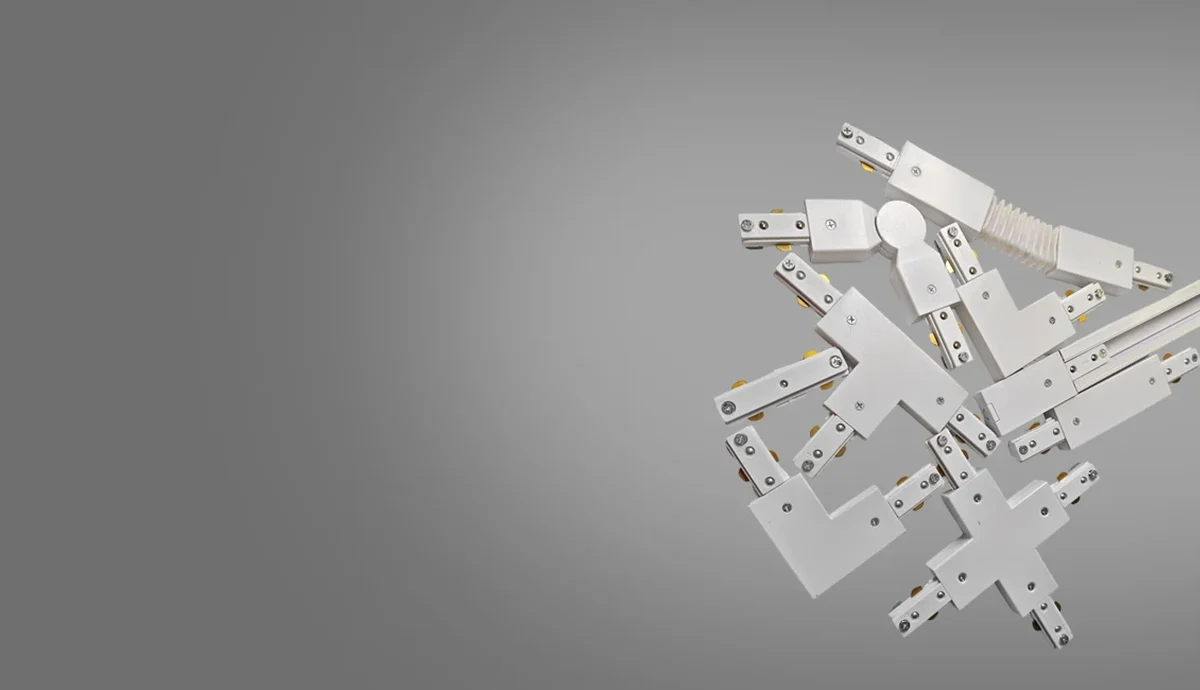
For a long run, calculate the number of full sections and cut pieces from the reflected ceiling plan, then count straight, corner, T, or cross connectors and feed points. A missing joiner can stop installation even when every rail arrives on time. If luminaires are purchased separately, send the actual adapter sample or a controlled drawing for fit testing. Liangcheng’s adapter compatibility checklist explains the checks in more detail.
Which common specifications affect procurement?
Liangcheng’s published rail range includes high-strength aluminum alloy profiles, copper conductors, powder-coated or anodized finishes, standard black, white, and silver colors, and the 0.5 m to 3 m standard lengths noted above. It offers surface-mounted, suspended, and recessed options and can discuss customized configurations. Those are product-family capabilities; the exact dimensions, electrical ratings, documentation, and lead time must be checked against the selected model and target market.
For a buyer, the most useful specification sheet records a manufacturer model number, profile drawing with tolerances, rated voltage and current, conductor layout, approved adapters and accessories, allowable mounting method, finish standard, length tolerance, packaging method, and applicable test or certification documents. Asking for an item-specific document is more meaningful than asking whether the whole company “has certification.” Market and project requirements differ, and a certificate for a related fixture does not automatically cover the ordered rail.
The specification may also need a control narrative. A simple retail aisle can use one switched group, while a gallery may need several separately selected groups. A magnetic installation may call for dimming or scene control through compatible drivers and modules. More controls can improve flexibility, but they add interface questions, commissioning time, and potentially more SKUs. For a direct system comparison, see Liangcheng’s 2-wire versus 4-wire rail guide and conventional versus magnetic track comparison.
How do project applications change the buying plan?
A single boutique typically values quick availability and straightforward one-circuit switching. A standard surface rail may reduce approval steps and avoid custom hardware. The trade-off is less zoning flexibility, so the buyer should verify whether display, window, and ambient lights truly can share one control group before selecting the cheapest rail.
A multi-store retail rollout values repeatability more than the first store’s unit price. Every location should use a controlled drawing revision, rail and accessory part numbers, approved finish sample, and packing label convention. A reasonable purchase plan may stage batches by store opening date and reserve spare connectors. This approach reduces variation between locations but requires a reliable forecast and rules for design changes.
A museum or gallery may require multiple lighting groups and frequent rearrangement of heads. Circuit selection, adapter compatibility, and safe reconfiguration matter as much as rail finish. A hotel or office project may put more weight on concealed or suspended mounting, coordination with ceiling trades, and delivery by installation zone. In both cases, procurement should ask for a complete system mock-up before bulk release rather than treating rails as interchangeable metal lengths.
A distributor building a private-label range faces a different constraint: continuing availability. A popular rail profile is of limited value if a unique connector cannot be reordered later. The distributor should agree on replacement-part identification, minimum repeat quantities, packaging files, and the notice period for material or tooling changes. Liangcheng’s private-label rail planning article develops that product-line perspective.
What are the advantages and drawbacks of buying from a Chinese manufacturer?
Direct manufacturer sourcing can offer a wider choice of profiles and finishes, coordinated accessories, OEM packaging, and volume pricing. Liangcheng describes support for custom lengths, colors, packaging, branding, and accessories on its standard track rail systems page. Direct coordination is particularly useful when a project needs one approved rail, adapter, feed, and connector set rather than parts assembled from separate suppliers.
The trade-offs are longer communication and logistics chains, larger economic batch sizes for custom work, and a stronger need for documented approvals. A buyer should budget time for sample review, possible time-zone handoffs, freight, customs clearance, and local installation checks. The lowest ex-factory price may not produce the lowest installed cost if rails are damaged, accessories are omitted, or replacement parts have a different interface.
Consider an illustrative comparison: Supplier A offers a lower rail price but excludes feed connectors, protective packing, and inspection; Supplier B offers a higher rail price for an approved system kit with measured packing dimensions. A fair comparison adds all accessories, tooling, samples, inspections, freight, duties, damage allowance, and replenishment terms. This total-landed-system view is more useful for project profitability than a rail-only unit price.
How can a buyer shorten lead time without increasing risk?
The fastest safe improvement is to remove unanswered questions before placing the purchase order. Submit a dimensioned layout, target market, mounting detail, circuit plan, selected adapter or luminaire, preferred lengths and finishes, quantity by SKU, packing needs, documentation list, and required arrival date. Liangcheng’s track rail RFQ checklist can serve as a starting template. A complete RFQ enables the supplier to flag exceptions before the buyer promises a project date.
Choose standard components wherever they meet the design brief. A stock black two-meter rail may avoid a custom-color sample and a new carton. If the visual brief requires a special finish, approve a physical sample early and freeze its color reference. If the project requires a new profile, start engineering and sample work before the general construction purchasing window closes. Expedite only a defined bottleneck; paying for faster freight does not solve a pending adapter test.
Split shipment can help only when the sequence matches site work. For example, a first lot of rails and mounting hardware may let the ceiling contractor begin while spare parts or later-store quantities follow. The buyer must confirm that the first lot contains every needed feed, joiner, bracket, and end cap. Otherwise, a partial shipment creates more handling without enabling installation.
What should a production schedule and quotation state?
A useful written offer has separate lines for rails, connectors, feeds, end caps, mounting kits, samples, tooling, packaging, inspection, and freight. Each line should show its part number, configuration, quantity, unit of measure, price, and MOQ rule. The schedule should identify sample dispatch, approval deadline, material release, planned production finish, inspection window, shipment readiness, shipping term, and estimated arrival. Dates are preferable to an unanchored phrase such as “three weeks.”
Ask who owns each approval. The buyer may approve a drawing and finish sample; the manufacturer may confirm extrusion and packing; a project consultant may approve installation details; the importer may verify documentation. If one approval is late, the plan should state whether the production slot is held. This is especially important for a custom color or new die, where the factory may be unable to start without an accepted reference.
Specify the commercial handover point using the agreed Incoterm and named place. “Ready in 20 working days” at the factory is not equivalent to delivery at a warehouse or site. The buyer should request carton count, longest package dimension, gross weight, and damage-protection method before selecting air, sea, or another freight service. Liangcheng’s long-rail packaging guide explains why packing affects delivered quality.
Which checks should happen before bulk release?
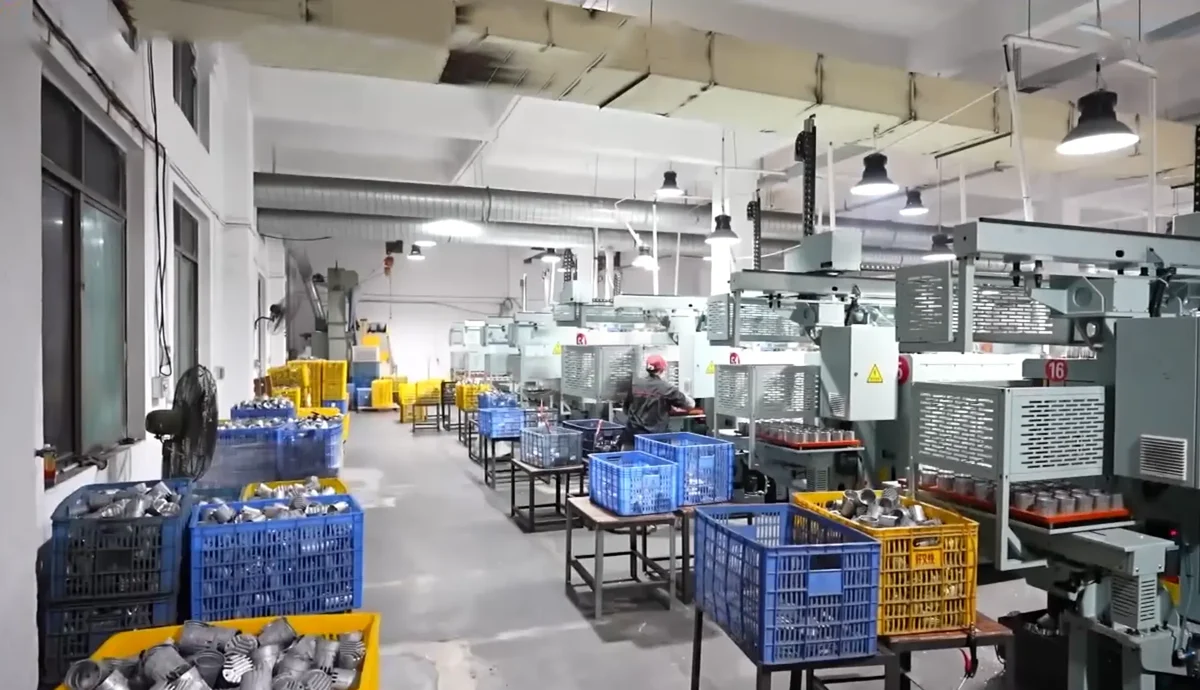
Approve a representative system sample, not only a short extrusion offcut. The sample set should include a full rail section, matching power feed, joiner, end cap, mount, and actual luminaire adapter where applicable. Inspect the profile dimensions, straightness, finish, conductor seating, electrical continuity, and engagement of each connector. Compare the result with a dated drawing and approved sample so the production team has one reference.
Confirm any market-specific test reports and certificates by model number and scope. For an export order, the importer should verify that the documentation meets the destination’s legal and project requirements. A generic logo or a company-wide list of approvals is not a substitute for evidence covering the specific rail and electrical assembly. Build inspection acceptance criteria into the purchase order, including acceptable cosmetic limits and what happens if a lot fails.
Finally, approve the packing trial for the longest rail length. Check separation between finished surfaces, end protection, carton strength, labels, and how mixed lengths are identified. A bent three-meter rail can cancel the schedule advantage of fast production. Liangcheng’s sample approval process gives a fuller workflow for moving from drawing to pilot run.
Często zadawane pytania
Can different rail colors count toward one MOQ?
Different colors may require separate finishing batches even when they use the same aluminum profile. Ask the manufacturer whether mixed colors can share a minimum and request that rule in writing by SKU. If not, compare standard colors, a setup charge, or a later consolidated replenishment order.
Can a buyer order samples before meeting the bulk MOQ?
Samples are commonly handled separately from production MOQ, but availability and sample cost depend on the selected model. A sample should include the matching connection parts and adapter, because a bare rail alone cannot prove system compatibility. Agree on whether the sample cost is credited against a later bulk order.
Are 2-wire, 3-wire, and magnetic rails interchangeable?
No. Their electrical arrangements, adapter interfaces, power supplies, and accessories can differ. Even rails with the same broad label may not share dimensions or contact positions. Verify the exact models with drawings and physical samples before placing a bulk order.
Does production lead time include ocean or air freight?
Production lead time and transit time are separate unless the written quotation explicitly combines them. Confirm the start event, factory-ready date, handover point, freight method, customs responsibility, and requested site-delivery date. Add approval and inspection time to the plan as well.
What usually creates the longest delay in a custom rail project?
New tooling, unresolved adapter fit, custom finish approval, and missing installation details can delay release before mass production begins. The precise bottleneck depends on the order. A milestone schedule with named approvers reveals the critical path earlier than a single quoted lead-time number.
Request a configuration-specific track rail quotation
Liangcheng Lighting supplies wholesale and customized track lighting rails for distributors, lighting brands, contractors, and commercial projects. Share your destination market, ceiling layout, system type, rail lengths, finish, quantities by configuration, adapter or fixture reference, accessory list, packaging requirements, and target delivery date. Liangcheng can then review compatible rail and accessory options, sample needs, MOQ, and a realistic production schedule for your project.
Contact Liangcheng Lighting for a B2B track rail quote and attach your drawing or bill of materials. A defined specification gives both teams a clearer price, a more useful lead-time commitment, and a smoother path from sample approval to repeat orders.
Potrzebują Państwo indywidualnych rozwiązań oświetlenia szynowego?
Skontaktuj się z Liangcheng Lighting w sprawie rozwiązań aluminiowych szyn kontaktowych OEM/ODM oraz profesjonalnego wsparcia oświetleniowego.
Powiązane