







Temps de lecture estimé : 13 minutes
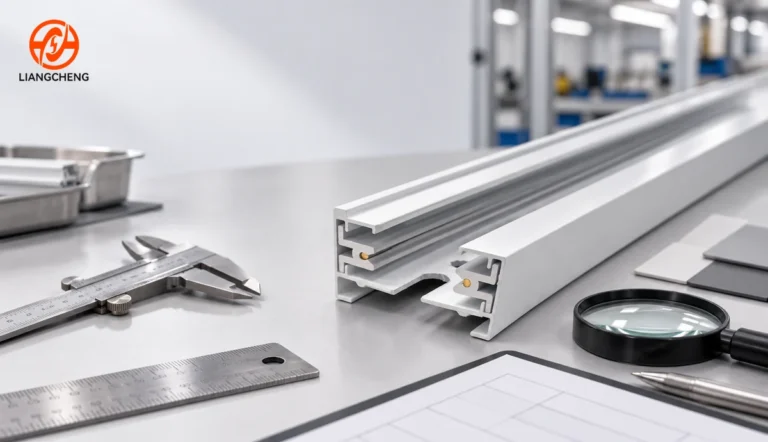
The quality of a lighting track rail should be judged by whether an identified production system consistently meets its approved dimensional, material, finish, interface, electrical, mechanical, packaging, and documentation requirements. A polished surface or heavy profile can support a first impression, but neither proves compatibility, safety, straightness, conductor performance, finish durability, or repeatability. Buyers should combine documents, sample inspection, system-fit checks, supplier evidence, and a pilot before bulk ordering.
This guide focuses on pre-purchase product evidence. It differs from a factory audit, which evaluates manufacturing controls, and from a sample approval workflow, which manages the full development sequence. The central question is: what can a buyer reasonably conclude from a photo, drawing, sample, test record, and pilot lot, and which conclusions require stronger evidence?
What does quality mean for a lighting track rail?
Quality means conformity to the requirements of the intended system and project. A rail can have a clean finish yet be poor quality for a project when its profile does not fit the approved adapter, its accessory family is incomplete, or its mounting detail conflicts with the ceiling. A less decorative sample can still be technically suitable when it satisfies the controlled specification and the visible condition is acceptable for the application.
Track rail quality has three layers. Product quality covers the rail, conductors, insulators, finish, geometry, and workmanship. System quality covers adapters, feeds, joiners, end caps, directional connectors, mounting parts, and fixtures. Supply quality covers batch consistency, identification, packaging, records, change control, and corrective action. A reliable buying decision checks all three because a strong extrusion alone does not create a dependable lighting system.
The approved specification should define quality before the buyer sees the sample. If acceptance rules are invented after inspection, a preferred supplier or attractive appearance can influence the decision. A controlled drawing, product specification, finish reference, compatible-component list, inspection plan, and required documents create the baseline against which evidence can be judged.
Use an evidence ladder instead of trusting one sample
A product photograph can show general profile shape, color family, obvious damage, and visible components. A photograph cannot prove exact dimensions, straightness over a full length, alloy, conductor material, insulation performance, electrical continuity, coating adhesion, internal tolerances, or batch consistency. Photo review is useful for identification and obvious questions, but it should not be treated as final approval.
A controlled drawing can show dimensions, tolerances, materials, component positions, mounting features, and revision status. A drawing cannot prove that the supplied product actually conforms. The buyer should compare measurements and observations with the drawing, while the supplier should control which revision applies to the quotation, sample, and order.
A physical sample can demonstrate appearance, handling, cross-section, cut quality, component fit, connector engagement, adapter insertion, and selected measurements. One sample cannot prove production variation or shipment protection. A sample should therefore become a verified reference only after inspection results are recorded and its identity is connected to the future commercial product.
A test or inspection record adds method, measured result, acceptance limit, sample identity, date, and approval status. The record is stronger than a claim only when it applies to the exact product or representative production and uses a suitable method. A generic certificate or undated result should not be assumed to cover every rail, finish, accessory, or destination.
A pilot lot provides the strongest pre-purchase evidence because it tests normal production, commercial lengths, packaging, handling, assembly, documentation, and repeatability. A pilot still has limits, but it reveals risks that a hand-selected sample may hide. Evidence should become stronger as order value, custom content, project exposure, and replacement difficulty increase.
Confirm the exact system before judging workmanship
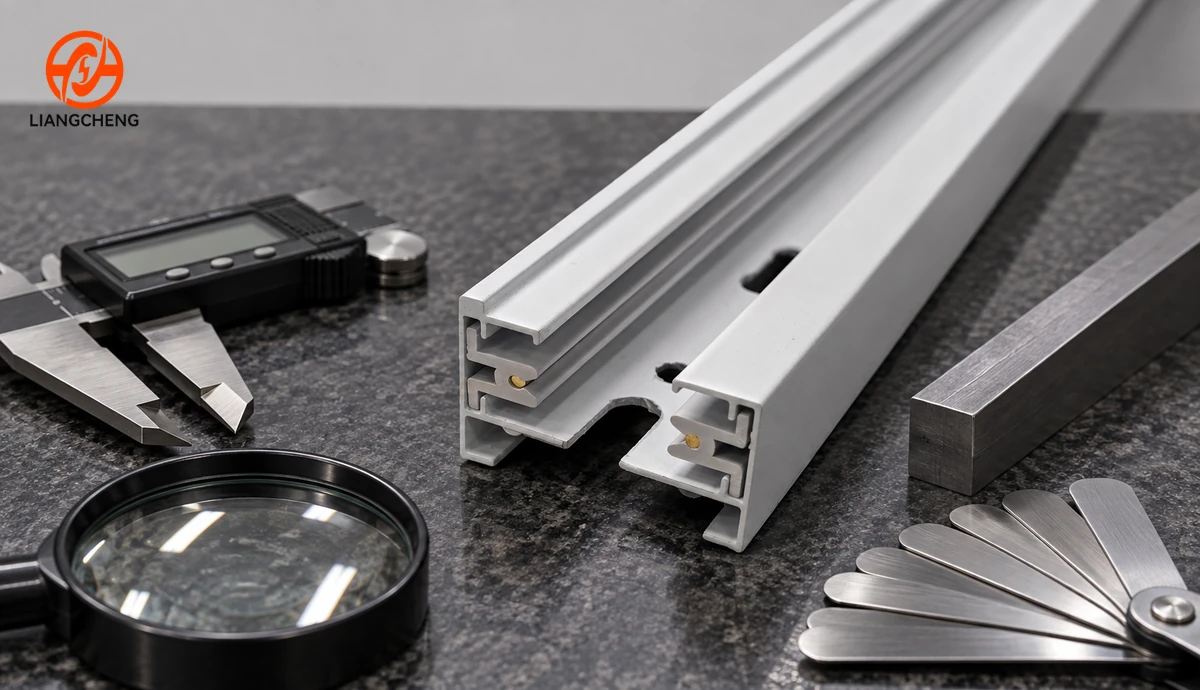
A quality assessment is meaningful only when the rail belongs to the correct system family. Labels such as two-wire, three-wire, four-wire, single-circuit, and multi-circuit may be used differently across markets. Buyers should verify the conductor functions, circuit arrangement, profile geometry, orientation, protective provisions, adapter interface, feeds, connectors, and intended fixtures from controlled product information.
Two rails can look similar while using different internal keys, contact locations, conductor spacing, polarity, or accessory geometry. A visual match should therefore be treated as an identification clue rather than compatibility proof. The approved system identity should appear consistently on drawings, samples, quotations, packaging, inspection records, and purchase orders.
How should the aluminum extrusion be evaluated?
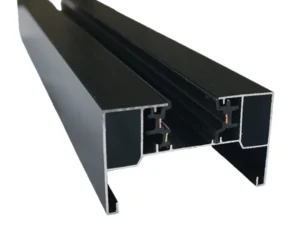
An aluminum track rail extrusion should be evaluated against the specified material, cross-section, wall features, straightness, twist, surface condition, cut quality, and ability to retain system components. Visual density or weight alone does not identify alloy, temper, mechanical properties, dimensional control, or suitability. Material claims require supplier documentation and, when justified by risk, appropriate verification.
Cross-section consistency matters because internal ledges, slots, grooves, and support surfaces position conductors, insulators, adapters, connectors, covers, and mounting parts. A small dimensional shift can affect insertion force, contact alignment, locking, visual joints, or assembly. The drawing should identify critical-to-function dimensions and tolerances rather than treating every dimension as equally important.
Straightness should be checked over a representative commercial length on a suitable reference surface or with an agreed method. A short sample may appear straight even when long rails bow or twist. The method should distinguish product shape from an uneven floor, flexible support, or packaging deformation. No universal tolerance should be applied without the product drawing and project need.
Cut ends should be examined for burrs, deformation, collapsed features, chips, coating damage, and incomplete cleanup. Poor cutting can interfere with connectors, end caps, alignment, insulation, or installation. The acceptable cut condition depends on whether rails are factory-cut, field-cut, exposed, recessed, or joined to another component.
Le Guide des dimensions des rails d'éclairage sur rail explains how to evaluate stock lengths, finished runs, cross-sections, recessed cutouts, connector allowances, and tolerances. Dimensions should be connected to their function so that inspection effort focuses on features that affect fit, installation, and system performance.
Does a heavier track rail mean better quality?
A heavier rail is not automatically higher quality because mass depends on profile geometry, dimensions, material choice, and system design. Extra material may increase stiffness in a particular design, but weight cannot prove alloy, straightness, finish, compatibility, electrical behavior, or manufacturing consistency. A rail should meet an approved drawing and performance requirement rather than an informal weight preference.
Material comparisons should also avoid blanket rankings. Aluminum and steel systems have different combinations of weight, stiffness, corrosion behavior, finishing, installation, and design possibilities. The aluminum versus steel track rail guide explains how to compare materials through project requirements and evidence rather than assuming one is always superior.
How should the surface finish be inspected?
A surface finish should be inspected for the approved color, gloss or texture, coverage, cleanliness, scratches, dents, stains, orange peel, particles, pinholes, chips, exposed substrate, handling marks, and visible variation between rails. Inspection lighting, viewing distance, sample orientation, and acceptance zone should be defined because appearance can change under different conditions.
Finish quality includes adhesion and durability when the application requires them, but these properties cannot be confirmed by appearance alone. The buyer should request the relevant method, acceptance criterion, sample identity, and result. Evidence should match the finish process and intended environment rather than rely on a generic statement about coating quality.
Internal and hidden surfaces should be checked where coating buildup or contamination could interfere with insulators, conductors, connectors, grounding features, fasteners, or adapters. A flawless visible face does not compensate for an obstructed functional groove. Critical masking and contact areas should be defined in the drawing or specification.
How should insulators and conductors be judged?
Insulators and conductors should be evaluated as controlled system components rather than decorative inserts. Buyers should verify material specification, dimensions, positions, retention, continuity along the rail, clean ends, absence of cracks or deformation, and correct assembly orientation. Visual inspection can identify obvious defects, but electrical and material properties require suitable records or testing.
Conductor color does not prove conductor material or electrical performance. A brass-colored or copper-colored surface can indicate appearance, plating, or base material, but composition and conductivity claims need controlled supplier information and appropriate verification. The buyer should avoid converting a visual observation into a material conclusion.
Insulator fit should remain stable without gaps, loose sections, twisting, damage, or interference with the adapter path. Retention should be assessed using the approved assembly and inspection method because excessive force can damage the product while a casual pull may reveal little. Any safety-related conclusion should remain within qualified electrical review and applicable requirements.
Electrical inspection and testing should be defined by the product design, applicable rules, destination, and responsible professionals. The buyer can request evidence for conductor continuity, insulation, protective functions, ratings, and required conformity, but should not assume that one generic test value or certificate covers every configuration. This article does not provide electrical test instructions or universal acceptance limits.
Why is adapter compatibility a quality issue?
Adapter compatibility is a quality issue because the rail must position, retain, and electrically connect the intended fixture adapter throughout normal use. A rail can meet its isolated dimensions yet fail as a system when the adapter binds, rocks, releases, selects the wrong circuit, or produces inconsistent contact. System quality therefore requires testing actual approved combinations.
Fit should be evaluated across more than one insertion point and, when risk justifies it, across representative rail and adapter samples. The assessment can include insertion, rotation or locking, retention, orientation, contact engagement, circuit selection where relevant, removal, and signs of interference. The method and decision should be documented rather than summarized as fits well.
Le track light adapter compatibility checklist provides a buyer framework for geometry, locking, contacts, ratings, golden samples, production variation, traceability, and change control. Similar conductor counts or matching exterior widths should not be treated as compatibility evidence.
Judge the complete accessory system, not only the straight rail
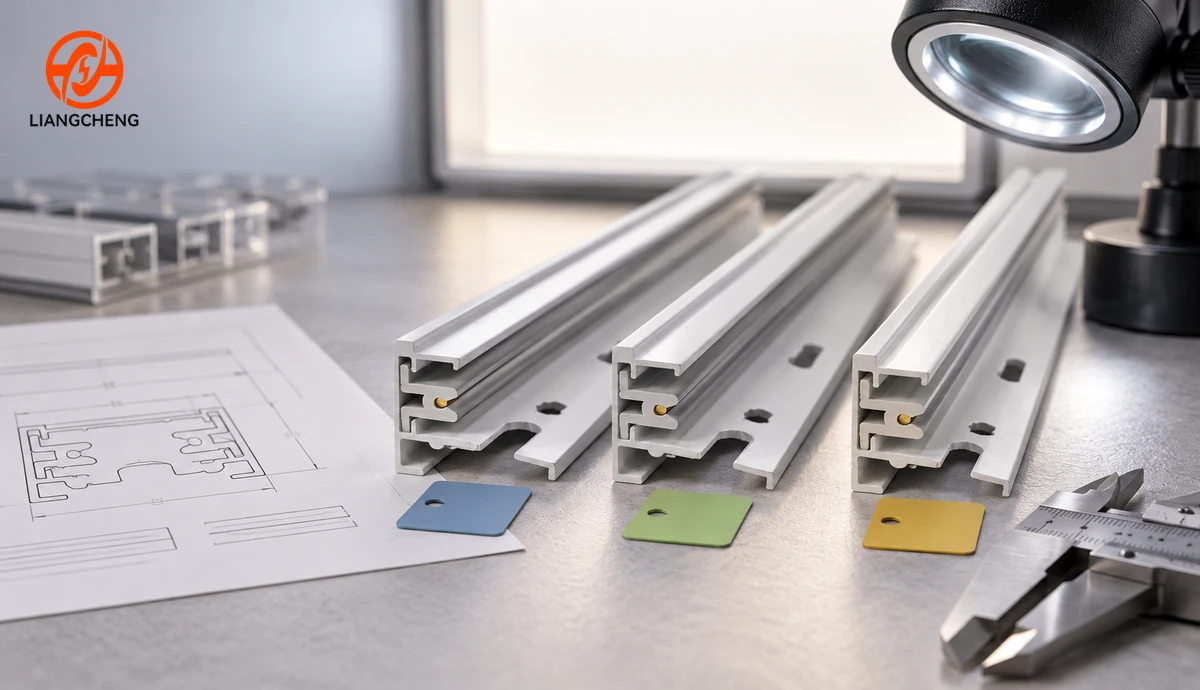
A high-quality straight rail is not sufficient when feeds, joiners, corners, end caps, suspension parts, recessed trim, or adapters are missing or incompatible. Every planned node in the layout should map to an approved system component. Mechanical joiners and electrical connectors should not be confused because some parts align rails without carrying electrical functions.
Accessory fit should produce the intended alignment, retention, contact, finish continuity, and installation sequence without uncontrolled modification. Gaps, steps, loose joints, excessive force, exposed unfinished cuts, or orientation conflicts may indicate drawing, manufacturing, or application problems. The inspection should use the actual bill of materials rather than a convenient selection of parts.
Le track lighting rail accessories guide explains the roles of feeds, joiners, directional connectors, end caps, adapters, and mounting components. Buyers should request an accessory schedule and compatibility matrix that identify which parts belong to the approved rail family.
What should a pre-purchase sample approval include?
Sample approval should start with a controlled drawing and end with a decision record. The buyer should record sample identity, drawing revision, finish reference, measured characteristics, visible condition, component fit, interface checks, document status, open issues, corrective actions, and approval scope. A verbal approval cannot reliably control future production.
The sample quantity and length should match the questions being answered. A cross-section piece can support profile identification and selected measurements, while a full commercial length is more useful for straightness, finish continuity, packaging, and handling. A system mockup is needed when feeds, joiners, adapters, suspension, or recessed details create the main risk.
Le track rail sample approval process provides a staged workflow from drawing review through functional samples and pilot production. A golden sample should preserve the approved physical reference and its related documents, but it should not replace written tolerances, methods, or batch controls.
Which supplier records make a quality claim credible?
A credible supplier should connect raw material or purchased-component identity, extrusion or forming, machining, surface finishing, assembly, inspection, packaging, and shipment to the ordered product. The buyer does not need every internal record, but should receive enough evidence to confirm that the quality promise is controlled and traceable.
Useful records can include controlled drawings, material information, process inspection, dimensional reports, finish controls, functional checks, required electrical or conformity documents, batch identification, nonconformance handling, retained samples, calibration status, packaging approval, and change notification. The exact evidence should reflect product risk and destination requirements.
A test report is useful when it identifies the product, sample, method, result, limit, date, and responsible approval. A report becomes weak when it describes a different model, an unknown configuration, an expired context, or only a broad product family. Buyers should ask what the document proves and which part of the order it covers.
Le track rail factory audit guide explains how to trace one representative order through process controls, inspection records, corrective actions, outsourced operations, and release decisions. Product inspection and factory audit complement each other: one checks the result, while the other checks whether the system can repeat it.
How should packaging quality be evaluated?
Packaging quality should prevent bending, twist, scratches, crushed ends, contamination, moisture exposure where relevant, and uncontrolled movement during the expected transport route. Long rails can be damaged even when factory inspection passes, so packaging belongs in product approval rather than being treated as a shipping detail.
A packaging review should identify individual surface protection, separators, end protection, bundle restraint, internal supports, carton strength, pallet or crate structure, lifting points, stacking limits, labels, and inspection after a representative handling or transport simulation. Packaging should restrain the product without creating pressure marks or bending forces.
Le long track rail packaging guide provides a detailed framework for supports, separators, end protection, cartons, pallets, bracing, and receiving checks. The approved packaging configuration should be linked to rail length, quantity, route, handling method, and container plan.
Red flags buyers should not ignore
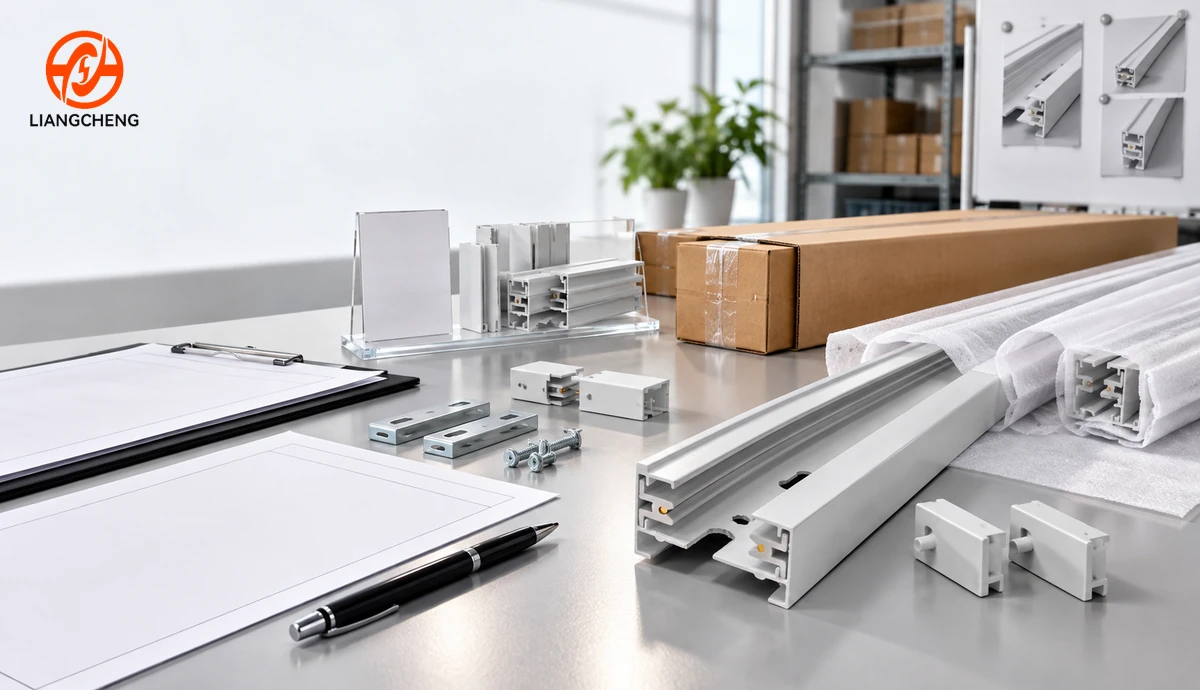
A supplier should not ask the buyer to approve compatibility from exterior appearance alone. Missing cross-section drawings, unclear system identity, inconsistent part names, untraceable samples, or reluctance to identify the exact adapter and accessory family create avoidable risk. These gaps should be closed before price becomes the main decision.
A supplier should not replace measured information with vague premium claims. Heavy duty, thick aluminum, pure copper, perfect coating, universal compatibility, and export quality are not controlled specifications. Each meaningful claim should be connected to a material, dimension, method, limit, sample, or document.
A hand-selected sample should not be presented as proof of bulk consistency without a plan for production inspection and change control. The buyer should know whether the sample came from normal production, which revision it represents, how future batches are identified, and what happens when a material or process changes.
Price differences should not be interpreted before scope is normalized. Two quotations may cover different wall geometry, conductor system, accessories, finish, length tolerance, packaging, testing, documentation, freight boundary, or service. The lower number can represent a different product rather than better purchasing value.
A practical track rail quality checklist before buying
- Identify the system. Confirm functions, profile, circuit arrangement, compatible adapters, accessories, and intended application.
- Freeze the specification. Approve controlled drawings, critical dimensions, materials, finish, required records, and packaging.
- Review evidence by strength. Separate what photos, drawings, samples, reports, and pilots can actually prove.
- Inspect the extrusion. Check critical geometry, straightness, twist, cut condition, burrs, and component-retaining features.
- Inspect the finish. Compare color, gloss or texture, coverage, defects, functional grooves, and the controlled reference.
- Verify internal components. Confirm conductor and insulator identity, position, retention, assembly, and required records.
- Test the system interfaces. Evaluate approved adapters, feeds, joiners, end caps, corners, and mounting parts.
- Approve representative samples. Record results, open issues, corrections, golden samples, and pilot scope.
- Approve packaging. Protect long rails from movement, bending, scratches, contamination, and end damage.
- Control repeat supply. Define batch identity, incoming inspection, retained evidence, change notice, and corrective action.
The checklist should be scaled to project risk. A standard repeat order with stable history may use focused confirmation, while a custom profile, new adapter family, high-value project, private-label program, or long transport route needs deeper evidence. The objective is not maximum paperwork; the objective is enough evidence to support the purchasing decision.
Foire aux questions
Can you judge track rail quality from a photo?
A photo can show general shape, color, obvious damage, and visible workmanship, but it cannot prove dimensions, material, straightness over full length, compatibility, electrical properties, finish adhesion, or batch consistency. Photo review should lead to specific questions and sample requests rather than final approval.
Is thicker aluminum always better?
Thicker aluminum is not automatically better because the correct geometry depends on system design, loads, mounting, stiffness needs, interfaces, manufacturing control, and project requirements. Buyers should approve critical dimensions and functional performance instead of selecting the largest wall dimension without context.
What is the most important pre-purchase quality check?
The most important check is that the exact rail, adapter, accessory, and fixture combination belongs to one verified system and matches the intended project. Good finish and dimensions have limited value when the interface or system architecture is wrong.
Does one approved sample guarantee the bulk order?
One approved sample does not guarantee bulk consistency because it cannot represent all production, packaging, and shipment variation. It becomes useful when linked to written specifications, inspection methods, production controls, a representative pilot, batch traceability, and change notification.
Should every dimension be inspected?
Inspection should prioritize dimensions that affect fit, safety, assembly, appearance, installation, and performance. The supplier should control the full drawing, while the buyer and project team can identify critical-to-function characteristics for sample approval and incoming inspection. Risk and evidence should determine inspection depth.
Build a controlled B2B track rail supply program
Liangcheng Lighting supplies wholesale and customized track lighting rail products for distributors, importers, contractors, lighting brands, and commercial projects. A useful B2B inquiry should include the required system family, profile drawing or existing sample, rail lengths, mounting method, adapters and fixtures, accessories, finish, quantity, destination, documentation, inspection, packaging, and sample approval needs.
To evaluate product quality before a bulk commitment, contact Liangcheng Lighting with your project requirements and evidence checklist. Liangcheng Lighting can support product identification, dimensional review, rail and accessory matching, finish and length customization, samples, packaging, and wholesale supply. Final electrical, structural, installation, and compliance decisions should remain with the qualified professionals responsible for the project.
Besoin de solutions d'éclairage sur rail personnalisées ?
Contactez Liangcheng Lighting pour des solutions professionnelles de rails d'éclairage en aluminium en tant que fabricant d'équipement d'origine (OEM) ou fabricant d'équipement d'origine (ODM) et pour un support d'éclairage professionnel.
Connexe