







Estimated reading time: 13 minutes
To audit a track rail factory before placing a bulk order, follow a representative product from its approved drawing through incoming materials, production, inspection, packing, and shipment records. Compare the evidence with your purchasing requirements, identify uncontrolled changes or missing checks, and make order approval conditional on resolving significant findings. A factory tour alone does not establish production readiness.
A useful track rail factory audit asks whether the supplier can repeatedly deliver the specified rail and matching components, not simply whether machines and finished samples are present. This guide presents a buyer-led audit framework for lighting brands, distributors, importers, and project contractors. The framework is not an actual audit of Liangcheng Lighting or a substitute for qualified electrical product assessment.
What should a track rail factory audit establish?
A track rail factory audit should establish how the supplier controls the processes that determine your order outcome. Those processes include specification review, material identification, outsourced work, assembly, inspection, nonconforming product handling, and final release. The audit conclusion should describe the verified scope and remaining gaps rather than label the entire factory universally approved.
A factory audit differs from sample approval and pre-shipment inspection. Sample approval checks whether selected product examples meet an agreed specification, while pre-shipment inspection examines the condition of a defined shipment. A factory audit evaluates the controls behind repeated production. Passing one activity does not automatically satisfy the others, because each examines a different source of purchasing risk.
Audit principles should remain evidence-based and tied to stated criteria. ISO 19011 provides guidance for auditing management systems, but that guidance is not a track rail product certificate. The practical checks below are a proposed purchasing framework, not a claim that following this article alone demonstrates conformity with an ISO standard.
What information should buyers define before the visit?
The audit scope should identify the exact rail family, intended accessories, production site, outsourced stages, and proposed order requirements. A surface-mounted standard rail and a customized recessed system may require different evidence. Without an agreed scope, the factory can demonstrate an impressive process that does not actually produce the product you intend to buy.
Purchasing requirements should include the current drawing revision, bill of materials, finish reference, quantities, packaging expectations, and applicable product documentation needs. Use the track rail RFQ information checklist to establish that baseline. Record unresolved specifications before the visit so the audit does not mistake an undefined requirement for a supplier failure.
The audit plan should name the people responsible for technical review, production questions, commercial clarification, and the final purchasing decision. Agree access, confidentiality, photography rules, and permitted record redaction in advance. Commercially sensitive customer identities can often be masked while retaining the dates, revisions, quantities, and process links needed to evaluate control.
How can buyers verify who performs each manufacturing stage?
A process map should distinguish work performed at the visited site from work performed by subcontractors or other company locations. Extrusion, surface treatment, component sourcing, cutting, assembly, and testing do not necessarily occur under one roof. Outsourcing is not automatically a weakness; undisclosed outsourcing or unclear responsibility makes the production evidence harder to rely on.
Site identity should be cross-checked against relevant commercial and management documents. Confirm which organization contracts with the buyer, which site manufactures the rail, and which party controls outsourced operations. A signboard or machine photograph cannot establish those relationships by itself, while a consistent explanation supported by records provides a more useful starting point.
For an outsourced process, ask how the supplier approves the provider, communicates the specification, checks returned work, and handles changes. A supplier who purchases finished profiles can still demonstrate effective control, but should not represent that activity as in-house extrusion. Evaluate the actual control arrangement instead of using factory size as a shortcut for supplier capability.
How should an auditor select a representative order?
A representative order should resemble the proposed bulk purchase closely enough to expose relevant controls. Ask to select an available work order or completed lot from the agreed scope, rather than reviewing only a presentation sample chosen for visitors. If no closely comparable production exists, record that limitation and plan additional pilot evidence before volume release.
Order selection should consider meaningful differences in profile, conductor arrangement, finish, length, accessory interface, and production route. One black rail does not demonstrate control of every color or system family. Use targeted additional samples when a different process or known problem creates a distinct risk; no universal sample count can establish suitability for every factory and order.
A sampled audit can reveal control weaknesses but cannot prove that every historical or future unit conforms. Record the lots, dates, operations, and documents examined so the conclusion remains proportionate to the evidence. Missing access or unavailable production should be identified as a limitation, not quietly converted into a passing result.
How do you trace a rail from drawing to shipment?
An order trace connects a selected physical rail to its approved specification, component inputs, production record, inspection results, and release decision. Start with the item identification and ask staff to retrieve the associated records. Then reverse the direction by selecting a source record and checking which work orders or shipped lots used the material.
| Stage | Evidence to connect | Question to resolve |
|---|---|---|
| Order review | Purchase requirement, drawing revision, approved deviations | Was the correct specification released? |
| Material receipt | Supplier identification, lot or receipt reference, incoming checks | Which materials entered the selected order? |
| Production | Work order, setup checks, operating instructions | How did the operator know what to make? |
| Inspection | Measured results, method, instrument identity, disposition | What demonstrated acceptance? |
| Packing | Pack specification, quantity reconciliation, product labels | Did the correct items reach the correct cartons? |
| Release | Authorized release, unresolved holds, shipment linkage | Who approved shipment and on what basis? |
Traceability should be assessed against the agreed risk and product requirements, not an assumed serial-number system. Lot-level records may be appropriate in some arrangements, while other requirements call for greater detail. The important question is whether the recorded links are sufficient to investigate a defect, identify affected stock, and make an informed containment decision.
What should incoming material controls demonstrate?
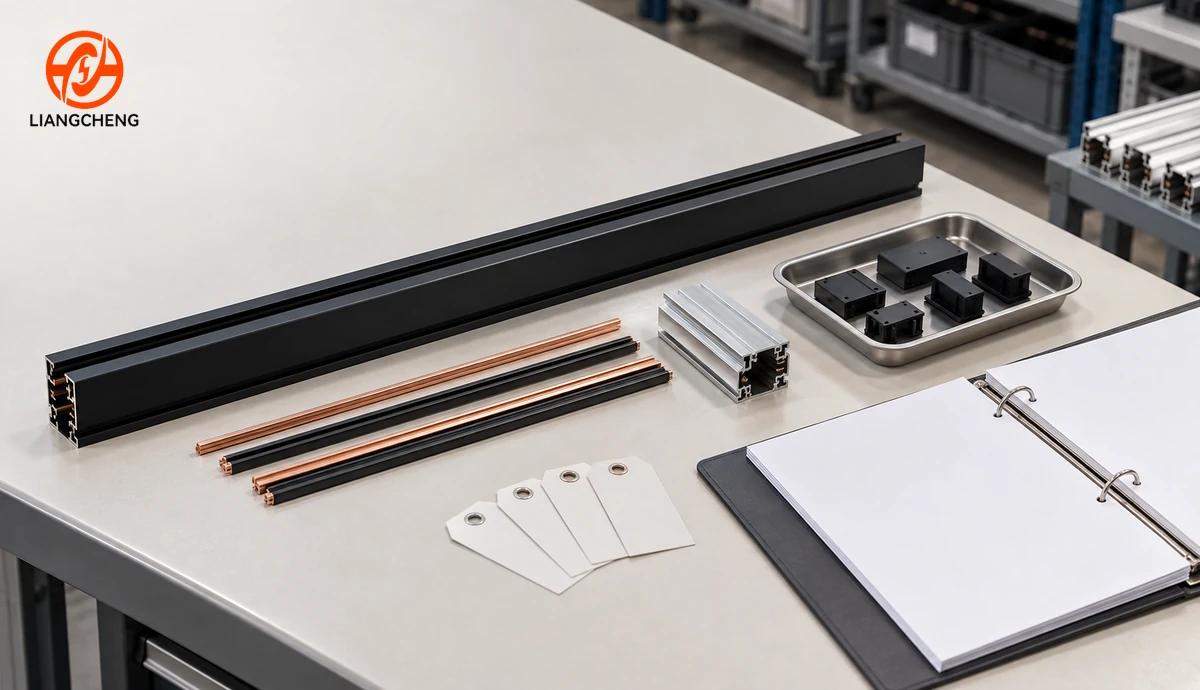
Incoming material controls should show how aluminum profiles, conductors, insulating parts, and purchased accessories are identified and accepted. Ask to compare a received item with its purchasing specification and inspection record. A supplier certificate can support the review, but it does not replace a clear explanation of how incorrect or mixed materials are prevented from entering production.
Material identity should remain recognizable after the original shipping package is opened. Look at partially used stock, internal bins, and returns from the production line because those conditions can expose gaps hidden by a tidy receiving area. Unidentified material is a stronger warning sign than imperfect presentation when the missing identity prevents verification of the selected order.
Incoming rejection controls should distinguish held material from released stock and identify who may change its status. Ask for a recent example of a rejected delivery and its disposition. A real record of investigation and resolution can be more informative than a claim that incoming problems never occur.
How can buyers examine drawing and production change control?
Drawing control should demonstrate that operators and inspectors use the same approved revision. Compare the work order, workstation instruction, inspection form, and sample reference for the selected item. A current file in the engineering office does not establish control if an obsolete print remains at the cutting or assembly station.
Production changes should identify the reason, affected products, required approval, and implementation point. A new conductor source, insulation component, machining feature, or finish process may affect the approved configuration. Ask how the supplier determines whether a change requires buyer approval, renewed testing, or segregation of old and new stock.
Reference samples should carry enough identity to support comparison without becoming substitutes for measurable requirements. The track rail sample approval process explains the drawing-to-pilot relationship. During the audit, verify how approved samples are protected, updated, and withdrawn when a revision changes.
What should the audit examine on cutting and assembly lines?
Production observation should focus on controls relevant to the selected rail, such as setup confirmation, length control, end condition, component placement, and protection from handling damage. Ask operators to explain the current job and show the relevant instruction. Compare that explanation with an actual workpiece rather than relying solely on a supervisor describing the intended process.
Dimensional checks should use the locations and acceptance limits defined by the approved specification. Ask how instruments are selected, maintained, and checked for suitability, and review their calibration or verification status where applicable. A digital display with many decimal places does not establish that the measurement method is capable of resolving the required tolerance.
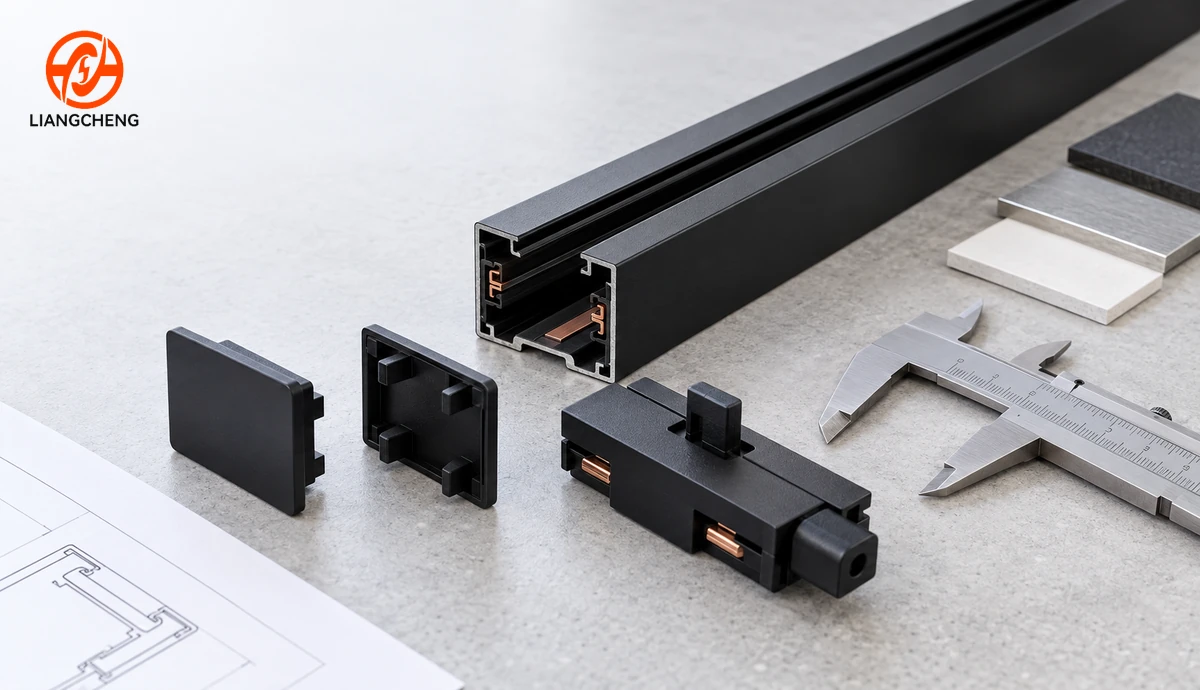
Assembly controls should address the rail and intended mating components as a system. Physical insertion of an adapter alone cannot prove electrical suitability or long-term performance. Use the adapter compatibility checklist to identify the interface evidence that belongs in the technical review.
How should electrical testing and product documentation be reviewed?
Electrical testing should be reviewed by people competent to assess the product and applicable requirements. Ask which tests apply to the exact configuration, who authorizes the methods and limits, and how results link to production or qualification records. Do not invent universal test voltages, currents, or acceptance limits from a generic audit checklist.
Buyers should observe electrical test demonstrations only under the facility safety procedures and competent supervision. Request records and explanations rather than handling energized rails or bypassing protective equipment. A safe demonstration with identifiable equipment and controlled settings is more useful than an improvised test arranged solely to impress a visitor.
Management-system certificates, product certificates, and test reports serve different purposes. Check the organization, site, model scope, issuing body, validity, and relevant limitations before relying on a document. Resolve disputed coverage with the issuing organization or an appropriate qualified specialist; a certification logo in a catalog does not establish approval for every customized rail.
How should finish and accessory consistency be checked?
Finish control should connect the approved appearance requirement to production inspection conditions. Review how color, gloss, texture, visible damage, and exposed surfaces are judged when those characteristics matter to the order. A visually attractive rail under showroom lighting does not establish that separate production lots will match the agreed reference.
Accessory control should identify which feeds, connectors, end caps, and mounting parts belong with each rail model. Review the picking instructions and a packed order for similar-looking items that could be mixed. The track rail accessories system guide provides context for defining the complete component set.
Audit findings should distinguish a cosmetic preference from a stated acceptance requirement. If the buyer never defined an appearance boundary, the appropriate action may be specification clarification rather than a supplier nonconformity. Where a clear requirement exists, record the observed difference and the affected product reference so the finding can be reproduced.
What does effective handling of defective product look like?
Effective nonconforming product control prevents unintended use or shipment while an issue is evaluated. Ask how rejected rails, suspect accessories, and incomplete inspection lots are identified in both physical storage and production records. A painted holding area is insufficient if employees can move its contents back into saleable stock without an authorized decision.
Rework should follow an approved method and receive the checks needed to confirm the final product. Ask for one completed rework example and trace the original defect, authorized action, repeated inspection, and release. Repairing the visible symptom does not establish that the underlying functional requirement remains satisfied.
Corrective action should address the cause of a recurring problem and demonstrate effectiveness after implementation. A new training attendance sheet alone may not show that mixed parts or obsolete drawings have stopped reaching production. Request later records from the affected process and compare them with the original finding before accepting closure.
How can capacity and delivery claims be checked?
Production capacity should be evaluated for the proposed product mix and delivery window rather than a factory-wide headline number. Ask which operation limits output, which shifts and resources are available, and what existing commitments use that capacity. Equipment presence is not the same as available capacity for your specific order.
A credible schedule should account for material availability, outsourced stages, setup, inspection, packing, and potential rework. Compare the proposed route with a recent similar order where records are available. A different product or unusually favorable demonstration run may provide context, but should not be treated as proof of the promised delivery date.
Commercial pressure should not erase technical release gates. A shorter delivery promise is not valuable if it depends on skipping approval or shipping unresolved material. Separate price and scheduling discussions from acceptance decisions; the wholesale track rail pricing guide explains why apparently similar offers can cover different work.
What should packing and outgoing release demonstrate?
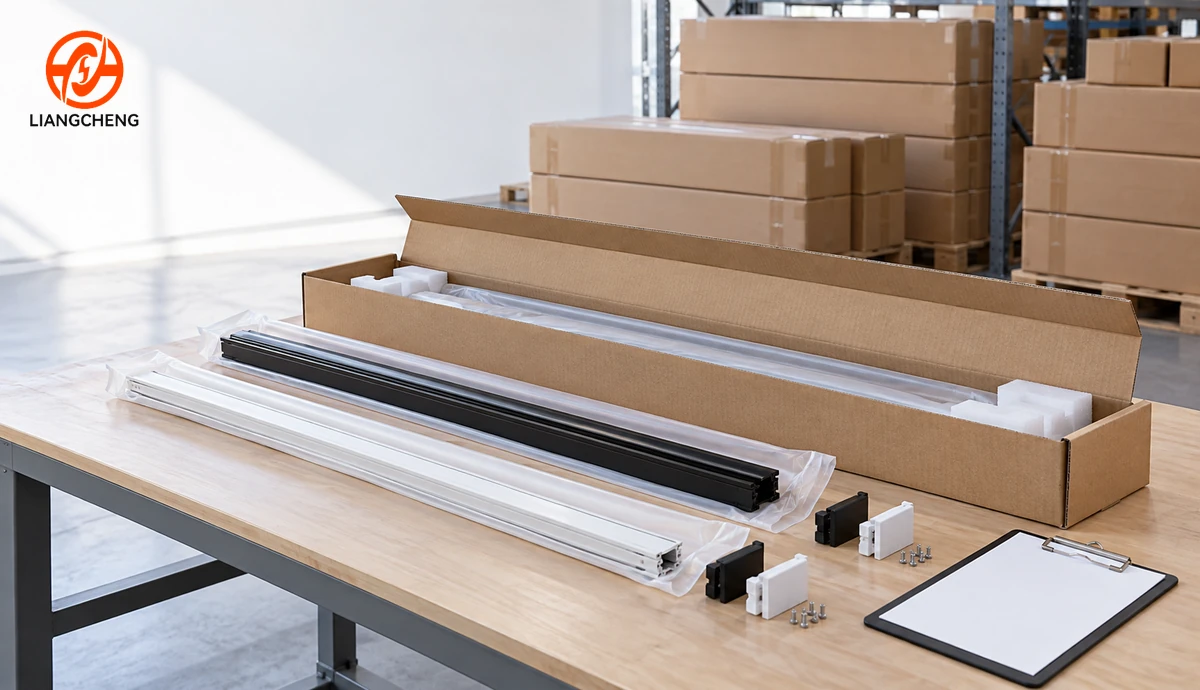
Packing review should confirm that the specified rail lengths, accessories, quantities, and identification reach the intended cartons. Inspect how rails are separated and supported, and ask how staff prevent mixed models or finishes during packing. A correct production lot can still become an incorrect shipment if final picking and reconciliation are weak.
Packaging adequacy should be linked to the agreed shipment conditions and supporting evidence, not judged from carton appearance alone. Long rails may need protection against bending, surface contact, and end damage. Review the long track rail packaging guide when defining the required protection and review scope.
Outgoing release should identify the authorized person and the evidence checked before shipment. Verify how open inspection holds, approved deviations, missing accessories, and packing changes affect release. A signed form is useful only when the selected order shows that the required checks actually occurred before approval.
How should findings determine the bulk-order decision?
Audit findings should state the requirement, objective evidence, observed gap, affected scope, and required next action. Avoid descriptions such as poor quality system when a specific mismatch can be recorded. A finding that names the work order and conflicting drawing revisions is easier to investigate and verify than a subjective impression.
| Decision | Evidence condition | Purchasing response |
|---|---|---|
| Hold | Significant safety, identity, or release uncertainty remains unresolved | Do not release the affected bulk scope until the gap is resolved |
| Conditional progression | Defined gaps have controlled interim measures and verifiable closure plans | Limit progression to the explicitly approved scope and conditions |
| Proceed within scope | Required evidence is available and relevant findings are closed | Proceed with agreed sample, production, and shipment controls intact |
A numerical audit score should not allow strong housekeeping or low prices to offset unresolved safety-related or product-identity concerns. Set mandatory gates before the audit and define who can accept residual commercial risk. Conditional progression must not waive required product conformity or treat an unverified critical control as complete.
Can a remote audit replace a factory visit?
A remote audit can support document review, live process walkthroughs, and selected record tracing when access and video quality are adequate. Ask for live movement between the selected workpiece and relevant records rather than relying entirely on edited promotional footage. Agree confidentiality and recording arrangements before sharing production or customer information.
Remote evidence has limits when measurements, storage conditions, operator practices, or product identity cannot be checked reliably. Record those limits and choose follow-up actions proportionate to the unresolved risk, such as qualified local verification or a representative pilot. Neither a video call nor an on-site visit guarantees future product conformity.
What should the closing meeting and follow-up record contain?
The closing meeting should confirm factual accuracy, scope limitations, and the proposed purchasing conditions while relevant personnel are present. Give the supplier an opportunity to explain or provide additional evidence for a finding. An explanation can resolve a misunderstanding, but an unsupported assurance should not replace a missing record or an observed control failure.
A corrective-action register should assign each finding a reference, responsible person, due date, containment action, cause investigation, permanent action, and closure evidence. Separate immediate correction from prevention of recurrence. Replacing one obsolete instruction fixes the observed copy; checking distribution and withdrawal controls addresses whether other workstations can repeat the same problem.
Closure verification should examine evidence produced after the corrective action, not just the promise to implement it. For a drawing-control finding, a follow-up review might compare a later work order, its workstation instruction, and the inspection revision. The verification method should match the original failure and explain why the new evidence supports closure within the affected scope.
The final audit report should retain the selected samples, records reviewed, findings, agreed restrictions, and authorized purchasing decision. State which matters remain outside the audit, including unobserved production routes or unresolved product-document coverage. A later reviewer should be able to distinguish what was actually checked from what the team inferred or still needs to verify.
Reassessment should be triggered by meaningful changes such as a new production site, significant process transfer, recurring defects, or a revised product configuration. A previous audit remains historical evidence; it should not become permanent approval for operations that were never examined.
How can buyers start an evidence-based discussion with Liangcheng Lighting?
Liangcheng Lighting provides wholesale and custom track lighting rail systems for lighting brands, distributors, and project buyers. Share the proposed rail configuration, quantities, matching components, destination, and audit priorities so the commercial and technical scope can be clarified. Request model-specific supporting information rather than relying on generic manufacturing descriptions.
To prepare a bulk order, contact Liangcheng Lighting about track rail supply and factory review requirements. Send your drawing or product reference, sample approval needs, packaging requirements, and evidence checklist. Agree which records and production stages can be reviewed, identify unresolved requirements, and make the purchasing decision against documented evidence rather than the appearance of a factory tour.
Benötigen Sie individuelle Schienensystemlösungen?
Kontaktieren Sie Liangcheng Lighting für OEM/ODM Aluminium-Schienenlösungen und professionelle Beleuchtungsunterstützung.