







Estimated reading time: 13 minutes
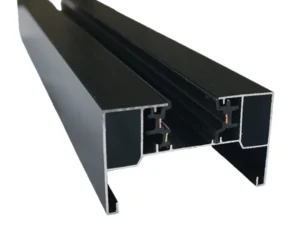
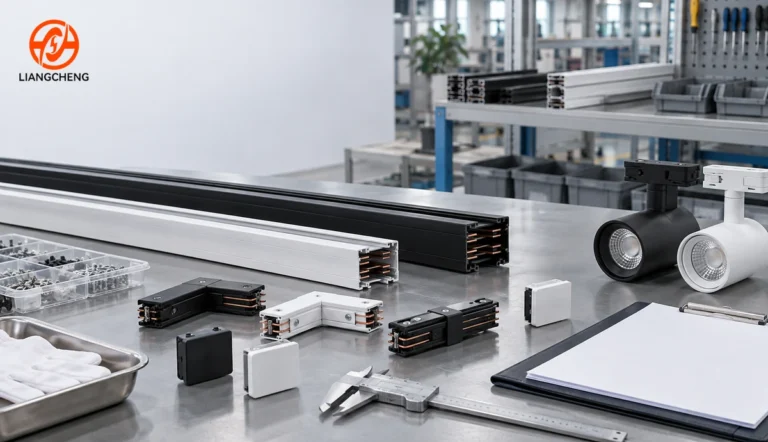
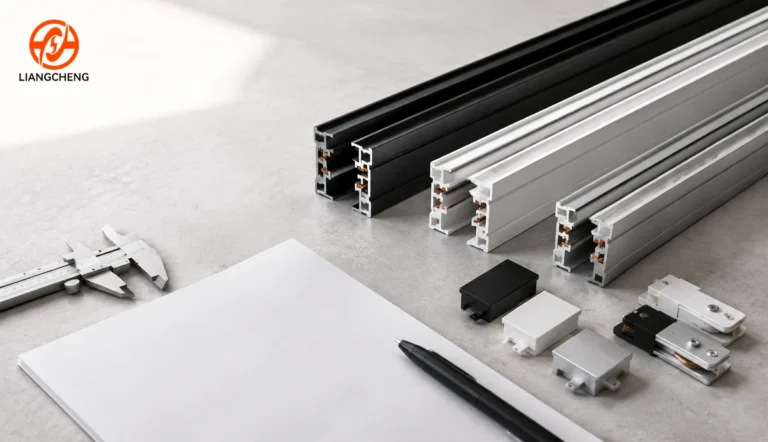
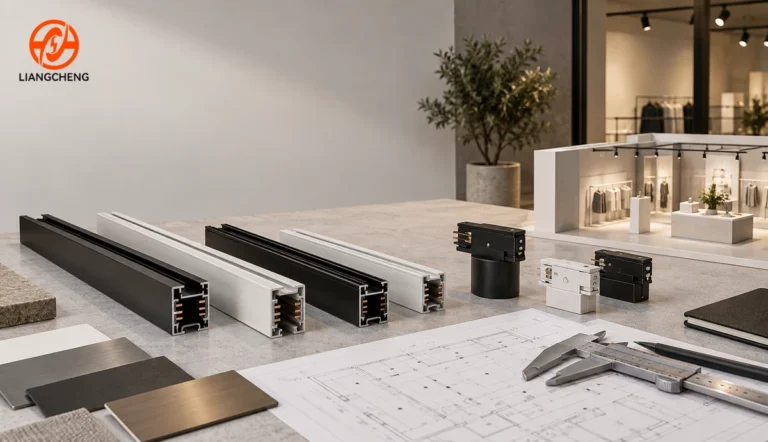
For architectural spotlight installations, an aluminum track rail is often a practical choice because it combines low weight, detailed extruded profiles, and flexible surface finishes. Steel can be a good choice for a purpose-designed lighting trunking or support system where stiffness and structural integration matter. However, neither material is automatically better: the complete system must meet the required electrical, mechanical, environmental, and compatibility specifications.
The useful question in an aluminum track rail vs steel track rail comparison is not simply which metal is stronger. It is whether two proposed products perform the same job, and which documented assembly delivers that job with fewer installation and maintenance compromises. This guide explains how to make that comparison without confusing a material advantage with a finished-product rating.
Are aluminum and steel track rails actually equivalent products?
Start by identifying what the supplier means by track rail. An electrified lighting track supports compatible luminaires and provides their electrical connection through a designed conductor and insulation arrangement. A metal support channel may carry equipment but provide no electrical distribution. Lighting trunking may accommodate wiring and support continuous lighting assemblies, with a different connection system.
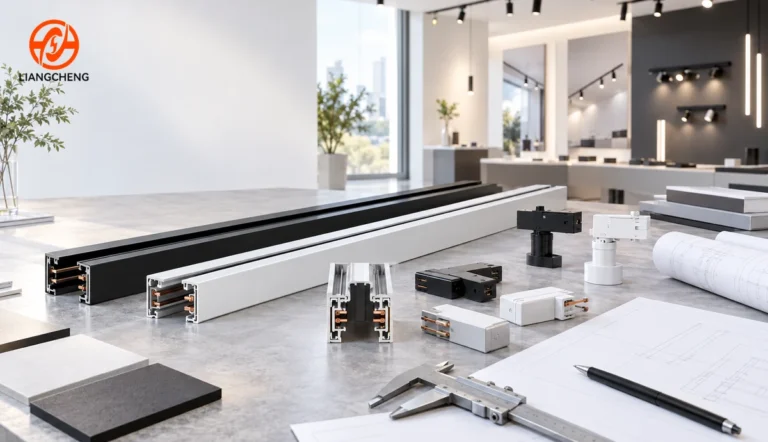
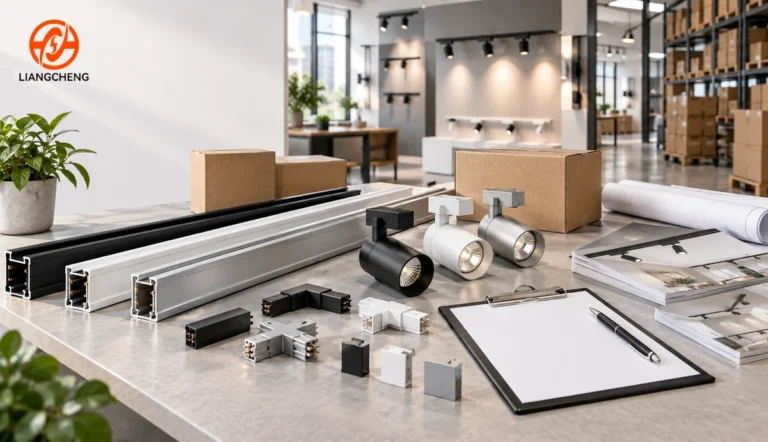
Consequently, a low quotation for a bare steel channel is not a like-for-like alternative to a complete aluminum lighting track. Before comparing price or weight, ask whether both offers include conductors, insulation, connectors, feeds, end caps, mounting accessories, and the required luminaire interface.
Also separate the rail body from the light itself. The difference between a track rail and a track light matters because the metal used for the rail does not necessarily describe the lamp housing, adapter, contacts, or brackets. Several materials can coexist in one assembly.
Finally, define steel precisely. Unprotected carbon steel, galvanized steel, powder-coated carbon steel, and stainless steel have different finish and corrosion considerations. Likewise, aluminum requires an alloy, temper, and finish specification. Comparing an unspecified aluminum product with unspecified steel produces a broad opinion, not a reliable purchasing decision.
How do the materials compare at a glance?
The following comparison describes general tendencies. It is a screening tool, not a substitute for the selected product drawings, load data, installation instructions, or applicable approval documents.
| Decision factor | Aluminum rail body | Steel rail or channel body | What to verify |
|---|---|---|---|
| Gewicht | Lower density; useful for handling long sections | Higher density at equal material volume | Actual complete-system mass per meter |
| Stiffness | Lower material stiffness; geometry is important | Higher material stiffness at equivalent geometry | Permitted spans, loads, and deflection limits |
| Profile manufacture | Extrusion can integrate detailed channels and grooves | Formed sheet can suit channels and trunking | Interface dimensions and production tolerances |
| Corrosion protection | Natural oxide film; finish and exposure still matter | Depends strongly on grade and protective system | Environment, coating, edges, joints, and fasteners |
| Electrical function | Housing material alone does not establish ratings | Housing material alone does not establish ratings | Conductors, insulation, contacts, and assembly approval |
| Installed cost | May offer handling and profile-integration advantages | May suit an integrated structural or trunking package | Complete bill of materials and installation scope |
Does lower weight make aluminum the better choice?
Lower density is a genuine aluminum advantage. The Australian Aluminium Council explains that an aluminum component of the same size and shape can weigh about one-third as much as steel. That comparison concerns material volume, not two differently engineered track systems with the same load rating.
A complete rail includes more than its outer shell. Conductors, insulating carriers, joining pieces, suspension hardware, and packaging all affect the delivered mass. One aluminum profile may also use thicker walls or a deeper section than the steel alternative. Request kilograms per meter for the complete product, then compare the actual project quantities.
For overhead installation, lighter lengths can make positioning and handling easier. However, reduced rail mass does not justify weaker anchors, fewer supports, or an unverified ceiling connection. The supporting construction must carry the full installed assembly, including luminaires and other approved accessories, under the specified conditions.
Freight savings also require calculation. Long rails may be charged partly by package dimensions rather than weight. Protective packing and length restrictions can dominate transport cost. Ask for carton dimensions, gross weight, rail lengths, and the proposed shipping basis instead of assuming that lower density guarantees a lower freight invoice.
Is steel stronger, and will it prevent rail sagging?
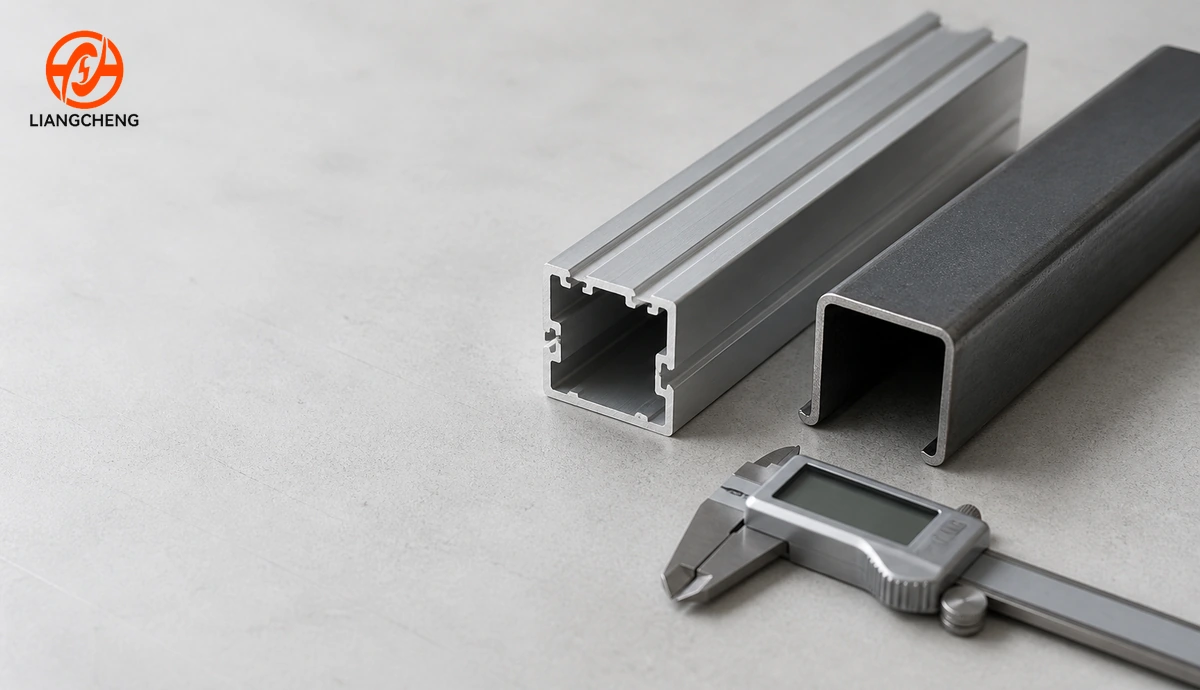
Strength and stiffness answer different questions. Strength concerns resistance to permanent deformation or failure. Stiffness concerns how much a component bends elastically under load. Steel generally has a higher elastic modulus than aluminum, as discussed in the European Aluminium guide to structural material behavior. This does not establish the capacity of a particular lighting rail.
A finished section also depends on its shape, wall distribution, alloy or steel grade, joints, support arrangement, and loading direction. A deep, well-designed aluminum extrusion can perform differently from a thin, shallow steel channel. Comparing only metal names or wall thickness ignores the geometry that helps the profile resist bending and twisting.
For a suspended installation, request a drawing showing the maximum support spacing and any limits around joints or ends. Ask how the rating changes with point loads, distributed loads, and off-center fixtures. A group of heavy spotlights clustered between two supports is not equivalent to the same mass spread evenly along the rail.
Do not convert a demonstration video, hand-bending impression, or generic material datasheet into an installation limit. Use documented system data for the actual orientation and accessories. Where project loads fall outside the published arrangement, obtain a reviewed solution before ordering. Neither an aluminum label nor a steel label replaces that engineering check.
Which material handles corrosion better?
Aluminum develops a protective oxide film, while ordinary unprotected carbon steel is vulnerable to rust. This makes aluminum attractive for many indoor architectural applications, but it does not make every aluminum track corrosion-proof. Alloy selection, surface finish, moisture, salts, cleaning chemicals, and contact with other materials still affect durability.
Galvanized or coated steel should not be evaluated as if it were bare carbon steel. Specify the protection system, intended exposure, and treatment of cut edges or damaged areas. Stainless steel is another distinct option, with grade-dependent performance. A photograph of a black finish cannot establish what lies underneath or how it will behave in service.
For either material, pay attention to joints, fasteners, concealed surfaces, and places where moisture could remain. A good-looking exposed face does not prove that the complete assembly is suitable for a humid, coastal, or chemically aggressive location. Ask for product-specific environmental limits and supporting documentation relevant to the proposed use.
Mixed-metal contact requires a proportionate assessment. The American Galvanizers Association explains that galvanic corrosion depends on dissimilar metals, electrical contact, and an electrolyte. Dry indoor contact is not the same exposure as persistent moisture. Use approved interface details, and never improvise isolation that interrupts required protective bonding or electrical continuity.
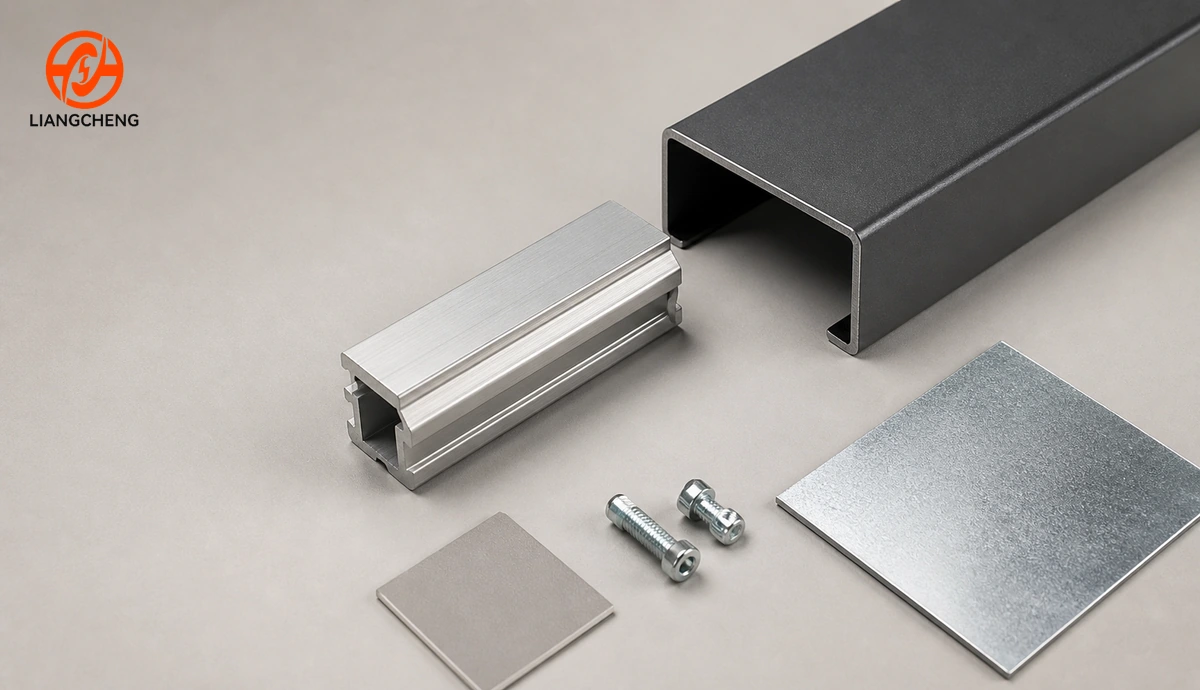
Does an aluminum track cool the lights better?
Do not transfer LED-strip profile claims directly to spotlight track rails. An LED strip mounted against an aluminum profile may use that profile as part of its heat-transfer path. A track-mounted spotlight usually has its own thermal design. The rail is not automatically a significant heat sink simply because its body is aluminum.
Aluminum has useful thermal conductivity, but heat must have a designed path from the source into the material before that property helps. Contact conditions, insulation, geometry, airflow, and the luminaire design matter. A metal comparison alone cannot support a promise of cooler LEDs, higher light output, or a longer rated lamp life.
Evaluate allowable ambient temperature and thermal limits in the complete product documentation. If the supplier claims a thermal benefit from the rail, ask what component transfers heat to it and what evidence supports the claimed benefit. Otherwise, treat rail material and luminaire thermal performance as separate purchasing questions.
Does the rail body change electrical safety or compatibility?
The outer metal does not tell you the conductor material, circuit arrangement, insulation quality, contact pressure, voltage rating, or current rating. An aluminum housing may contain separate conductors and insulating parts. A steel housing may do the same. Ask for the actual electrical construction instead of assuming the shell carries normal operating current.
Protective bonding requirements depend on the system design and applicable installation rules. Coatings, joints, and mounting arrangements must be handled according to the product instructions. Metal content alone does not prove electrical safety or fire performance; those claims require relevant evidence for the complete assembly and its intended use.
Compatibility also remains a separate decision. Similar-looking profiles may accept different adapters or connect in different ways. Matching width, color, or material is not enough. Confirm the exact rail family, approved adapters, connectors, feeds, and mounting accessories before purchasing replacements or combining parts from different product lines.
Likewise, aluminum does not mean single-circuit, and steel does not mean multi-circuit. The single-circuit versus multi-circuit comparison addresses electrical grouping, not a choice of housing metal. Decide the required lighting control arrangement separately, then check whether the chosen complete system supports it.
Which material offers better appearance and customization?
Aluminum extrusion can integrate grooves, channels, mounting features, and a clean exterior into one profile. This is useful where the rail remains visible in a shop, gallery, or office. However, extrusion capability is not proof of dimensional accuracy: straightness, twist, interface dimensions, and finish consistency still require defined acceptance criteria.
Steel forming can suit a different manufacturing approach, including folded channels and trunking. Its suitability depends on the required shape, sheet thickness, tooling, and finish. Neither manufacturing route guarantees sharper visual alignment at joints. Evaluate actual samples assembled with the specified connectors, not isolated profile sections alone.
For visible runs, agree on color, gloss, texture, and acceptable variation across rails and accessories. Review the finish under the intended room lighting. A close color match in daylight may look different beside a connector after installation. If dimensions are the main concern, use the track rail dimensions and clearance guide alongside the selected product drawing.
How should you compare total installed cost?
There is no universal price winner between aluminum and steel lighting rails. Material grade, manufacturing method, finish, order volume, location, and included components all change the quotation. A raw-material price comparison cannot establish the cost of a finished, compatible, installed lighting system.
Use the same scope for each quotation: rail lengths, connectors, feeds, end caps, adapters, supports, finishing, packaging, freight, installation labor, and any required project documentation. Separate one-time tooling or customization charges from repeat-order pricing. Record exclusions explicitly so a cheap initial number does not hide missing parts.
A useful comparison is a complete, representative section of the project, including its actual joints and supports. For example, price the same planned straight run with the same number and type of luminaires. This is a quotation exercise, not a claim that both products can use identical support spacing; each must follow its own documented arrangement.
Also consider access and replacement. If a connector becomes unavailable, replacing an otherwise sound rail can cost more than the original material saving. Ask about spare components, product identification, finish matching, and ordering continuity. These practical issues can outweigh a small difference in price per meter.
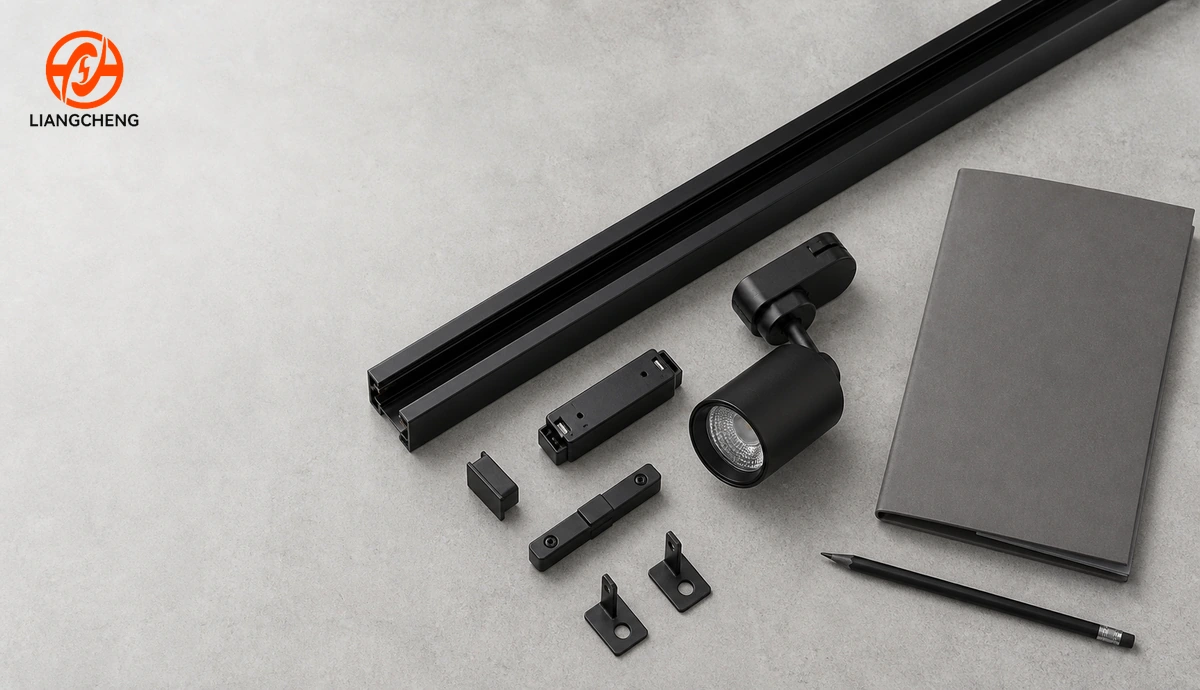
Which option fits common lighting projects?
Visible architectural spotlight runs
For retail displays, galleries, and offices, aluminum is a sensible starting point when low handling weight, a detailed profile, and a coordinated finish are priorities. Make the final choice from compatible systems with appropriate ratings. An attractive aluminum extrusion without suitable adapters or documented supports is not a complete solution.
Industrial trunking or engineered support arrangements
A steel-based system can be appropriate when the project is designed around its particular trunking, suspension, or structural arrangement. Evaluate that complete package on its own merits. Do not describe a support channel as an interchangeable electrified spotlight track, or assume a steel body automatically permits longer unsupported spans.
Humid, coastal, or demanding environments
Start with environmental suitability rather than a preferred metal. Assess the complete enclosure, connections, finish, fasteners, and permitted installation location. An indoor aluminum track is not automatically suitable outdoors, and coated steel is not automatically unsuitable. If exposure conditions are outside the documentation, request an approved alternative.
Extensions to an existing installation
Compatibility usually comes before material optimization. Identify the existing rail system and approved extension parts. A switch from steel to aluminum, or between two aluminum profiles, may require replacement of more than the straight lengths. For a broader specification sequence, follow the project guide to choosing the right track rail.
What evidence should you request before approving a substitution?
Ask the supplier to submit a clear, matched specification package. The following questions turn the material comparison into an auditable decision:
- What is the exact product family, and is it electrified track, lighting trunking, or support hardware?
- What body material, grade or alloy, temper where relevant, and surface finish are supplied?
- What are the complete mass, section dimensions, interface tolerances, and supplied lengths?
- Which load and support limits apply to this mounting orientation and luminaire arrangement?
- Which adapters, connectors, feeds, and accessories are approved together?
- What electrical ratings, environmental restrictions, and applicable approval documents cover the assembly?
- What cutting, finishing, maintenance, and replacement instructions must the installer follow?
- What is included in the price, and how are spare parts and future batches identified?
A sample review can confirm appearance, dimensional fit, and assembly details, but it is not a replacement for safety testing or rated-load evidence. Have a qualified installer review the installation documents and any proposed substitution. Record the approved model and revision so procurement does not later replace it with an unspecified equivalent.
For customized sections or finishes, the custom track rail specification guide can help organize the request. Keep custom appearance requirements separate from electrical and mechanical acceptance criteria so each item has a clear approval basis.
What should you check when the rails arrive?
Inspect the shipment against the approved specification before installation begins. Check product identifiers, quantities, supplied accessories, and finish references. Keep the original labels and batch information with the project record. A familiar color or matching package length is not sufficient evidence that a replacement batch has the same construction.
Review a representative selection for transit damage, distorted ends, unusual bowing, finish defects, and damaged insulating components. Follow the agreed inspection method and acceptance limits; do not invent a straightness tolerance on site. If a rail fails the agreed checks, separate it from acceptable stock and document the issue before anyone attempts modification.
For aluminum profiles, protect visible edges and adapter interfaces from handling damage. For coated steel, check the finish at ends and fixing locations as well as the broad faces. In both cases, use the specified storage and handling arrangements. Wet packaging, uncontrolled outdoor storage, or stacking without suitable protection can undermine an otherwise appropriate material choice.
Keep installation cutting and drilling within the documented procedure. Field changes can affect fit, surface protection, conductor clearances, and bonding provisions. A supplier-approved repair for a finish blemish is not necessarily approval to repair a damaged electrical assembly. Record nonconformities separately so cosmetic and functional problems receive the right response.
After handover, retain a small, clearly identified set of approved spare accessories where appropriate. Include the product family and finish code in maintenance records. This makes later repairs easier to specify and reduces the chance that an apparently similar rail or connector is ordered solely because its material and appearance match.
Frequently asked questions
Can a magnet identify whether the whole track is steel?
No. A magnetic response may come from a steel insert, fastener, or other component inside an aluminum-bodied assembly. Conversely, some stainless steels respond differently from ordinary carbon steel. Use the material declaration or construction drawing rather than a magnet alone to identify the complete product.
Does magnetic lighting track have to use a steel housing?
No. A system can combine an aluminum outer profile with components that provide magnetic retention. The housing metal does not determine the supply voltage or confirm adapter compatibility. Check the specific magnetic track system documentation instead of inferring its construction from the product name.
Can aluminum and steel parts be used in one installation?
Yes, when the combination is part of an approved design. For example, a rail and its supporting hardware need not be the same material. Use specified components, check environmental compatibility, and preserve required protective bonding. Mixed materials are a design question, not an automatic defect.
Which material will last longer?
Neither supports a universal service-life promise. Exposure, coating quality, contact wear, installation, maintenance, and replacement-part availability all matter. Compare product warranties and their exclusions, and ask what maintenance is required. Do not translate a general material property into a guaranteed number of service years.
Should a damaged rail be repaired or replaced?
Follow the system instructions and obtain qualified assessment. Distorted profiles, damaged insulation, loose contacts, or compromised joints can affect more than appearance. Do not straighten, repaint, drill, or modify an electrical track as an improvised repair unless the manufacturer explicitly permits that procedure.
Final verdict: choose the documented system, not just the metal
Aluminum is often a practical starting point for visible architectural spotlight rails because of its low weight and extrusion flexibility. Steel can be effective in a purpose-designed lighting trunking or support system. Neither choice removes the need to verify load capacity, compatible parts, environmental suitability, and complete installed cost.
When requesting a Liangcheng track rail proposal, provide the layout, mounting method, fixture details, electrical requirements, and exposure conditions. Ask for the matching drawings and accessory list before approving the material. The better rail is the one that performs the specified job as a complete, documented assembly, not the one with the strongest-sounding metal description.
Benötigen Sie individuelle Schienensystemlösungen?
Kontaktieren Sie Liangcheng Lighting für OEM/ODM Aluminium-Schienenlösungen und professionelle Beleuchtungsunterstützung.