







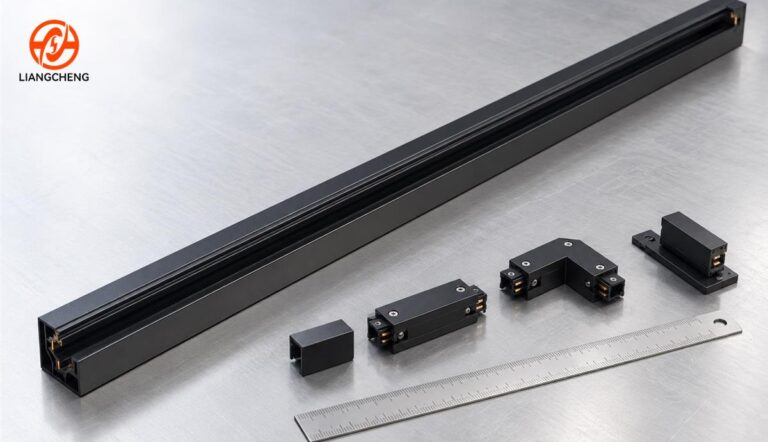

Choose a 2-wire track rail when every luminaire on a run can operate as one group. Choose a compatible 4-wire track rail when one physical run must support several independently switched groups. The better choice depends on the lighting brief, not on which rail has more conductors. A common 2-wire system supplies one circuit; a common 4-wire, three-circuit system can support three selectable groups when the feed, adapters, controls, and connectors are designed together.
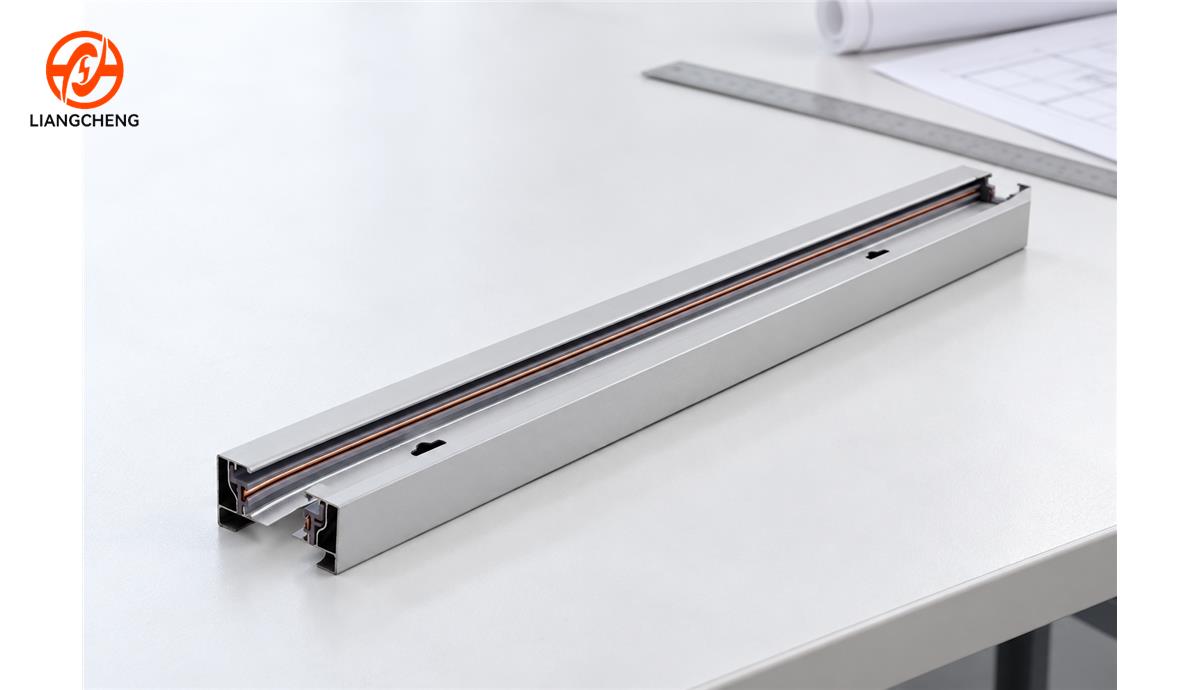
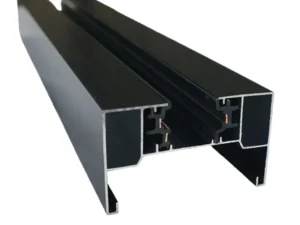
This guide is written for commercial lighting contractors, distributors, lighting brands, and project buyers. It focuses on the decisions that affect a real purchase: conductor functions, protective earth, zone control, fixture compatibility, rail dimensions, accessories, price scope, sample approval, and future changes. The Liangcheng LC-15B/6212E shown in the images is a 2-wire product reference. It is not a photograph of a 4-wire rail.
الوقت المقدر للقراءة: 14 دقيقة.
What is the core difference between 2-wire and 4-wire track rail?
A typical mains-voltage 2-wire rail has live and neutral power conductors for one lighting circuit. Compatible heads on that circuit follow the same switching schedule. A typical 4-wire, three-circuit rail has three selectable live conductors and a neutral, allowing different heads on the same physical route to be assigned to separate groups. The 4-wire profile alone does not create three lighting scenes; the electrical feed, switching arrangement, and compatible adapters must use its circuits.
Wire-count labels are supplier shorthand rather than universal electrical specifications. Some manufacturers count only insulated power conductors and provide protective earth through another approved contact or conductive rail path. Others include an earth conductor in the stated count. A purchaser must request a conductor-function diagram and the exact model’s earth arrangement before treating “2-wire” or “4-wire” as a complete specification. Liangcheng’s track rail types guide
Four-wire and three-circuit are commonly paired terms in commercial track catalogs, but not every 4-wire product follows the same contact layout. Likewise, a rail described as three-phase should not be connected to a supply based on its name alone. The manufacturer should identify every terminal and conductor. The project’s qualified electrical designer should verify the supply arrangement, protection, and installation against local requirements.
How do the systems compare in one table?
| Buying question | Typical 2-wire answer | Typical 4-wire answer | ما الذي يجب التحقق منه؟ |
|---|---|---|---|
| How many lighting groups? | One group on each run | Often up to three groups on one run | Actual circuit and switching diagram |
| How does a head connect? | Approved single-circuit adapter | Approved circuit-selecting adapter | Mechanical and electrical fit |
| What does the feed carry? | One circuit’s power paths | All intended power paths | Feed model, orientation, and rating |
| How complex is control? | One switch or group dimmer | Separate switching or controls per group | Group schedule and dimming compatibility |
| What changes in the BOM? | One-circuit accessories | Multi-circuit accessories | Feeds, joins, corners, caps, adapters |
| What is the usual project fit? | Stable, simple lighting scene | Changing retail or gallery scenes | Current and future use |
A 4-wire rail does not automatically allow individual control of every fixture. In a conventional three-circuit system, several heads share each selected circuit. If the brief calls for individual dimming, addressing, or complex scene recall, the design may require a separate digital or wireless control architecture. Likewise, a 2-wire rail can support dimming as one group only when its heads, drivers, and dimmer are approved together.
How is a 2-wire track rail wired and controlled?
A typical 2-wire system feeds a live and neutral conductor through a matched power feed, then supplies compatible track heads along the run. All heads connected to that one circuit are normally switched together. This is useful when a boutique, café counter, meeting room, or apartment needs adjustable spotlight positions but only one operating scene.
The label “2-wire” does not mean that protective earth can be omitted. An approved rail system may provide earth by a separate designed contact or another documented path. The product data and local installation rules determine what is required. A buyer should ask for the manufacturer’s full connection diagram and continuity test requirement instead of assuming the rail body or mounting screws provide the intended path.
One circuit simplifies the control schedule, but it limits zoning. If a window display must remain lit while the rest of a store is off, the project may need a separate 2-wire run with another feed or a multi-circuit route. That choice affects ceiling appearance, cable paths, and cost. Comparing a 2-wire meter price with a 4-wire meter price would miss those layout differences.
How does a typical 4-wire rail create three groups?
A common 4-wire multi-circuit rail distributes three live paths and one neutral along a shared physical track. A compatible fixture adapter selects the intended live path while using the approved common connections. The project can then switch different groups separately, for example a retail window, feature display, and general merchandise area.
The rail’s unused paths do not create value by themselves. If all three live paths are connected to one control output, the installation does not deliver independent scenes. If the track heads use adapters without circuit selection, they cannot implement the grouping plan. The buyer should request a schedule identifying each head’s group, the compatible adapter model, and the feed and switching components required.
A four-conductor count does not prove a particular voltage, current limit, or supply phase arrangement. Ratings and permitted configurations vary by manufacturer and target market. A qualified designer must check connected loads, circuit protection, common components, and the manufacturer’s instructions for the exact model. Liangcheng’s 4-wire rail buying guide
When does 2-wire provide the better project value?
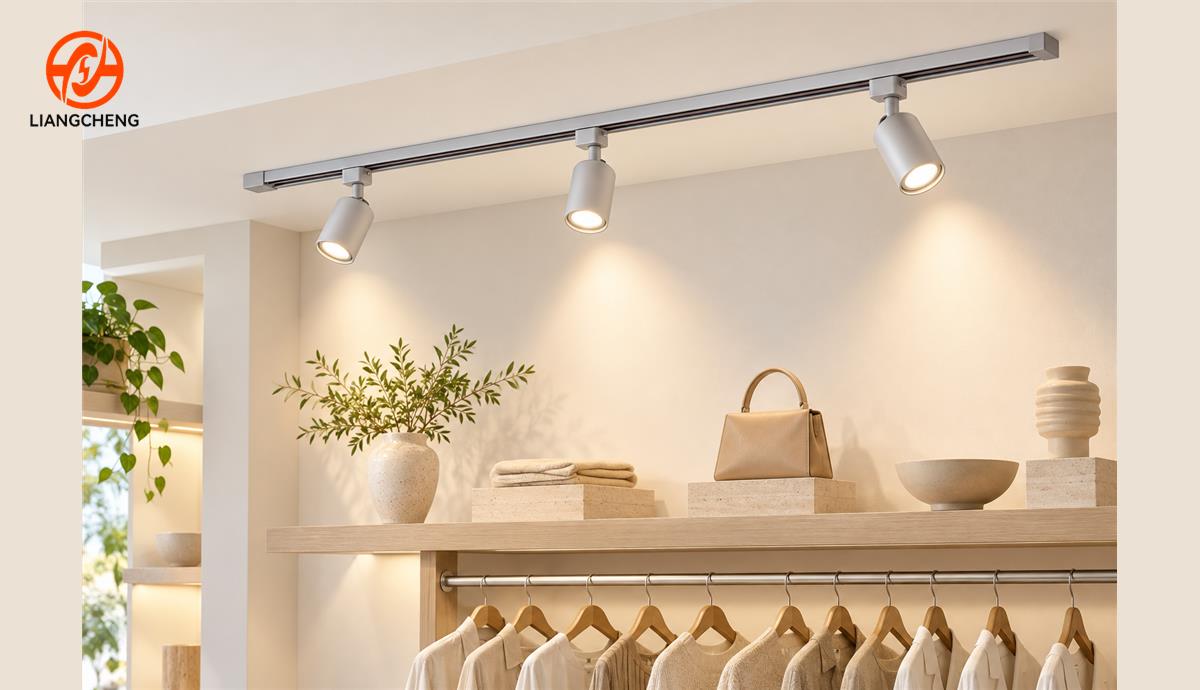
Two-wire rail is often the better value when one lighting group can serve the whole rail route. A small clothing store may aim three heads at different merchandise yet operate them together. A café may use one rail above a counter during all opening hours. In these cases, paying for extra circuit paths and keeping additional adapters in stock does not improve the intended lighting behavior.
For a distributor, a simple system can reduce stock complexity if the market uses one confirmed adapter family. The rail, feed, straight joiner, end cap, and head must still belong to the same approved system. Fewer parts do not justify buying generic components that only appear to fit. A stable model code and repeatable accessory supply are more important than the shortest product description.
A 2-wire choice becomes less attractive when separate operating schedules are likely. If a tenant frequently changes displays, adding another physical rail later can be disruptive. The buyer should ask the client whether window, circulation, and product accents will ever need separate control. A low initial price is only a saving when future control needs remain simple.
When is 4-wire worth the additional coordination?
Four-wire multi-circuit track becomes useful when separate groups must share one rail route. A fashion store can keep window lighting on after closing while turning other heads off. A gallery can retain circulation lighting while changing artwork accents. A showroom can test new feature layouts without adding several parallel ceiling tracks.
The added flexibility requires a more precise design. The team must decide which group each fixture uses, where feeds enter, whether corner connectors preserve every circuit, and how the groups are switched or dimmed. Commissioning must verify that the assigned heads respond to the intended controls. A 4-wire rail without this schedule can be more expensive and still behave like a one-circuit system.
Three shared circuits are not the same as individual fixture addressing. If a museum asks for each artifact to have a separately stored dimming level, a conventional 4-wire power rail alone may not meet the brief. Define the needed scene behavior and control protocol first. Then select a rail, driver, adapter, and control architecture that supports it.
Are 2-wire and 4-wire heads or accessories interchangeable?
A 2-wire track head should not be assumed to fit a 4-wire rail. Different rail families may use different contact positions, keys, locking travel, polarity marks, ground contacts, and electrical ratings. A fixture body can sometimes be supplied with a choice of manufacturer-approved adapters, but the adapter model determines compatibility. The apparent width of the opening is not enough evidence.
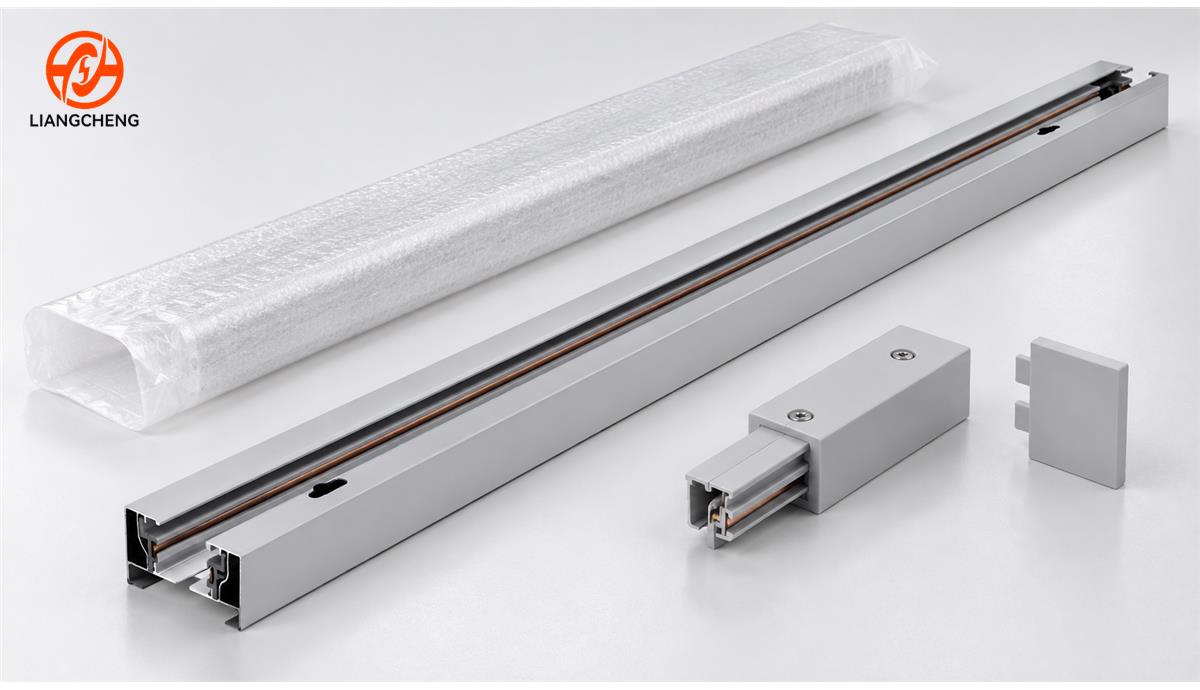
Feeds and connectors also carry electrical functions. A straight joiner that physically enters a rail may fail to connect all circuits, preserve polarity, or maintain the intended earth path. A corner may have an orientation rule that affects which conductor continues through the turn. Order the rail with its documented feed, joiners, corners, caps, supports, and matching fixture adapters.
A retrofit should start with the existing product markings, measured cross-section, and a physical adapter sample. The supplier should identify the replacement system in writing and test the intended head with the actual proposed rail. Liangcheng’s track adapter compatibility checklist
Never force a head into a track or alter a grounding feature to make it fit. A rail that accepts a head with unusual force may still have poor contact, weak retention, or unsafe operation. The B2B consequence is not only one failed light: a distributor may be left with an entire batch that does not match its installed customer base.
What should the full bill of materials contain?
A 2-wire BOM should list the exact rail model, lengths, finish, mounting method, feed, straight and corner connectors, end caps, approved heads or adapters, and control device. A 4-wire BOM needs all of those plus the circuit-selection method, group schedule, multi-circuit connector variants, and the control and protection equipment specified by the designer.
Surface, suspended, and recessed mounting can change the economics. Recessed rail needs a ceiling section with the exact profile width, depth, trim detail, supports, and access plan. Suspended rail needs an approved cable or rod system and a coordinated power feed. A larger 4-wire profile may alter ceiling coordination, but only the model drawing can establish the real dimensions. Liangcheng’s recessed rail guide
Drawings should show each route, feed, corner, luminaire, and access point. For 4-wire, add the circuit assignment beside each head. For 2-wire, show whether separate rail runs are required for separately switched scenes. These annotations prevent a supplier from quoting a bare rail when the project needs a complete and testable system.
Some rails may be field cut under their installation instructions, while others require prepared ends or specific finishing steps. Ask the manufacturer what is permitted for each SKU. Cutting long rails affects conductor ends, insulation, end caps, and accessory engagement; it should not be improvised on site based on a generic track-lighting video.
Which common specifications matter most?
Liangcheng’s general aluminum rail catalog includes black, white, and silver finishes, typical lengths from 0.5 m through 3 m, and surface, suspended, and recessed mounting options. These are catalog-level possibilities rather than a promise that every combination exists for the selected 2-wire or 4-wire SKU. Request a current model matrix with cross-section, finish, length, and accessory codes.
| Specification | لماذا يُعد ذلك مهماً؟ | الأدلة المطلوبة |
|---|---|---|
| Conductor functions | Distinguishes one circuit from multiple groups | Terminal map and section drawing |
| Protective earth | Determines the approved safety path | Installation and continuity instructions |
| Voltage and load | Limits assembled system use | Model-specific ratings and test documents |
| Adapter interface | Controls fixture fit and circuit selection | Approved adapter list and sample test |
| Rail size and length | Affects ceiling cutout, joins, and freight | Controlled profile drawing and SKU list |
| Finish and color | Affects project appearance and repeat orders | Approved finish sample and tolerance |
| Accessory family | Determines whether layout can be built | Complete BOM and connector drawings |
Do not copy a generic voltage or ampere limit from another manufacturer’s rail. The effective limit depends on the approved assembly, including feed, joiners, adapters, and other relevant components. A purchaser should confirm that a certificate applies to the actual ordered configuration, especially after an OEM change to insulation, conductor layout, or feed design.
Which applications favor each rail?
Retail applications should be decided by the lighting schedule. One stable display with a common opening and closing time often fits 2-wire rail. A store with a window, promotional table, and general shopping area on one continuous route may benefit from a 4-wire multi-circuit plan. The spotlight’s beam, glare control, and color quality remain separate choices; wire count alone does not improve merchandise lighting.
Gallery applications depend on exhibition changes. Moving spotlights along a rail does not require multiple circuits if all heads operate together. Keeping circulation lights on while switching artwork accents separately does require a control distinction. If each artwork needs individual dimming or stored scenes, a conventional 4-wire power rail may need additional control components or a different system.
Hospitality projects should weigh appearance and maintenance. A small café can use a simple exposed 2-wire route that staff understand and can service. A large hotel venue may use several groups on one recessed rail, but the maintenance team must retain compatible adapters and know the circuit assignments. The ceiling design and service access can matter more than the number of conductors.
Chain-store rollouts should choose one controlled system standard for each store format. If every branch receives a different rail or feed revision, later replacement stock becomes difficult. Approve a pilot installation, record the rail and adapter revisions, and require change notification. A lower quotation is poor value if the next batch cannot join or accept the first batch’s heads.
What are the advantages and limitations?
The main 2-wire advantage is a small decision set for a single lighting group. It can reduce component and control complexity when that is exactly what the space needs. Its limitation is that separate groups normally require separate runs or a more advanced control strategy. Choosing it solely on initial price can create later renovation costs.
The main 4-wire advantage is multiple switched groups along one route. It can help preserve a clean ceiling while supporting changes in merchandising or display scenes. Its limitations are more demanding feeds, accessories, adapter selection, control wiring, commissioning, and spare parts. The additional scope has little value if all heads remain on one switch.
Neither system guarantees smooth dimming or universal fixture fit. Dimming depends on driver, dimmer, and approved control compatibility. Both systems require model-specific electrical limits, safe installation, and maintenance access. A buyer should compare the complete installed outcome, not a product label or a one-meter extrusion price.
How should wholesalers compare quotations and samples?
Send each supplier the same RFQ: destination market, voltage and frequency, rail model or target interface, intended fixture adapters, lengths, finish, mounting form, lighting-group schedule, complete accessory quantities, sample requirements, packaging, delivery terms, and annual or project volume. If the supplier substitutes a different rail family, it should mark the deviation clearly.
For 4-wire quotes, require the conductor map and group-selection method. For 2-wire quotes, include any separate runs needed to produce the same lighting scenes. A fair comparison counts rail, feeds, joints, corners, heads, controls, labor, packing, and expected replacement stock. Per-meter rail price alone can favor an option that is more expensive after installation.
Approve a representative assembled sample before bulk production. Check straightness, finish, conductor retention, adapter lock, feed and corner fit, polarity, protective-earth continuity where applicable, and operation of every planned group. Record the approved drawing and sample revision. Liangcheng’s sample approval guide
Long aluminum rails need shipment protection. Ask for end protection, sleeves or dividers, carton strength, and a packing sample. A rail that passed inspection at the factory can arrive bent or scratched if the packaging is weak. Distributors should agree on damage claims and spare lengths before the first repeated order.
Can a 2-wire installation be upgraded to 4-wire later?
A 2-wire rail should not be treated as a rail that can simply receive two more conductors. A 4-wire system may use a different extrusion, feed, connectors, adapter geometry, cable routes, switching equipment, and approvals. Some luminaire bodies accept approved alternative adapters, but that does not make the existing rail reusable.
Future control needs can still be planned. A designer may reserve ceiling access, support positions, or a cable route for a later replacement. Compare that preparation with the cost of fitting a multi-circuit system at the start. The answer depends on how likely new lighting groups are and how disruptive a future ceiling intervention would be.
A distributor can apply the same logic to inventory. A stable 2-wire range may fit small fixed-layout buyers. A 4-wire platform may fit commercial clients that routinely change displays. Stocking both can be sensible when the rails, adapters, feeds, and accessories are clearly separated and sales teams can explain the choice.
الأسئلة الشائعة
Does every 4-wire rail have three circuits?
No. Three selectable live conductors plus neutral are common, but catalogs can count protective earth or arrange contacts differently. The model’s conductor-function diagram is the decisive evidence.
Does 2-wire mean there is no protective earth?
No. The label may count only power conductors. The approved system may provide earth through another designed path. The manufacturer and qualified installer must verify the actual arrangement and local requirements.
Can a 2-wire spotlight be mounted on 4-wire track?
Only when its manufacturer approves the installed adapter for that exact rail. Similar-looking profiles do not establish safe contact alignment, retention, or circuit selection.
Is 4-wire better for every commercial project?
No. A commercial project with one operating group may gain no value from extra circuit paths. Four-wire is useful when separate groups share a route and the controls will actually use them.
Does 4-wire rail automatically support DALI?
No. A conventional 4-wire power rail does not automatically include a digital control pair, compatible drivers, or addressing. The required control system must be specified separately.
What is the first B2B approval step?
Define the lighting-group schedule, then obtain model drawings for rail, adapter, feed, and connectors. Build and test one representative run before committing to wholesale quantities.
Source 2-wire and 4-wire track rails from Liangcheng Lighting
Liangcheng Lighting manufactures aluminum track lighting rails for commercial projects, wholesalers, and distributors. Its range includes 2-wire and 4-wire configurations, matching accessories, surface and recessed options, and OEM services for length, finish, branding, and packaging. Factory-direct pricing and minimum order quantities should be confirmed for the selected models and order mix.
Send Liangcheng your ceiling plan, lighting-group schedule, destination market, intended fixture adapter, rail lengths, mounting method, finish, accessory list, volume, and certification requirements. The team can review whether one 2-wire group or a 4-wire multi-circuit system fits the brief and prepare matched samples and a B2B quotation. Explore Liangcheng’s track rail products or contact Liangcheng for wholesale supply.
هل تحتاج إلى حلول إضاءة مسارات مخصصة؟
اتصل بـ Liangcheng Lighting لحلول قضبان الألومنيوم OEM/ODM ودعم الإضاءة الاحترافي.
ذو صلة