








Tempo estimado de leitura: 13 minutos
A track rail sample approval process should connect a controlled drawing to identified physical samples, documented inspection results, closed corrective actions, and a representative pilot run. Each approval must state the product revision, evidence reviewed, responsible approver, and permitted next step. A successful sample review establishes a defined reference; a successful pilot provides additional evidence that the planned production process can repeat that reference.
For lighting distributors, importers, and private label buyers, sample approval works best as a sequence of decisions rather than a single signature. A finish sample may establish color acceptance while leaving adapter compatibility unresolved. A short profile sample may confirm a cross section while providing little evidence about full-length straightness, packaging protection, or repeatable assembly.
This guide explains how to manage the handoffs from drawing review to pilot release. The suggested workflow is a buyer planning framework to agree with the manufacturer, not a claim that every project needs identical tests or quantities. Product-specific electrical qualification and installation requirements must be addressed by competent technical personnel within the applicable product and market scope.
What should the approval process deliver at each stage?
A useful approval plan assigns a distinct output to each stage so purchasing, engineering, quality, and production share the same definition of progress. Drawing approval permits construction of the agreed sample configuration. Sample approval establishes the accepted design reference. Pilot release depends on evidence from the intended manufacturing and handling process, including unresolved issues that could affect repeated supply.
| Stage | Required evidence | Decision before proceeding |
|---|---|---|
| 1. Drawing review | Controlled drawings, requirements and agreed inspection scope | Authorize the specified sample build |
| 2. Sample receipt | Sample identities, build history and delivery condition | Confirm samples are suitable for evaluation |
| 3. Sample evaluation | Dimensional, appearance, interface and required technical records | Accept, restrict or return the sample submission |
| 4. Reference approval | Closed issue log and controlled reference set | Approve the defined configuration for pilot preparation |
| 5. Pilot run | Production records, representative inspection and packaging evidence | Determine whether the planned process is ready |
| 6. Production release | Approved pilot disposition and updated manufacturing documents | Authorize the stated production scope |
The approval plan should identify who can sign each decision and who can stop progression. Purchasing manages commercial coordination, while engineering and quality evaluate the evidence within their responsibilities. One contact can coordinate the program, but a schedule commitment should not silently replace a required technical decision or expand the scope of an existing approval.
What must be agreed before sample drawings are approved?
The sample brief should identify the target application, mounting arrangement, rail family, intended mating components, lengths, finishes, and product requirements. A broad request for a compatible rail leaves essential interfaces undefined. Buyers can use the track rail RFQ information checklist to turn purchasing needs into a consistent starting package before drawing and sample work begins.
The drawing package should include part numbers, revision identifiers, units, dimensioned interfaces, material requirements, finish requirements, and relevant assembly references. Where several files describe one product, the approval record should identify the complete file set. An emailed sketch may help discussion, but manufacturing needs a clear statement of which controlled information governs the sample build.
Critical dimensions should be selected according to function rather than convenience of measurement. Rail opening geometry, mating contact positions, locking features, connector engagement, and mounting interfaces may require closer review than an external cosmetic dimension. The guia de dimensões de trilhos para iluminação provides useful terminology, while the project drawing must establish the actual dimensions and acceptance limits.
Drawing review should also settle how requirements will be checked. Straightness needs an agreed support condition and measurement method; finish assessment needs an approved reference and viewing conditions. Defining these details before samples arrive reduces disputes because both parties evaluate the same characteristic instead of applying different interpretations after seeing the result.
The sample build authorization should identify any departures from intended production tooling, materials, or operations. A machined development piece can answer an early geometry question, but its dimensional behavior may differ from a production extrusion. Recording these differences lets the buyer approve the knowledge gained without assuming that the prototype proves manufacturing repeatability.

How should samples be identified and checked on arrival?
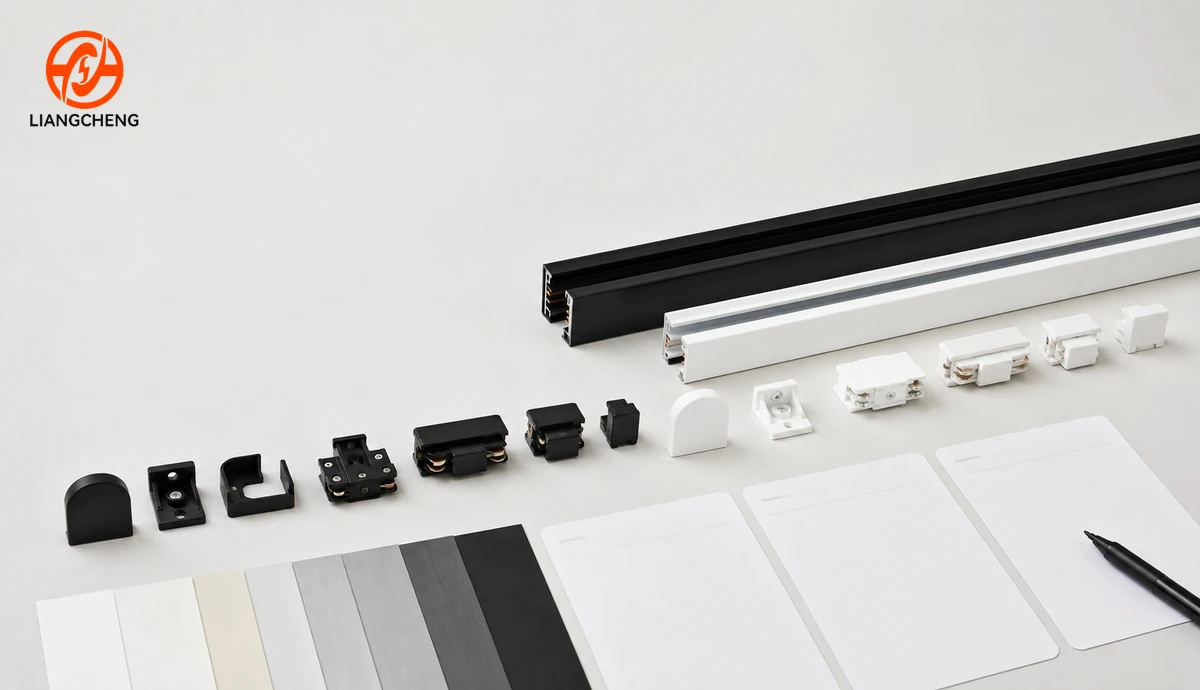
Each track rail sample should carry an identifier linked to the part number, drawing revision, production or development lot, finish, and build date where available. Loose pieces without this mapping create uncertainty when results differ. Identification should remain visible throughout evaluation, including after samples are cut, assembled, photographed, or sent to another reviewer.
The receiving check should record packaging condition, sample quantity, visible damage, and whether the supplied components match the submission list. Transit scratches and bent samples can distort an evaluation of manufacturing quality. Photographs taken before unpacking help distinguish shipment damage from an original product defect and show whether a replacement sample is needed.
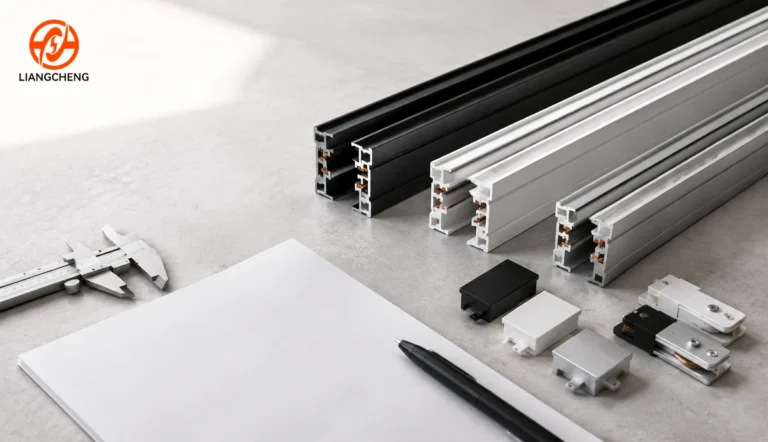
The sample set should represent the questions under review, including relevant mating components and useful lengths. Short sections support cross-section assessment, while full-length pieces help evaluate straightness, handling, and carton design. The agreed sample quantity should also allow required destructive tests and retained references; consuming every sample can leave no stable benchmark for later investigation.
Which checks belong in the first sample evaluation?
How should dimensional results be documented?
The dimensional report should link each inspected characteristic to the drawing, identify the measurement method, and record actual results with acceptance limits. A general statement that dimensions are acceptable gives little support for future comparisons. Where geometry varies along the rail, measurements should represent agreed positions instead of relying on one convenient end section.
Borderline measurements should be reviewed using the agreed reporting precision and decision rule. An apparent difference can arise from support conditions, instrument setup, or measurement uncertainty as well as the product itself. Rechecking the same identified feature under comparable conditions is more useful than selectively rounding values to make a sample appear acceptable.
How should color and surface finish be approved?
Finish approval should identify the color reference, surface treatment, gloss or texture requirements where specified, viewing conditions, and acceptable appearance boundaries. A screen image provides useful communication but cannot reliably establish an exact physical color match. Retained finish references and defined defect examples give subsequent inspectors a more consistent basis for judging production pieces.
Appearance review should include edges, cut ends, visible faces, and areas contacted during assembly or packaging. A rail may look acceptable while resting on a desk but develop marks when an adapter moves or a connector is fitted. Recording the location and cause of marks helps distinguish a finish issue from an interface or handling problem.
How should the rail and accessories be reviewed together?
System review should identify every rail, adapter, feed, connector, end cap, and mounting component included in the approval. Components that share a commercial description can still have different interface details. The adapter compatibility checklist for B2B buyers supports a structured review of mating configurations without treating a successful fit as complete technical qualification.
The assembly record should state which combinations were evaluated, the observed engagement and alignment, and the acceptance criteria applied. Testing one straight connection does not establish every corner, orientation, or accessory combination. The track lighting rail accessories guide can help organize the bill of materials so omitted components are visible before approval.
What technical evidence should accompany physical checks?
Technical evidence should match the exact system configuration and the requirements identified for the target market and use. Relevant records may cover mechanical retention, electrical characteristics, materials, markings, and other qualification requirements determined by the responsible technical team. A certificate heading or a powered demonstration alone cannot establish that the submitted assembly is covered by the required evaluation.
Technical reviewers should check report identifiers, tested model references, component revisions, test scope, and stated limitations. A report for a related rail can offer background while leaving the submitted combination unverified. Any proposed reliance on earlier evidence should have a documented technical rationale identifying which differences matter and which additional evaluation remains necessary.
How should problems and sample revisions be controlled?
A sample issue log should assign each finding a unique reference, affected sample identifier, requirement, observed result, supporting evidence, owner, and closure condition. Vague feedback such as improve the fit invites inconsistent changes. A precise finding allows the supplier to investigate the relevant feature and gives the buyer an objective basis for checking the correction.
Corrective action should explain what changed and which related features could be affected. Adjusting a rail opening may improve insertion while changing retention or contact relationships. The revised evaluation scope should follow the impact of the change, rather than automatically repeating only the measurement that originally failed.
Revised samples should have distinct identifiers and a clear connection to revised drawings and materials. Mixing old adapters with new rails can produce results that do not represent either approved configuration. The review record should preserve earlier findings, identify the superseded sample set, and explain why the latest evidence closes each issue.
Conditional approval should describe a limited permission, named restrictions, and a deadline or event for closure. Permission to prepare packaging, for example, need not authorize sale or full production. If an unresolved issue affects product suitability, the record should keep the relevant activity on hold until the responsible reviewer accepts the required evidence.
What makes a golden sample useful for repeat supply?
A golden sample is an approved physical reference tied to a controlled product definition and approval record. The reference should identify the rail and mating components, finish, revision, and permitted comparison uses. A physical sample complements measurable specifications because it can demonstrate appearance and assembly details that are difficult to communicate fully through text alone.
Buyer and supplier reference sets should be linked to the same approval event and protected against damage, substitution, and uncontrolled use. Repeated assembly can wear interfaces, while storage can alter appearance. A reference-control record should therefore define custody, condition checks, and replacement authorization so an aging benchmark does not silently redefine acceptable quality.
The approved sample package should include drawings, inspection records, the compatibility matrix, finish references, issue closure evidence, and the signed approval scope. A signature on a photograph offers less information because the underlying configuration may remain uncertain. For branded ranges, the private label track rail product line guide explains how these references connect to SKU and packaging control.
How should a pilot run be planned?
A pilot run should use the intended production route closely enough to expose practical variation in materials, tooling, setup, assembly, inspection, and packing. A hand-selected group of development samples answers a different question from output produced through routine operations. Any remaining difference between the pilot and planned production should be recorded with its effect on the conclusions.
Pilot quantity should be chosen from the process questions, product risk, variation sources, and required inspection coverage. There is no single quantity that proves every rail program ready for production. A useful pilot includes enough representative output to evaluate relevant conditions while preserving traceability to setup, material lots, and any interventions during the run.
The pilot coverage matrix should address relevant lengths, finishes, accessory combinations, and packaging formats. Selecting only an easy short rail may miss handling or straightness issues associated with longer products. Where one variant represents several others, engineering should record the rationale and identify any characteristics that still require separate evaluation.
The pilot plan should define inspection timing, acceptance criteria, record ownership, and the response to defects before the run starts. Checks at startup and later representative points can reveal different problems. If operators adjust a process during the pilot, records should distinguish output made before and after the adjustment so successful later pieces do not conceal the initial condition.
What should the pilot reveal beyond sample appearance?
Pilot evaluation should compare actual output with the approved requirements and examine whether routine operations can reproduce the accepted sample. Useful observations include dimensional spread, assembly difficulties, rework, rejected pieces, and recurring handling marks. A passing final piece offers less process information than a traceable record showing how the full evaluated output was produced and handled.
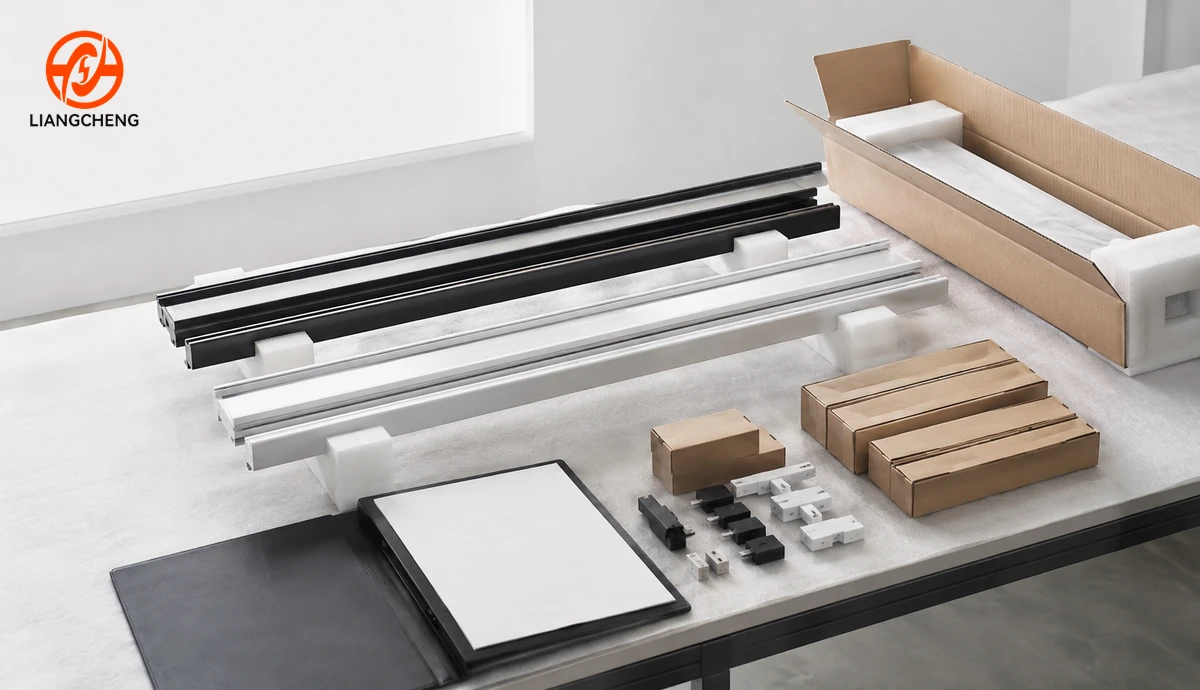
Packaging evaluation should use the intended rail lengths, quantities, separators, end protection, accessory packs, and labels. Sample shipping cartons may differ from the final delivery format and therefore leave transport preparation untested. The long track rail packaging guide provides additional detail for assessing bending and scratch protection within a defined shipment plan.
Warehouse and assembly trials should verify that product labels, part codes, accessory quantities, and instructions lead users to the correct configuration. A technically acceptable rail can still create order errors if similar cartons contain different lengths or components. Recording these operational problems during the pilot allows corrections before the same ambiguity reaches a larger inventory.
What belongs in the sample and pilot approval record?
An approval record should let another team determine exactly what was reviewed and what activity was authorized without reconstructing email history. Separate the physical sample decision from the pilot disposition and production release. The following template provides practical fields for that purpose; project-specific requirements should be added before the record is used.
TRACK RAIL SAMPLE AND PILOT APPROVAL RECORD
Project, customer and supplier:
Product codes and intended application:
Drawing and specification revisions:
Approved component and accessory list:
Sample identifiers and build history:
Prototype departures from intended production:
Evaluation scope, methods and acceptance criteria:
Dimensional and appearance report references:
Assembly combinations and technical evidence:
Open issue references and responsible owners:
Corrections, affected features and recheck results:
Reference sample identifiers and storage location:
Sample disposition and permitted next activity:

PILOT SECTION
Pilot order, quantity and covered variants:
Material lots, tooling and process references:
Inspection timing and sampled output identifiers:
Results, rework, rejects and process adjustments:
Packaging, labeling and operational trial findings:
Remaining differences from normal production:
Issue closure evidence and any restrictions:
Pilot disposition and production release scope:
Approvers, roles, dates and approval references:
Future change notification and reapproval triggers:
Evidence attachments should carry identifiers that remain usable after the approval record is shared. A broken folder link or an unversioned spreadsheet weakens the decision trail. Keeping stable references to the approved files allows production, purchasing, and incoming inspection to apply the same requirements during subsequent orders.
When should a pilot be approved, repeated, or held?
A pilot can support production release when the defined requirements are satisfied, relevant issues are closed, and the planned process is sufficiently represented by the evidence. The release should specify the covered products and revisions. Approval of one finish or rail family should not automatically extend to a materially different construction without a documented coverage decision.
A pilot should be repeated to the extent necessary when a correction changes the process or product characteristics that the earlier run was intended to evaluate. A packaging-only correction may need focused packaging verification, while a tooling or interface change may require broader checks. The repeat scope should follow the actual impact rather than a fixed all-or-nothing rule.
A production hold is appropriate when required evidence is missing, identities cannot be reconciled, or unresolved findings prevent a justified release. The hold record should name the missing evidence, owner, and next review event. A defined closure path is more actionable than an indefinite rejection and prevents scheduling pressure from creating an undocumented exception.
Which changes require renewed approval after launch?
Change notification should cover relevant alterations to geometry, material, insulation, contacts, tooling, finish, manufacturing route, accessories, and packaging. The supplier should describe the change before affected shipments proceed under the existing approval. Buyers can then assess whether documentary review, focused samples, further qualification, or another pilot is needed for the proposed revision.
Repeat orders should reference the approved revision and retain a route back to the original release evidence. A familiar product code alone may not show that a component or process changed. Consistent revision and lot records help isolate affected stock and support an efficient investigation if later deliveries behave differently.
How can B2B buyers start a track rail sample program?
Can an existing standard rail use a shorter approval process?
An established standard rail may use a narrower review when its configuration, manufacturing route, and supporting evidence already match the new order. The buyer should still confirm the selected accessories, finish, length, packaging, and intended application. Reusing relevant evidence can shorten the program, while documenting the coverage prevents assumptions about variants that were never evaluated.
Can sample approval be completed remotely?
Remote review can support drawing checks, document review, and observation of identified samples when the evidence is clear and traceable. Photographs and video are less reliable for subtle finish differences or tactile assembly behavior. The approval plan should therefore identify which decisions can use remote evidence and which require physical samples or qualified testing before release.
Buyers should send their application, drawings or interface requirements, mating component details, target lengths, finishes, estimated order volume, and proposed approval criteria. Including the pilot objectives at the start helps the manufacturer plan representative samples and production steps. Commercial schedules should show dependencies such as drawing acceptance, sample review, corrections, and pilot disposition rather than one unexplained completion date.
Liangcheng Lighting provides wholesale and customized track lighting rail services, with options covering lengths, finishes, colors, branding, packaging, and matching accessories. Review the standard track rail systems and customization options, then share your sample brief and purchasing requirements to discuss a suitable configuration. Confirm the available sample scope, documentation, and pilot arrangements for the selected product with the team.
For your next distributor or project order, use the Liangcheng Lighting inquiry page to request a quotation and sample review plan. Include the people responsible for engineering and quality decisions so questions reach the right reviewers. A defined approval record gives both parties a practical basis for moving from an accepted drawing to repeatable supply.
Precisa de Soluções Personalizadas de Iluminação de Trilhos?
Entre em contato com a Liangcheng Lighting para soluções de trilhos de alumínio OEM/ODM e suporte profissional de iluminação.